
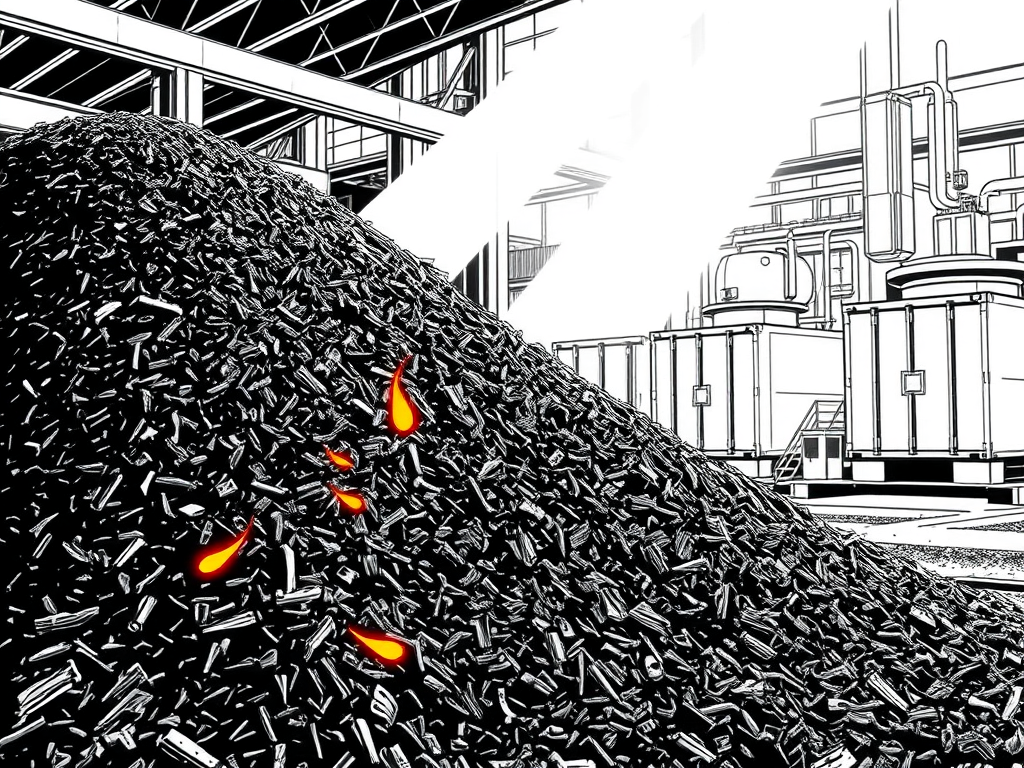
BiocharBiochar is a carbon-rich material created from biomass decomposition in low-oxygen conditions. It has important applications in environmental remediation, soil improvement, agriculture, carbon sequestration, energy storage, and sustainable materials, promoting efficiency and reducing waste in various contexts while addressing climate change challenges. More stands as a powerful testament to sustainable innovation, increasingly recognized for its significant potential in carbon sequestration, soil amendmentA soil amendment is any material added to the soil to enhance its physical or chemical properties, improving its suitability for plant growth. Biochar is considered a soil amendment as it can improve soil structure, water retention, nutrient availability, and microbial activity. More, and as a viable alternative fuel source. Its widespread adoption is undoubtedly a valuable management tool. However, as the global demand for biochar escalates, it brings into sharper focus a critical, yet often underestimated, inherent hazard: its propensity for self-heating and spontaneous ignition during storage and transportation. This phenomenon carries substantial implications, leading to considerable production losses, elevated maintenance costs, and, most importantly, severe health risks and potential fatalities for personnel involved. The primary mechanism underpinning biochar’s self-heating is the spontaneous exothermic reaction that occurs upon contact with oxygen, even at relatively low temperatures. This process commences with the chemisorption of oxygen onto the biochar’s surface, releasing heat and progressively elevating the material’s temperature. Should the rate of heat generation within the biochar mass surpass its heat dissipation rate, a critical temperature threshold can be breached, precipitating thermal runaway and spontaneous ignition.
Biochar and the Challenge of Self-Ignition
As we all know, biochar is biomass-derived carbonaceous material and has gained considerable attention for its diverse applications, including its capacity for long-term carbon sequestration in soils, contributing to climate change mitigation (Dzonzi-undi et al., 2014). Beyond its environmental benefits, Biochar serves as a valuable soil amendment, enhancing soil health and water retention, and is increasingly explored as an alternative carbon and fuel source in various industrial sectors (Phounglamcheik et al., 2022). Self-heating is defined as a material’s temperature increase under ambient conditions, stemming from internal chemical or physical processes. When this self-heating escalates to a point where the rate of heat generation surpasses the rate of heat loss, it can lead to spontaneous ignition, or auto-ignition—combustion occurring without an external ignition source (Wang & Skreiberg, 2023). For biochar, this phenomenon represents a significant fire hazard.
The escalating demand for Biochar necessitates a corresponding expansion in its production capacity, storage infrastructure, and transportation networks. This expansion, however, inherently magnifies the risk of self-heating and spontaneous ignition incidents. Such occurrences can result in substantial production losses, increased maintenance costs, and, critically, pose potential injuries or even fatalities to operational personnel (Phounglamcheik et al., 2022).It is particularly noteworthy that large quantities of stacked biochar exhibit a heightened potential for spontaneous combustion when exposed to air (Schwab & Hanna, 2012).
A fundamental challenge in the large-scale deployment of biochar arises from a specific characteristic: its very nature as a highly porous, carbon-rich material, which underpins its effectiveness for soil amendment and carbon sequestration, simultaneously renders it inherently susceptible to exothermic reactions with oxygen. This creates a fundamental paradox, as the beneficial attributes are directly linked to the hazard. Biochar’s high porosityPorosity of biochar is a key factor in its effectiveness as a soil amendment and its ability to retain water and nutrients. Biochar’s porosity is influenced by feedstock type and pyrolysis temperature, and it plays a crucial role in microbial activity and overall soil health. Biochar More and large surface area facilitate oxygen adsorption and consumption, which are key exothermic reactions. This means that the intrinsic physical and chemical properties that define biochar’s utility are also the drivers of its self-heating propensity, necessitating careful engineering and management to mitigate this inherent risk.
Real-World Incidences and Their Implications
While comprehensive reports documenting large-scale biochar heap self-ignition incidents are not extensively detailed in readily available literature, the scientific community and industry consistently acknowledge biochar’s inherent susceptibility to spontaneous ignition during storage. A lack of numerous explicitly detailed biochar heap fire incident reports does not indicate an absence of such events. Instead, it suggests that incidents may be less formally documented or published in academic studies, particularly for smaller-scale occurrences, or they might be broadly categorized under more general “biomass” or “charcoal” incidents. This points to a gap in systematic incident reporting and a need for more robust data collection on biochar-specific self-ignition events to quantify the real-world impact fully.

Literature indicates that self-heating is a leading cause of incidents in biomassBiomass is a complex biological organic or non-organic solid product derived from living or recently living organism and available naturally. Various types of wastes such as animal manure, waste paper, sludge and many industrial wastes are also treated as biomass because like natural biomass these More storage, with a significant increase in mishaps observed since 2014. Given biochar’s reactive nature, a similar trend is anticipated, even if not yet fully quantified through dedicated studies. A relevant example is the 2012 fire at the Tilbury Power Plant in the UK, which was caused by biomass self-heating and underscores the potential for significant operational problems in biomass industries, a scenario that biochar production and storage facilities could parallel (Ngene et al., 2024). A specific incident highlighting the dust explosion hazard associated with fine carbonaceous materials occurred in Heaters, West Virginia, on September 7, 2023. This “charcoalCharcoal is a black, brittle, and porous material produced by heating wood or other organic substances in a low-oxygen environment. It is primarily used as a fuel source for cooking and heating. More dust explosion” involved a worker injured during a “biochar charcoal method” process when an explosion occurred in a storage container (Cloney, 2023). The incident caused chest and arm injuries to the worker, highlighting the severe risks of finely ground, dry carbonaceous materials when airborne with an ignition source.
Several incidents highlight this danger as in November 2015, the Panamanian-flagged MSC Katrina experienced a fire, and in February 2016, a fire occurred on the German-flagged Ludwigshafen Express; in both cases, investigations in Germany called for updated regulations on charcoal cargo after self-ignition of charcoal was identified as the cause. Furthermore, the Federal Bureau of Maritime Casualty Investigation (BSU) identified coconut biochar as the likely cause of a fire on the container ship YANTIAN EXPRESS in the Atlantic Ocean, breaking out on January 4, 2019, after transport began on December 13, 2018, leading authorities to believe it was caused by the self-heating and ignition of coconut biochar briquettes packaged in woven polypropylene bags (Torresak, n.d.). These events underscore that Biochar’s primary spoilage factor is self-heating and ignition. Common contributing factors observed or inferred in these incidents and acknowledged in the literature include:
- Oxygen Exposure: Uncontrolled contact with atmospheric oxygen remains a fundamental driver of exothermic reactions and self heating (Phounglamcheik et al., 2022).
- Volume and Accumulation: Large stockpiles and significant accumulations of material increase the risk due to reduced surface area for heat dissipation, leading to greater heat retention.
- Fine Particles and Dust: Fine biochar particles or “dust” significantly increase flammability and present a substantial risk of dust explosions during storage, transport, and handling (Dzonzi-undi et al., 2014).
- Moisture (Dual Role): As previously discussed, while optimal moisture content can mitigate flammability (Zhao et al., 2014), the exothermic adsorption of water can also initiate heating, particularly in dry, porous materials (Wang & Skreiberg, 2023).
- PyrolysisPyrolysis is a thermochemical process that converts waste biomass into bio-char, bio-oil, and pyro-gas. It offers significant advantages in waste valorization, turning low-value materials into economically valuable resources. Its versatility allows for tailored products based on operational conditions, presenting itself as a cost-effective and efficient More Temperature: Biochar produced at a pyrolysis temperature of approximately 450°C has been identified as prone to self-heating (Restuccia et al., 2019).
Self-ignition incidents carry severe economic, operational, and safety consequences, including production losses, increased maintenance costs, and operational downtime. They also pose significant health risks, from injuries and fatalities to exposure to harmful volatiles and irritating, allergenic, or explosive dust, as tragically demonstrated by the Heaters, WV incident (Cloney, 2023).
Mechanisms of Biochar Self-Heating and Spontaneous Ignition
Several key mechanisms primarily drive the self-heating and spontaneous ignition of biochar. Understanding these processes is crucial for safe handling and storage, as biochar’s unique properties make it susceptible to exothermic reactions even under seemingly benign conditions. If left unchecked, these reactions can lead to dangerous thermal runaway events and ultimately, spontaneous combustion. Therefore, identifying the underlying mechanisms is the first step towards effective mitigation strategies.
- Oxygen Chemisorption: The primary driver of self-heating is the exothermic oxidation reaction between Biochar and ambient air, specifically the chemisorption of oxygen onto active sites on the Biochar’s porous surface (Wang & Skreiberg, 2023). Furthermore, carbon-free radicals within the biochar structure have been shown to promote flammability by readily bonding with oxygen via chemisorption (Zhao et al., 2014).
- Porous Structure: Biochar is a reactive porous medium with small free spaces (pores and voids) that allow air permeability and significantly increase surface area, facilitating heterogeneous oxidation reactions when oxygen is present. This porous structure makes Biochar prone to self-heating ignition(Phounglamcheik et al., 2022).
- Heat Accumulation: If the heat generated by these exothermic reactions is not adequately dissipated through conduction or convection, it accumulates within the biochar mass, causing a temperature rise.
- Moisture Content: The effect of moisture on self-heating is complex. At low moisture content (up to approximately 50% MC), an increase in moisture can enhance the material’s reactivity and tendency to self-heat. Conversely, excess humidity can absorb heat at higher moisture levels (above 50% MC), reducing the material’s reactivity and slowing down heat release from oxidation.
- Particle Movement: Movement of biochar particles caused by absorption and desorption of moisture can create friction heat and can be a source of ignition. Shaking during transport can also create friction.
Factors Influencing Self-Ignition in Biochar Heaps
The propensity for Biochar to self-ignite is a complex interplay of its inherent material characteristics (intrinsic factors) and the external conditions under which it is stored and handled (extrinsic factors). Understanding these influences is paramount for effective risk management.
Intrinsic Biochar Properties
Biochar’s physical and chemical properties, and consequently its tendency towards self-ignition, are profoundly shaped by the type of biomass feedstockFeedstock refers to the raw organic material used to produce biochar. This can include a wide range of materials, such as wood chips, agricultural residues, and animal manure. More used and the specific pyrolysis conditionsThe conditions under which pyrolysis takes place, such as temperature, heating rate, and residence time, can significantly affect the properties of the biochar produced. More, particularly the temperature at which it is produced. Research indicates that the reactivity of biochar is not a simple linear function of pyrolysis temperature. A critical observation reveals that Biochar produced at approximately 450°C is most prone to self-heating. Conversely, reactivity tends to decrease at higher reactor temperatures, with Biochar produced at 600°C, for instance, being less reactive than the original feedstock (Restuccia et al., 2019). This suggests a nuanced understanding is required, as optimizing for stability in terms of carbon content might inadvertently increase short-term reactivity if not adequately managed post-production. Other key factors include:
- Volatile MatterVolatile matter refers to the organic compounds that are released as gases during the pyrolysis process. These compounds can include methane, hydrogen, and carbon monoxide, which can be captured and used as fuel or further processed into other valuable products. More Content: Lower pyrolysis temperatures result in higher volatile content, increasing flammability and combustion risk.
- Porosity and Surface Area: High porosity and extensive surface area increase air and moisture permeability, facilitating exothermic reactions. Combustion correlates with oxygen content and surface area in fast pyrolysis biochars.
- Density and Heat Conductivity: High bulk density and low thermal conductivity can hinder heat dissipation, raising self-ignition risk.
Moisture content plays a complex role: dry Biochar exposed to moist air can release exothermic heat upon water adsorption. Conversely, a specific moisture range (e.g., 20-50%) can reduce flammability, with WBC guidelines recommending 30% water content to prevent dust and spontaneous combustion. This underscores the need for precise moisture management.
Extrinsic Storage and Environmental Conditions
External environmental and storage conditions are crucial in influencing the self-ignition potential of biochar heaps (Torresak, n.d.).
- Ambient Conditions: Elevated ambient temperatures accelerate self-heating and lower the critical ignition temperature. High humidity can cause initial spot heating when water condenses on dry Biochar. Oxygen availability is fundamental for exothermic reactions; conversely, oxygen-impermeable containers lead to a temperature decrease once oxygen is consumed.
- Storage Volume, Heap Size, and Void Fraction: Larger biochar storage volumes and heap sizes increase spontaneous combustion potential due to reduced surface-to-volume ratio, impeding heat dissipation. The critical volume for self-ignition decreases with increasing ambient temperature. Decreasing the void fraction within the heap also mitigates self-heating by limiting oxygen availability.
- Ventilation and Heat/Mass Transfer: Inadequate ventilation accumulates heat and gas, increasing ignition risk. Spontaneous ignition occurs when heat generation within the Biochar surpasses the rate of heat loss to the surroundings.
- Storage Time: Storage duration can influence self-heating behavior. Short-term flammability, often due to reactive free radicals, typically diminishes within hours as these radicals react with ambient air.
Best Practices and Mitigation Strategies for Safe Biochar Storage
Effective management of Biochar’s self-ignition risk requires a multi-faceted approach, integrating controls over the storage environment, heap management, moisture content, handling protocols, and robust emergency preparedness. A critical observation in risk management reveals that mitigation strategies are not isolated but form a synergistic system. For example, controlling storage volume directly impacts heat dissipation, and moisture content affects both exothermic reactions and dust explosion risk. This highlights the necessity of a holistic approach for effective risk management.
- Storage Environment Control
To minimize self-ignition risk, Biochar should be stored in a cool, dry place, shielded from direct sunlight (Schwab & Hanna, 2012). Maintaining storage temperatures below 40°C is highly recommended, as temperatures exceeding this threshold significantly increase the inevitability of spontaneous ignition, even for smaller quantities of Biochar (Dzonzi-undi et al., 2014). Proper ventilation is crucial to prevent the accumulation of heat and gaseous products. While specific atmospheric management for Biochar is still an area of research, limiting oxygen permeability through container materials reduces temperature increases after oxygen consumption. Furthermore, storing Biochar away from any heat sources and strictly prohibiting smoking or open flames near stored materials are fundamental safety practices (Conditioner & Black, 2019).
2. Heap and Volume Management
The dimensions and volume of biochar storage heaps directly correlate with self-ignition potential. Large quantities of stacked Biochar inherently present a higher risk of spontaneous combustion. Consequently, reducing storage volume is a recommended mitigation strategy. It is important to note that the critical volume for self-ignition decreases as the ambient temperature rises. Another effective strategy is reducing the void fraction, or the empty space within the biochar mass, as this limits oxygen ingress and mitigates self-heating. Lowering the initial temperature of the char before storage is also a recommended approach to reduce the propensity for self-heating (Phounglamcheik et al., 2022).
3. Moisture Content Management
Managing moisture content is a critical and nuanced aspect of biochar safety, and adhering to recommended water content levels is paramount. For instance, the World Biochar Certificate (WBC) guidelines explicitly recommend adjusting WBC-certified biochar to a water content of 30% to effectively prevent dust formation and spontaneous combustion (World Biochar Certificate, 2024). This specific recommendation is a carefully determined equilibrium point that balances the opposing effects of moisture. If it is too dry, Biochar becomes a significant dust explosion and flammability hazard (Dzonzi-undi et al., 2014). Too dry biochar can self-heat when exposed to moist air; thus, preventing excessive drying is crucial. During transport, sufficient moisture prevents dust issues. However, high humidity and ambient temperatures should be avoided due to potential fungal growth and self-heating.
4. Handling and Packaging Protocols
Minimizing the amount of airborne biochar dust is a primary safety objective during handling. This involves exercising caution when transferring biochar from packages to soil or applicators, avoiding dumping the material from a height, and considering postponing applications during windy conditions that can easily suspend biochar particles. For repackaging leftover biochar, flexible bags are recommended over tightly sealed rigid containers (such as cans or jars). Flexible packaging allows for rolling up the sides, significantly minimizing the opportunity for dust to become airborne inside the container during transportation or other handling activities (Schwab & Hanna, 2012).
5. Personal Protective Equipment (PPE) and Emergency Preparedness
Appropriate Personal Protective Equipment (PPE) is essential when handling Biochar to mitigate dust and fire hazards. This includes eye protection (safety glasses or non-vented goggles for dusty environments), gloves (latex or PVC for wet Biochar), long sleeves, and long pants. For situations involving excessive dust or discomfort, a NIOSH-approved N95 particulate filtering facepiece respirator or a P100-type dust respirator is recommended (Schwab & Hanna, 2012). Effective emergency preparedness is also vital.
Need For Interference and Future Perspectives
Despite significant advancements in understanding Biochar’s properties and self-heating mechanisms, several critical areas require further scientific investigation and more robust real-world data collection to enhance safety protocols. A key observation highlights a disparity: despite substantial laboratory research on self-heating mechanisms and influencing factors, there remains an acknowledged gap in real-world incident data and a complete understanding of long-term flammability. This suggests that current scientific models and lab-scale findings may not fully capture the complexities of large-scale, long-term storage in diverse real-world conditions, underscoring a critical need for field-level validation and comprehensive incident reporting. Significant research gaps exist in comprehensively reporting Biochar self-heating incidents and fully understanding spontaneous oxidation mechanisms, especially long-term flammability. Further study is needed on how specific biochar properties influence self-heating across diverse conditions and on optimizing production to stabilize reactive Biochar.
To address research gaps and guide future directions, developing and validating refined predictive models that incorporate intrinsic biochar properties and extrinsic environmental factors for simulating large-scale self-heating is essential. Continued refinement and widespread adoption of standardized testing methods are crucial for consistently assessing flammability and self-heating. Additionally, developing detailed, industry-specific safety guidelines tailored to various scales of biochar operations is needed, alongside integrating advanced temperature and gas monitoring technologies for early detection in storage facilities.
The inherent reactivity of Biochar, primarily driven by exothermic oxygen chemisorption and influenced by a complex interplay of its intrinsic material properties and extrinsic environmental factors, establishes self-heating and spontaneous ignition as a significant and persistent hazard. Proactive and comprehensive risk management, encompassing meticulous production, storage, and handling protocols, is not merely advisable but fundamentally essential for the safe and sustainable expansion of the biochar industry. While Biochar offers substantial environmental and economic benefits, particularly in its capacity for carbon sequestration and soil improvement, these advantages must be rigorously balanced with an unwavering commitment to safety. Continuous scientific inquiry, improved systematic incident reporting, and the widespread adoption of robust, evidence-based safety standards are paramount. These efforts are crucial for mitigating the inherent fire hazards and ensuring that Biochar’s full potential is realized responsibly, fostering its safe and widespread integration into various sectors.
References
Cloney, C. (2023). One Worker Suffers Chest and Arm Injuries in Charcoal Dust Explosion – Dust Safety Science. Https://Dustsafetyscience.Com/Charcoal-Dust-Explosion-Heaters-Wv/.
Conditioner, S., & Black, C. (2019). MSDS Char.
Dzonzi-undi, J., Masek, O., & Abass, O. (2014). Determination of Spontaneous Ignition Behaviour of Biochar Accumulations. International Journal of Science and Research, 3(8), 656–661.
Ngene, G. I., Bouesso, B., González Martínez, M., & Nzihou, A. (2024). A review on biochar briquetting: Common practices and recommendations to enhance mechanical properties and environmental performances. Journal of Cleaner Production, 469(July). https://doi.org/10.1016/j.jclepro.2024.143193
Phounglamcheik, A., Johnson, N., Kienzl, N., Strasser, C., & Umeki, K. (2022). Self-Heating of Biochar during Postproduction Storage by O2 Chemisorption at Low Temperatures. Energies, 15(1). https://doi.org/10.3390/en15010380
Restuccia, F., Mašek, O., Hadden, R. M., & Rein, G. (2019). Quantifying self-heating ignition of biochar as a function of feedstock and the pyrolysis reactor temperature. Fuel, 236(March 2021), 201–213. https://doi.org/10.1016/j.fuel.2018.08.141
Schwab, C. V, & Hanna, H. M. (2012). Master Gardeners’ safety precautions for handling, applying, and storing biochar. In Agriculture and Biosystems Engineering, Extension and Outreach, Iowa State University (Issue April). http://lib.dr.iastate.edu/abe_eng_extensionpubs/5
Torresak, T. N. (n.d.). Modified Atmosphere Bulk Packaging: Principles and Practice of Biochar Storage and Transport.
Wang, L., & Skreiberg, Ø. (2023). A Critical Review on Self-Heating and Self-Ignition of Biocarbon. Chemical Engineering Transactions, 105(January), 271–276. https://doi.org/10.3303/CET23105046
World Biochar Certificate. (2024). Guidelines for a Sustainable Production of Biochar and its Certification (Issue December). http://www.european-biochar.org
Zhao, M. Y., Enders, A., & Lehmann, J. (2014). Short- and long-term flammability of biochars. Biomass and Bioenergy, 69, 183–191. https://doi.org/10.1016/j.biombioe.2014.07.017




Leave a Reply