

Australia faces two immense, large-scale environmental challenges: the ever-present threat of catastrophic bushfires fueled by enormous volumes of excess forest biomassBiomass is a complex biological organic or non-organic solid product derived from living or recently living organism and available naturally. Various types of wastes such as animal manure, waste paper, sludge and many industrial wastes are also treated as biomass because like natural biomass these More, and the extensive, costly problem of contaminated mine land rehabilitation. Separately, these are national headaches. But what if a single, circular strategy could solve both?
My latest article in the Nations of BiocharBiochar is a carbon-rich material created from biomass decomposition in low-oxygen conditions. It has important applications in environmental remediation, soil improvement, agriculture, carbon sequestration, energy storage, and sustainable materials, promoting efficiency and reducing waste in various contexts while addressing climate change challenges. More series dives deep into how Australia can transform these dual liabilities into a powerful, regenerative asset. The answer lies in biochar, serving as the critical link in a government-backed circular economy model.
The Dual National Challenge
Australia’s environmental management is defined by industrial-scale problems that demand industrial-scale solutions.
1. The Bushfire Fuel Load
The 2019–2020 “Black Summer” fires starkly reminded the nation of the risk posed by unmanaged forest biomass. This “fuel load” – woody debris and non-commercial forest material – is an explosive public safety hazard. Managing it through traditional methods like controlled burns or mechanical clearing is expensive, carbon-emitting, and must be repeated constantly. The government’s multi-billion dollar Disaster Ready Fund shows the sheer financial weight of mitigation and recovery.
2. The Mining Remediation Deficit
As a global mining powerhouse, Australia has inherited a massive legacy of disturbed land. Rehabilitating complex, historic mine sites, often plagued by acid drainage and heavy metal contamination, is a staggering task, costing upwards of $100,000 per hectare for the most complex sites. The conventional “dig-and-dump” approach merely moves the contamination elsewhere, failing to restore the land’s ecological function. Moreover, a significant portion of new critical minerals projects affects Indigenous land, making a sustainable solution a social and cultural imperative.
Biochar: The Regenerative Catalyst
The strategic opportunity for Australia is to connect these two challenges using biochar. This converts the fire fuel (a hazard) into a high-value tool for mine cleanup (a necessity).
Turning Fire Fuel into Financial Value
The model starts with systematic, planned removal of excess forest biomass—the fuel load—by land management agencies. Instead of burning it open-air, this biomass is processed through decentralized pyrolysisPyrolysis is a thermochemical process that converts waste biomass into bio-char, bio-oil, and pyro-gas. It offers significant advantages in waste valorization, turning low-value materials into economically valuable resources. Its versatility allows for tailored products based on operational conditions, presenting itself as a cost-effective and efficient More units (like mobile ‘Air Curtain Burners’). This process achieves two things at once:
- Fuel Reduction: It permanently removes the hazardous material that drives megafires.
- Carbon Capture & Revenue: It converts the biomass into biochar, a stable, carbon-rich material. Once the method is fully agreed upon, this process can generate Australian Carbon Credit Units (ACCUs) for permanent carbon sequestration, creating a vital revenue stream to offset the costs of fuel management and processing.
Transforming Mine Scars into Functional Land
The resulting biochar is then applied to the contaminated mine sites, where it works to stabilize and regenerate the land:
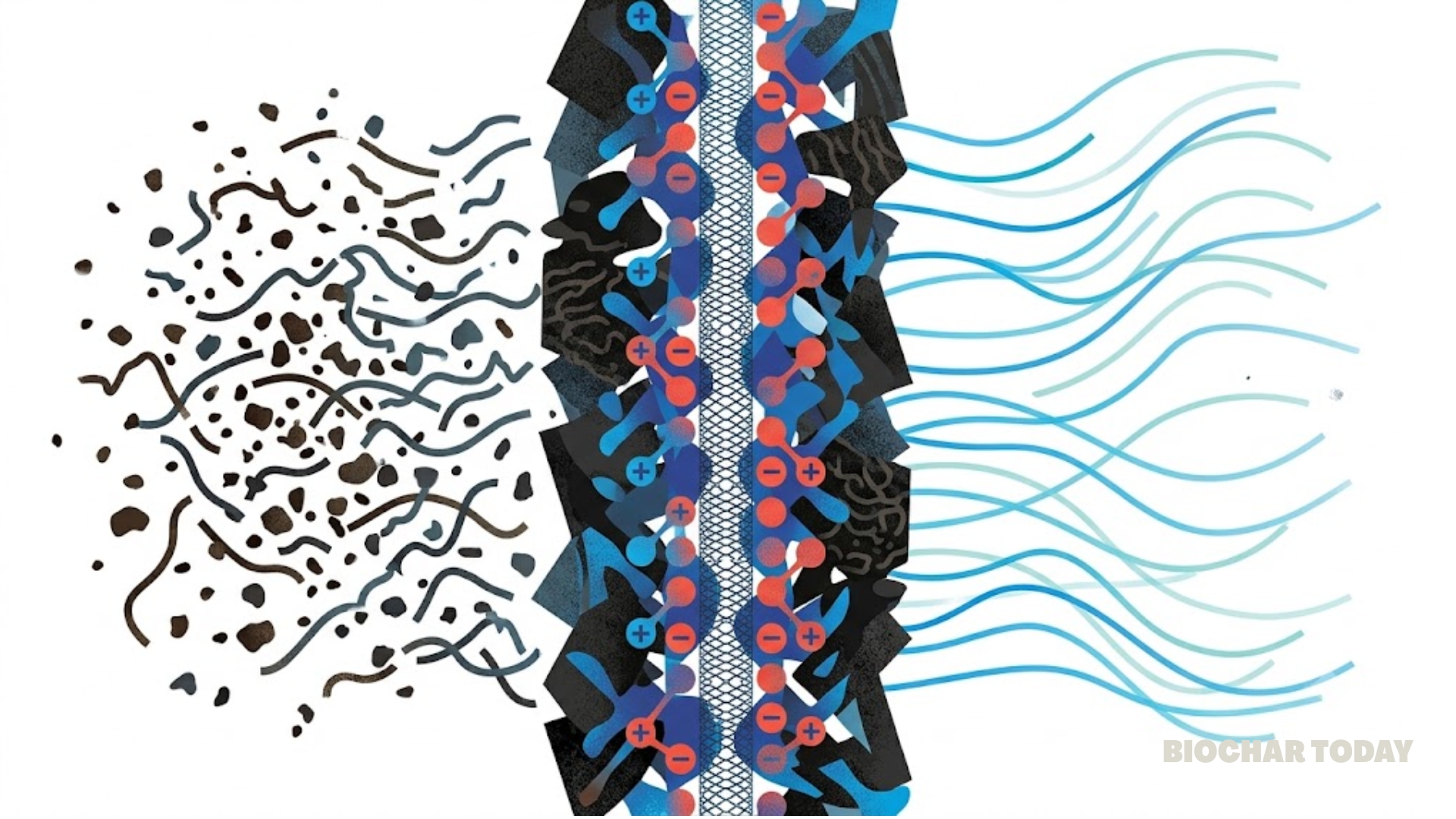
- Toxin Immobilization: Biochar is highly effective at binding heavy metals (like lead and arsenic) and other contaminants. Its large surface area and alkaline properties immobilize these toxins, drastically reducing their bioavailability and preventing them from leachingLeaching is the process where nutrients are dissolved and carried away from the soil by water. This can lead to nutrient depletion and environmental pollution. Biochar can help reduce leaching by improving nutrient retention in the soil. More into groundwater or being taken up by plants.
- Ecological Kickstart: Mine spoils typically have poor soil structure. Biochar immediately tackles this by:
- Raising the pHpH is a measure of how acidic or alkaline a substance is. A pH of 7 is neutral, while lower pH values indicate acidity and higher values indicate alkalinity. Biochars are normally alkaline and can influence soil pH, often increasing it, which can be beneficial More of highly acidic mine soils, making them hospitable for plant life.
- Significantly increasing Water Holding CapacityWater holding capacity is the amount of water that soil can retain. Biochar can significantly increase the water holding capacity of soil, improving its ability to withstand drought conditions and support plant growth. More (WHC), a non-negotiable benefit in Australia’s arid mining regions.
- Boosting Cation Exchange Capacity (CEC) to retain and slowly release essential nutrients, reducing the need for costly synthetic fertilizers.
A Powerful Payoff
This integrated approach offers a triple win for Australia:
- Risk Mitigation: It systematically reduces the severity of future bushfires, protecting lives, property, and the economy from catastrophic loss.
- Economic Efficiency: It replaces the costly “dig-and-dump” remediation method with a more effective, in-situ stabilization approach that accelerates the ecological recovery of mined land.
- The Climate-Resilience Bridge: Crucially, government action is required to bridge the gap between forest management and mine remediation, leveraging financial incentives like the ACCU scheme to draw these industries together.
By formally embracing this circular biochar strategy, Australia can demonstrate a world-leading model of land restoration and climate resilience, transforming its most significant environmental liabilities into a productive, carbon-negative future. Biochar is the key to creating a truly continuous productivity model, ensuring the land disturbed by mining is not abandoned, but rapidly and safely returned to a functional ecosystem.
The full article expands on the specific governmental policy levers, logistics, and production unit specifications required to scale this vision across the nation.
Have an idea for next week’s instalment? Reach out and let me know which nation you’d like me to cover next in this series! Feel free to drop me an email at: ralph@biochartoday.com




Leave a Reply