
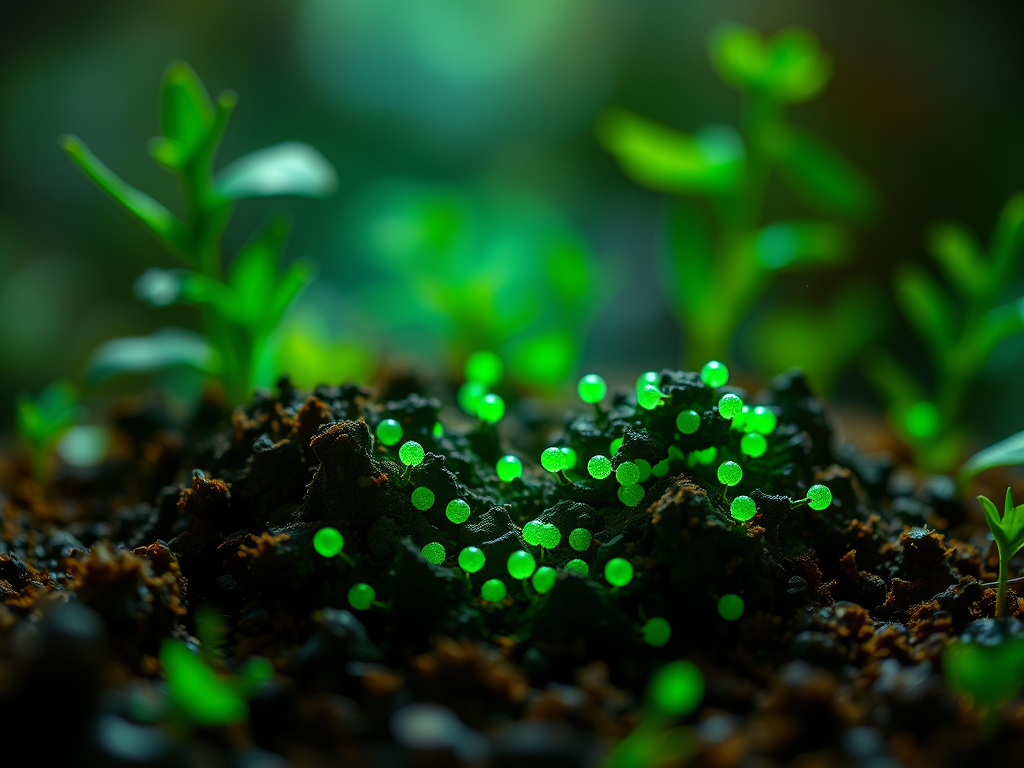
Get ready to have your socks knocked off, because we’re about to dive into something truly awesome! We all know biocharBiochar is a carbon-rich material created from biomass decomposition in low-oxygen conditions. It has important applications in environmental remediation, soil improvement, agriculture, carbon sequestration, energy storage, and sustainable materials, promoting efficiency and reducing waste in various contexts while addressing climate change challenges. More is there to clean up our environment and give our soil a much-needed boost. But what if I told you this already-impressive material could get even smaller and more powerful? Buckle up, because we’re about to explore the mind-blowing world of biochar-derived carbon nanodots (BCCDs) – microscopic marvels ready to revolutionize how we tackle environmental challenges.
My favorite “aha!” moments usually involved me, Giya Merline (my partner in biochar-obsessed crime), and enough data to wallpaper a small apartment, all crammed into the lab’s most dimly lit corners. Good times! It’s those electrifying flashes of scientific thoughts that I’m really excited to share with you today, far away from the stuffy pages of a scientific journal. So, let’s fire up the memory machine and relive that “YEAH!” feeling right here, right now!
The Rise of the Nanodots: A Sustainable Spin
Carbon dots (CDs) have been making waves in various fields due to their unique optical properties, like their ability to glow under UV light (photoluminescence). Imagine a material that can detect incredibly small amounts of pollutants, act as a drug delivery system, or even assist in bioimaging – that’s the promise of CDs! However, traditional CD production can sometimes involve energy-intensive processes or less-than-eco-friendly chemicals. As you know, biochar is a highly carbonaceous material, and agricultural waste like corn stalks or animal manure is getting a sustainable makeover. By converting this readily available and often underutilized biomassBiomass is a complex biological organic or non-organic solid product derived from living or recently living organism and available naturally. Various types of wastes such as animal manure, waste paper, sludge and many industrial wastes are also treated as biomass because like natural biomass these More into carbon nanodots, we create BCCDs – a sustainable tool combining the best of both worlds.
From Bulk to Nano: How BCCDs are Made
So, how do we shrink biochar down to the nanoscale? Researchers are exploring various methods, often categorized into “top-down” and “bottom-up” approaches. One prominent method for BCCD production is hydrothermal conversion. This involves heating biochar in a water medium under pressure. For example, studies have shown that converting domestic waste under hydrothermal conditions can yield BCCDs with average sizes ranging from 2.5 nm to 15.3 nm. Another method gaining traction is microwave-assisted hydrothermal synthesis, which can help achieve a more uniform size distribution of BCCDs, typically between 1 and 5 nm. PyrolysisPyrolysis is a thermochemical process that converts waste biomass into bio-char, bio-oil, and pyro-gas. It offers significant advantages in waste valorization, turning low-value materials into economically valuable resources. Its versatility allows for tailored products based on operational conditions, presenting itself as a cost-effective and efficient More carbonization is another common technique, breaking down carbon sources with heat to produce BCCDs with narrow size distributions, often between 0.4 and 2.0 nm. Once these tiny dots are formed, purification is a crucial step for obtaining pure materials, often achieved through dialysis. This process effectively separates BCCDs from other molecules based on their size.
Below are a few beautiful images of BCCD obtained in our earlier studies, and glad to share these exciting results.

The Science Behind Their Superpowers: Photoluminescence Quenching
One of the most exciting properties of BCCDs for environmental applications is their photoluminescence (PL), and more specifically, how this PL can be “quenched” or dimmed in the presence of certain substances. This quenching phenomenon is the cornerstone of their sensing capabilities.
Imagine BCCDs as tiny, glowing beacons. When specific inorganic or organic pollutants interact with the BCCDs, the light they emit dims or even turns off. The degree of dimming can be precisely measured, allowing scientists to quantify the amount of the pollutant present, even at very low concentrations. This “turn-off” or “on-off” behavior makes them highly effective sensors. The mechanisms behind this PL quenching are varied and complex, including processes like static quenching (where a complex forms between the BCCD and the pollutant), dynamic quenching (due to diffusion of the pollutant when the BCCD is excited), and involves resonance energy transfer, among others. The specific functional groups on the surface of BCCDs play a vital role in these interactions.

BCCDs in Action
BCCDs are powerful tools for detecting a wide range of contaminants and also helpful in achieving the objectives of sustainable agriculture.
- Heavy Metal Detection: From iron (III) and copper (II) to aluminum (III) and mercury (II) , BCCDs have shown remarkable sensitivity and selectivity. They can detect these harmful ions in water at very low concentrations, sometimes outperforming traditional laboratory methods. The ability to detect multiple heavy metals, even simultaneously, is also being explored.
- Organic Pollutant Sensing: Beyond metals, BCCDs are also being developed for the detection of organic species like pesticides (e.g., dimethoate, phoxim ), antibiotics (e.g., tetracyclines ), and even certain pain medications (e.g., prilocaine ). Some studies have even demonstrated “off-to-on” behavior, where the fluorescence is restored in the presence of the analyte, offering another powerful sensing mechanism.
- Sustainable agriculture: Compared to traditional biochar, these nanodots r boasts enhanced specific surface area, adsorption capacity, and mobility properties within soil, allowing it to support crop growth and environmental remediation. Carbon sequestration and reduction of greenhouse gases (GHGs) from agriculture can also be achieved with BCCD applications, contributing to climate change mitigation.
The Road Ahead: Challenges and Opportunities
While the potential of BCCDs is immense, there are still challenges to address. Fine-tuning the production process to control the size, functionalities, and quantum yield of BCCDs derived from diverse biomass sources remains an area of active research. However, this adaptability also presents a unique opportunity to create highly customizable sensors.
The field of CD-based environmental application is still relatively new, and a more goal-oriented approach to research, driven by a deeper understanding of CD structure-activity relationships, will be key to unlocking their full potential. In conclusion, biochar-derived carbon nanodots are more than just a scientific curiosity. They represent a significant step towards sustainable, high-performance analytical tools for advanced environmental management. As these tiny titans continue to evolve, they promise to play a vital role in a cleaner, healthier future.
If you’re as excited about this cutting-edge research as we are, we warmly invite you to join the conversation! This is a truly hot and emerging area for the next generation of biochar researchers, brimming with untold possibilities. Even fundamental questions like the environmental fate of biochar-derived carbon nanodots are burning topics just waiting to be explored. There’s so much more to discover, so many mysteries to unravel… as we often say in the lab, “Biochar research is deep and dark, with many more steps to go before we sleep!” Young researchers join us on this incredible journey of discovery discussion.
Resource
Zhu, L., Chen, L., Gu, J., Ma, H., & Wu, H. (2022). Carbon-based nanomaterials for sustainable agriculture: their application as light converters, nanosensors, and delivery tools. Plants 11 (4): 511.
Bhandari, G., Gangola, S., Dhasmana, A., Rajput, V., Gupta, S., Malik, S., & Slama, P. (2023). Nano-biochar: recent progress, challenges, and opportunities for sustainable environmental remediation. Front Microbiol.
Selvakumar, K., Thangavel, K., Dhandapani, S., K, R. S., A, B., & R, S. (2025). Effect of Carbon Nanomaterials on Soil and Plant Microbiome. Journal of Soil Science and Plant Nutrition, 1-18.
Guo, F., Bao, L., Wang, H., Larson, S. L., Ballard, J. H., Knotek-Smith, H. M., … & Hana, F. (2020). A simple method for the synthesis of biochar nanodots using hydrothermal reactor. MethodsX, 7, 101022.
Lo Bello, G., Bartoli, M., Giorcelli, M., Rovere, M., & Tagliaferro, A. (2022). A review on the use of biochar derived carbon quantum dots production for sensing applications. Chemosensors, 10(3), 117.



Leave a Reply