

This is the eleventh in a new series of Biochar Expert Profiles, where we celebrate those who have dedicated their passion, expertise, and innovation to advancing the field of biocharBiochar is a carbon-rich material created from biomass decomposition in low-oxygen conditions. It has important applications in environmental remediation, soil improvement, agriculture, carbon sequestration, energy storage, and sustainable materials, promoting efficiency and reducing waste in various contexts while addressing climate change challenges. More. These experts come from all walks of life: renowned scientists whose groundbreaking research has redefined possibilities, emerging researchers whose fresh perspectives are shaping the future, industry leaders who are growing the market through new technologies and business models, and unsung heroes who work tirelessly to enrich soils with biochar. Whether it’s their pioneering techniques, insightful discoveries, or unwavering dedication, these individuals are the heart and soul of the biochar revolution. By highlighting their contributions and sharing their knowledge, this series aims to inspire the biochar community at large.
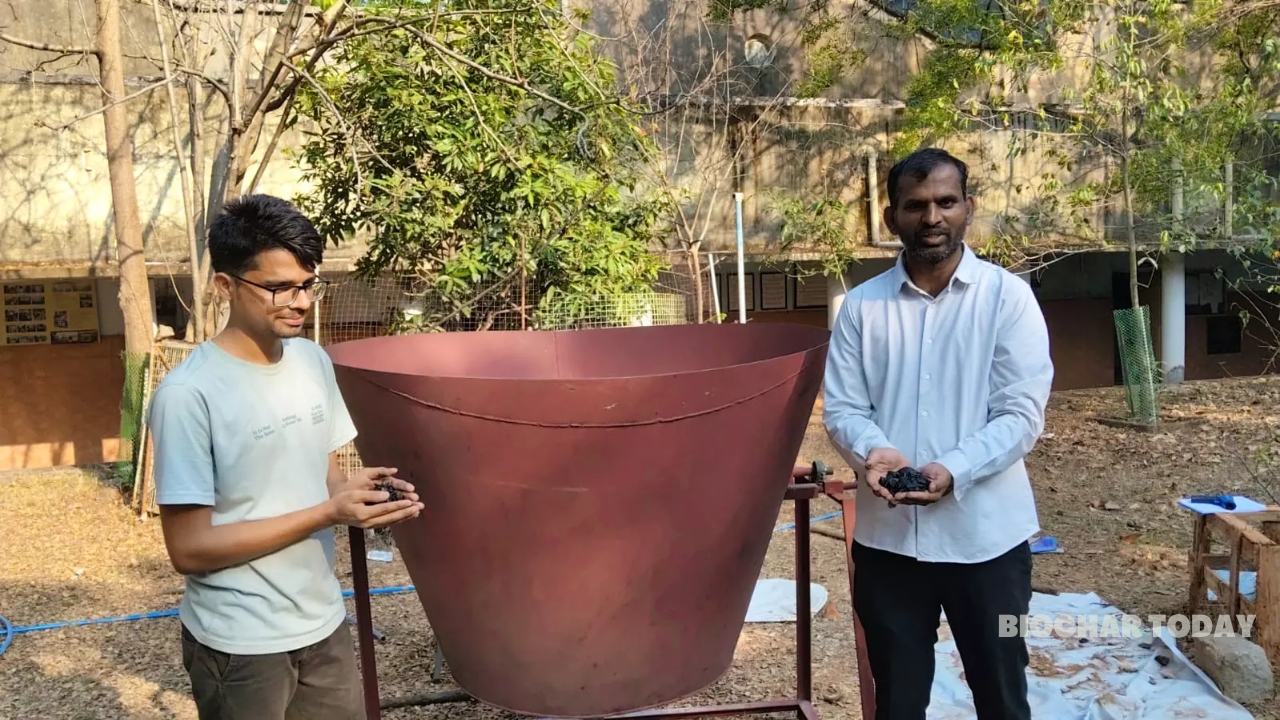
Welcome to another insightful session of Biochar Today’s expert interview! Today, we are delighted to introduce Mohammed Shafi M.S., a dedicated Research Scholar in Geotechnical Engineering at the Indian Institute of Technology, Guwahati, India.
Mohammed Shafi is a passionate researcher at the forefront of sustainable geotechnical solutions, particularly focusing on the innovative application of biochar. His academic journey includes an M.Tech in Geotechnical Engineering from Cochin University of Science and Technology, where he delved into the sustainable stabilization of expansive soil using biochar, and he is currently pursuing his PhpH is a measure of how acidic or alkaline a substance is. A pH of 7 is neutral, while lower pH values indicate acidity and higher values indicate alkalinity. Biochars are normally alkaline and can influence soil pH, often increasing it, which can be beneficial More.D. in Civil Engineering at IIT Guwahati.
A significant highlight of his work is the design and fabrication of a highly cost-effective lab-scale pyrolysisPyrolysis is a thermochemical process that converts waste biomass into bio-char, bio-oil, and pyro-gas. It offers significant advantages in waste valorization, turning low-value materials into economically valuable resources. Its versatility allows for tailored products based on operational conditions, presenting itself as a cost-effective and efficient More reactor, achieving a remarkable 75% cost reduction compared to commercial alternatives. This innovation underscores his practical ingenuity in advancing biochar production. His research extends to comprehensive characterization of biochar alongside standard geotechnical methods, providing a deep understanding of its influence on expansive soil behavior. Beyond his doctoral research, Mohammed Shafi contributes actively as a consultant for pyrolysis reactor fabrication and guides fellow researchers in biochar production and characterization.
Join us as Mohammed Shafi M.S. shares his expertise on biochar’s potential in geotechnical engineering, his innovative approaches to sustainable material development, and the exciting future of biochar applications. Get ready for an illuminating discussion!
Shanthi Prabha: Shafi, can you tell us what ignited your passion for biochar and set you on this innovative research journey?
Mohammed Shafi: My introduction to biochar research began under the mentorship of Dr. Divya P.V., Associate Professor at IIT Palakkad, who gave me a solid foundation in geoenvironmental engineering and sustainable geotechnics. What initially drew me in was how a simple material produced from agricultural residues could offer such complex and far-reaching solutions.
As I explored biochar’s production and characterization, I was particularly fascinated by its stable carbon structure. The idea that biochar could lock away carbon for centuries, preventing its release as CO₂ during natural decomposition, made me realize its decisive role in climate change mitigation.
What captivated me was biochar’s versatility. It’s not only a soil enhancer or a carbon sink—it also serves as a habitat for beneficial soil microbes and a low-cost adsorbent for removing heavy metals from water and soil. This ability to address multiple global challenges—climate change, soil degradation, and water contamination—using a single material made me deeply passionate about exploring biochar further.
My work focuses on optimizing biochar production and application mapping, especially within geotechnical contexts. I see biochar as a material and a bridge between engineering and environmental stewardship.
SP: You designed and fabricated a lab-scale pyrolysis reactor for biochar production. What was your most unexpected challenge during this process, and how did you overcome it?
MS: The most unexpected challenge I encountered during designing and fabricating our lab-scale Pyrolysis Reactor was achieving uniform heat distribution inside the pyrolysis chamber while maintaining precise temperature control. While considering temperature management important, I underestimated how sensitive biochar quality would be to even slight thermal inconsistencies.
In early trials, I observed uneven carbonization across feedstockFeedstock refers to the raw organic material used to produce biochar. This can include a wide range of materials, such as wood chips, agricultural residues, and animal manure. More samples, which pointed to temperature gradients—hotspots and cold zones—within the chamber. This is a common issue in traditional reactors and can severely impact both yield and the consistency of biochar properties. The challenge was heightened by the need to process varied feedstock types while maintaining an inert atmosphere to prevent oxidation.
To resolve this, I designed a pyrolysis chamber using SS 304 stainless steel tubing, which was surrounded by electrical heating coils. The stainless steel ensured corrosion resistance and uniform heat conduction along the reactor walls. The heating coils were carefully configured to distribute heat evenly around the chamber, minimizing temperature gradients that could otherwise affect pyrolysis consistency. This setup allowed for direct and controlled thermal input, critical in achieving uniform heating.
I integrated a PID controller with a K-type thermocouple for precise temperature regulation, allowing real-time temperature monitoring and control throughout the pyrolysis cycle. A controlled nitrogen gas flow system was also incorporated to maintain an oxygen-free environment and aid post-pyrolysis cooling. The nitrogen created an inert atmosphere and helped absorb and dissipate excess heat, ensuring more stable internal temperatures.
This dual-function approach—combining uniform heating and atmospheric control—proved essential in overcoming the heating gradient issue. It significantly improved the repeatability and reliability of the biochar produced. The challenge, though unexpected, helped me develop an understanding of heat transfer in closed systems and informed future optimizations of the reactor for scalability and feedstock variability.
SP: You achieved a remarkable 75% cost reduction on your pyrolysis reactor. What was the “secret sauce” behind this significant efficiency in resource utilization?
MS: Our lab-scale pyrolysis reactor’s remarkable 75% cost reduction was achieved through thoughtful engineering, material optimization, and a simplified yet scalable design. From the outset, we prioritized functionality and durability while minimizing unnecessary complexity. The use of SS 304 stainless steel for the reactor chamber, although slightly more expensive upfront than carbon steel, proved economical in the long run due to its superior corrosion resistance, thermal stability, and longevity. The reactor’s simplified architecture—with no moving parts and a compact thermal design—reduced fabrication time, eliminated mechanical wear, and significantly lowered maintenance requirements. We also incorporated a nitrogen purging system that doubled as an inerting mechanism and a cooling aid, eliminating the need for additional post-pyrolysis cooling infrastructure. This multi-functional design approach allowed several components to serve dual purposes, optimizing cost and operational efficiency. Importantly, the reactor was built to support multiple modes of biochar production, including physical and chemical activation and chemical-assisted pyrolysis, enabling high versatility and better system utilization. Its ability to be easily modified for either batch or continuous operation further improves its scalability. These strategic decisions allowed us to develop a high-performing, research-grade pyrolysis reactor at just $1,050—substantially lower than typical lab-scale systems, which often range up to $4000. This outcome demonstrates the feasibility of low-cost reactor fabrication and opens opportunities for broader adoption of decentralized biochar technologies in academic, rural, and small-scale industrial settings.
SP: Your research delves into biochar’s influence on expansive soil behavior. Can you share one fascinating, counter-intuitive finding from your characterization experiments at various pyrolysis temperatures?
MS: I produced biochar at four different pyrolysis temperatures: 300°C, 450°C, 600°C, and 750°C, and studied how the pH and electrical conductivity (EC) changed with temperature. I expected the pH to increase steadily as the temperature rose since higher temperatures usually remove acidic groups and leave behind more basic minerals. But the results were not that straightforward. The pH did not increase linearly because different acidic and basic groups break down or remain at various temperatures. For example, acidic groups like carboxyls may disappear at lower temperatures, while some basic minerals might not form or concentrate until higher temperatures. Similarly, the EC also showed an unexpected pattern. It is generally expected to increase with temperature due to the build-up of ashAsh is the non-combustible inorganic residue that remains after organic matter, like wood or biomass, is completely burned. It consists mainly of minerals and is different from biochar, which is produced through incomplete combustion. Ash Ash is the residue that remains after the complete More and minerals, but I noticed some irregular changes. Certain salts and ions may volatilize or break down at higher temperatures, leading to lower EC than expected. These results showed that many factors during pyrolysis affect both pH and EC, including feedstock type and how different compounds behave at different temperatures. It made me realize that temperature alone doesn’t control these properties, and careful control is needed depending on the final use of the biochar.
SP: Beyond the lab, you consult on pyrolysis reactor fabrication and guide others in biochar production. What’s the most common misconception people have when they first start working with biochar?
MS: The most common misconception among those new to biochar is the belief that all biochar is the same—what I call the “universal biochar” fallacy. Many assume that any biochar, regardless of how it’s made or what it’s made from, can be used in any application. In reality, the properties of biochar vary widely based on the feedstock and pyrolysis conditionsThe conditions under which pyrolysis takes place, such as temperature, heating rate, and residence time, can significantly affect the properties of the biochar produced. More. For example, biochar from wood tends to have high carbon content and surface area, while manure may be richer in nutrients but lower in porosityPorosity of biochar is a key factor in its effectiveness as a soil amendment and its ability to retain water and nutrients. Biochar’s porosity is influenced by feedstock type and pyrolysis temperature, and it plays a crucial role in microbial activity and overall soil health. Biochar More. These differences are critical because biochar must be matched to its intended use for soil improvement, water filtration, or carbon sequestration. Without proper characterization, such as checking pH, nutrient content, and surface chemistry, the application can fail or even cause harm. Another misconception is that producing biochar is environmentally harmful. Many people are surprised to learn that pyrolysis emits far less methane than landfilling or open burning and can sequester carbon for hundreds of years. When done correctly, biochar production and applications are carbon-negative process and can play a key role in climate change mitigation.
SP: With your background in sustainable stabilization of expansive soil, what do you see as the biggest hurdle to the widespread adoption of biochar in large-scale geotechnical projects?
MS: The biggest hurdle to the widespread adoption of biochar in geotechnical applications, especially for expansive soil stabilization, is the lack of consistency in its performance and the absence of standardized specifications tailored to geotechnical needs. Biochar properties vary significantly depending on the feedstock and pyrolysis conditions, directly affecting its interaction with different soil types. Unlike traditional stabilizers like lime or cement, biochar does not have well-defined parameters for particle size, surface area, or chemical reactivity that are universally accepted in geotechnical design. This variability makes it difficult for engineers to predict its behavior and incorporate it reliably into soil treatment plans. Additionally, most existing guidelines and standards for biochar are centered around agricultural or environmental uses, with limited relevance for geotechnical functions like swelling reduction or long-term stability. The lack of long-term field data and design frameworks specific to expansive soils further limits its integration into mainstream geotechnical engineering practice.
SP: Looking ahead, what emerging biochar application, perhaps outside of soil stabilization, are you most excited about?
MS: One emerging application of biochar that excites me most is its use in 3D printing and additive manufacturing. This innovative direction transforms biochar from a traditional soil amendmentA soil amendment is any material added to the soil to enhance its physical or chemical properties, improving its suitability for plant growth. Biochar is considered a soil amendment as it can improve soil structure, water retention, nutrient availability, and microbial activity. More into a high-performance material for sustainable engineering. Biochar can be incorporated into 3D printable composites like concrete, polymers, and epoxies, offering both mechanical enhancements and environmental benefits. For instance, small biochar additions have been shown to improve the viscosity and shape retention of fresh concrete mixtures, increase the mechanical strength of PLA bioplastics, and reinforce epoxy resins. What makes this especially promising is its potential to make manufacturing carbon-negative since biochar stores carbon that would otherwise return to the atmosphere. This application reduces the carbon footprint of construction and manufacturing and contributes to circular economy goals by converting agricultural waste into valuable, climate-friendly materials.
SP: Your work spans both the production and characterization of biochar. Which analytical technique—CHNS, FESEM, XRD, or FTIR—has provided the most exciting moments in understanding biochar’s properties?
MS: Among the techniques I use for biochar analysis, FTIR spectroscopy has been the most insightful. It reveals how biochar’s functional groups change during pyrolysis, explaining why properties like pH don’t follow simple trends with temperature. FTIR shows detailed chemical transformations that help predict biochar’s performance in applications like soil stabilization by linking specific groups to water retention and nutrient binding. Unlike CHNS, FESEM, or XRD, FTIR provides a clear picture of biochar’s chemistry, making it invaluable for quality control and tailoring biochar for different uses. Its fast, non-destructive nature also helps scale lab results to real-world applications, making it a key tool in my research.
SP: Given your deep dive into biochar, what’s one piece of advice you’d offer to aspiring researchers looking to make a significant impact in the field of sustainable geotechnics?
MS: I am an early career researcher and not in a position to give advice, but I can share valuable guidance I’ve received from my professors working in sustainable geotechnics. Based on their insights and my experience in biochar research, the most critical advice for aspiring researchers is to embrace interdisciplinary thinking and prioritize thorough material characterization. Breakthrough innovations arise at the intersection of chemistry, soil science, materials science, and geotechnical engineering, so it’s important not to limit yourself to traditional approaches. Sustainable geotechnics requires a systems mindset—understanding how materials behave throughout their entire lifecycle, beyond mechanical properties. Deep characterization using techniques like FTIR, FESEM, and chemical analysis reveals the mechanisms behind material behavior, which is far more valuable than running numerous tests. Always focus on understanding why a material works, not just what it does. Document all observations carefully and remain open to unexpected results, as these often lead to important insights. From the beginning, consider real-world scalability and economic feasibility; practical constraints should shape your research. Building strong connections with industry professionals early on helps ensure your work is relevant and implementable. Effective communication across disciplines is key to maximizing impact, as is bridging the gap between academic research and practical application. Think long-term and systemically, designing solutions that endure while minimizing environmental impact across the entire lifecycle. Anticipate evolving regulations and sustainability standards to future-proof your work. Finally, be patient—significant breakthroughs often come from careful, methodical investigation rather than flashy innovations. By mastering deep material understanding, systems thinking, and practical engineering, researchers can make meaningful contributions to building a more sustainable geotechnical future.
SP: If you could instantly solve one major problem in biochar research or application, what would it be and why?
MS: If I could solve one major problem in biochar research and application, it would be the lack of comprehensive standardization and quality control. This issue causes wide variability in biochar products due to differences in feedstock, production, and treatment, making it hard to predict performance or build consistent research. The absence of standards leads to economic uncertainty, regulatory challenges, and safety risks, and limits market growth and scalability. Existing standards focus primarily on agricultural uses, leaving gaps in geotechnical applications and long-term performance. Establishing robust standardization would improve quality assurance, market confidence, regulatory clarity, and research reliability. It would enable large-scale commercial use, integration with carbon markets, and cost reductions. Unlike other challenges, standardization can be implemented relatively quickly and have an immediate, lasting impact—transforming biochar into a reliable and scalable solution for climate mitigation, soil improvement, and sustainable construction.
SP: For our readers at Biochar Today who are keen to follow your ongoing research and future contributions, where can they track your profile and work?
MS: For readers interested in following my research and future work, I’m active on LinkedIn at https://www.linkedin.com/in/mohammed-shafi-m-s-67576b1a4 , where I regularly share updates and insights. Feel free to connect with me there to stay informed about my latest contributions in biochar and sustainable geotechnics.


Leave a Reply