

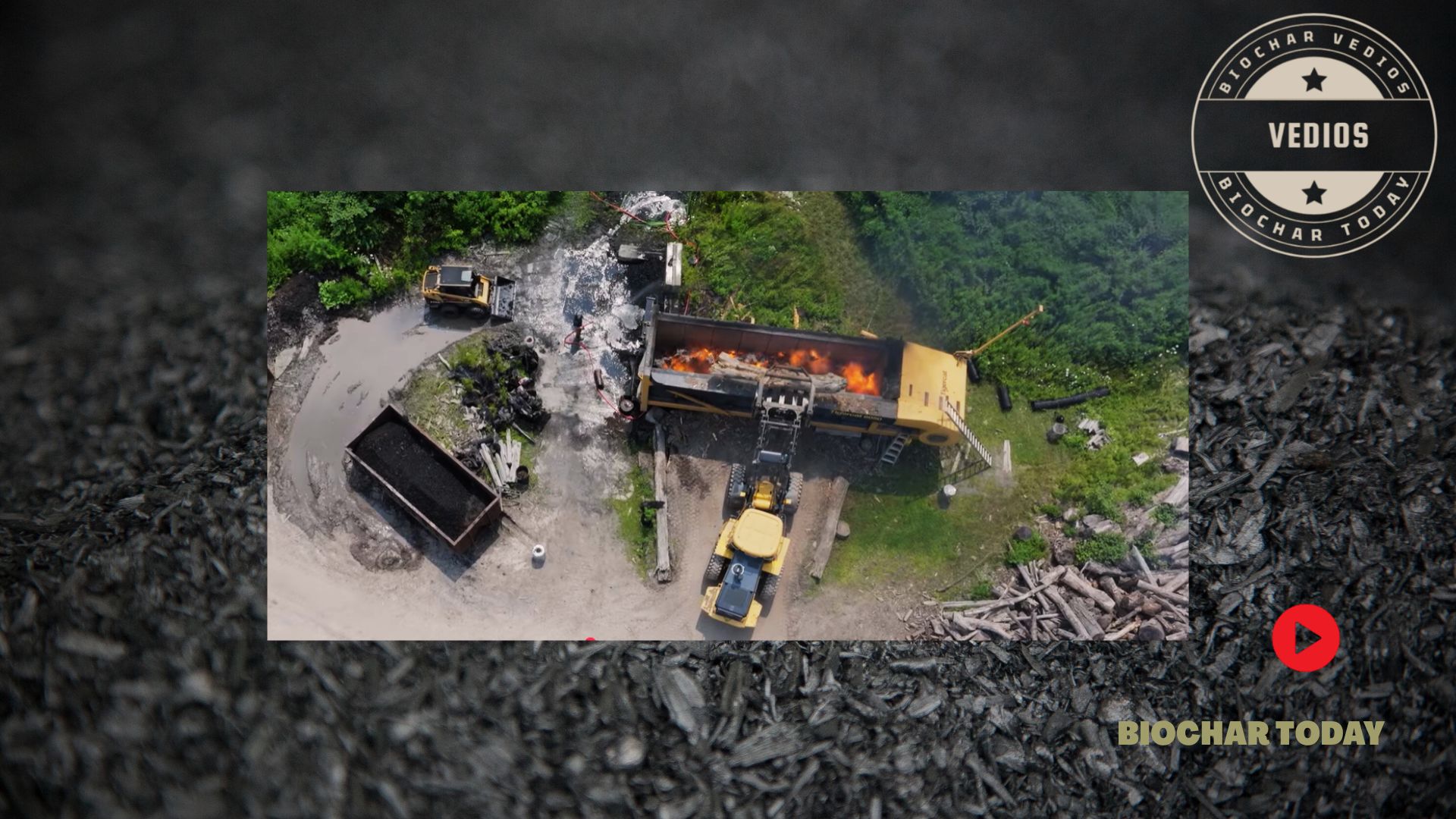
Today, we’re going to hang out deep into a fascinating process called pyrolysisPyrolysis is a thermochemical process that converts waste biomass into bio-char, bio-oil, and pyro-gas. It offers significant advantages in waste valorization, turning low-value materials into economically valuable resources. Its versatility allows for tailored products based on operational conditions, presenting itself as a cost-effective and efficient More. It’s a thermochemical treatment that can transform waste biomassBiomass is a complex biological organic or non-organic solid product derived from living or recently living organism and available naturally. Various types of wastes such as animal manure, waste paper, sludge and many industrial wastes are also treated as biomass because like natural biomass these More into biocharBiochar is a carbon-rich material created from biomass decomposition in low-oxygen conditions. It has important applications in environmental remediation, soil improvement, agriculture, carbon sequestration, energy storage, and sustainable materials, promoting efficiency and reducing waste in various contexts while addressing climate change challenges. More and other valuable products. So, let’s turn up the heat and get started.
What is Pyrolysis?
Pyrolysis is the thermal decomposition of organic materials in an environment without oxygen, under temperatures ranging from 250 to 900 °C. Think of it like cooking, but instead of using a stove, we’re using a process that breaks down materials by heating them in the absence of oxygen. This process is a clever way to convert waste biomass into useful stuff like biochar, syngasSyngas, or synthesis gas, is a fuel gas mixture consisting primarily of hydrogen and carbon monoxide. It is produced during gasification and can be used as a fuel source or as a feedstock for producing other chemicals and fuels. More, and bio-oil.

The Pyrolysis Process
During pyrolysis, the main components of biomass, namely cellulose, hemicellulose, and lignin, undergo some exciting chemical reactions:
- Depolymerization: Breaking down large molecules into smaller ones.
- Fragmentation: Cracking these molecules into even smaller pieces.
- Cross-linking: Forming new bonds between the molecules.
These reactions occur at specific temperatures and result in the production of solid (char), liquid (bio-oil), and gaseous products. The gaseous products include carbon dioxide, carbon monoxide, hydrogen, and syngas (a mixture of hydrocarbons).
What Happens to Biomass During Pyrolysis?
Biomass is mainly composed of cellulose, hemicellulose, and lignin. During pyrolysis, these components break down at different temperatures and through different chemical mechanisms.
- Cellulose Decomposition: Cellulose breaks down in two main ways, depending on the pyrolysis speed. Slow pyrolysis involves decomposition at a slower heating rate over a longer period, while fast pyrolysis occurs at a high heating rate, quickly vaporizing the cellulose and producing levoglucosan. This levoglucosan can further dehydrate into hydroxymethyl furfural, which can then decompose into liquid and gaseous products or undergo additional reactions to form biochar.
- Hemicellulose Decomposition: Similar to cellulose, hemicellulose breaks down into oligosaccharides through depolymerization. These oligosaccharides can then react further through decarboxylation, intramolecular rearrangement, depolymerization, and aromatization to produce biochar, syngas, or bio-oil.
- Lignin Decomposition: Lignin’s decomposition is more complex. It involves breaking the β-O-4 lignin linkage, which leads to the formation of free radicals. These free radicals then capture protons from other molecules, resulting in decomposed compounds and further chain reactions.
Factors Affecting Pyrolysis
Several factors influence the pyrolysis process and the yield of the products:
- Temperature: Higher temperatures generally decrease the biochar yield and increase syngas production.
- Residence TimeResidence time refers to the duration that the biomass is heated during the pyrolysis process. The residence time can influence the properties of the biochar produced. More: This is the duration the biomass spends in the pyrolysis reactor. It affects the composition of the products.
- Type of Biomass: Different biomass materials produce varying yields and types of products.
- Heating Rate: The speed at which the biomass is heated also plays a crucial role in the pyrolysis process and product distribution.
Types of Pyrolysis
Pyrolysis can be classified into two main types, based on the heating rate, temperature, residence timeThis refers to the amount of time that the biomass is heated during the pyrolysis process. The residence time can influence the characteristics of the biochar, such as its porosity and surface area. More, and pressure:
- Fast Pyrolysis: This method is designed to liquefy solid biomass into liquid bio-oil, which has high energy potential. It involves:
- High heating rates (>100 °C/min).
- Short residence times (0.5-2 seconds).
- Moderate temperatures (400-600 °C).
The key to fast pyrolysis is quickly cooling the fumes to produce high-quality bio-oil.
- Slow Pyrolysis: In contrast, slow pyrolysis uses a low heating rate (around 5-7 °C/min) and a longer residence time (more than 1 hour). This method is ideal for producing a higher yield of biochar, which can be used to improve soil quality.
So, there you have it – a basic understanding to pyrolysis! It is a versatile and promising thermochemical process that offers a sustainable pathway for converting biomass into valuable biochar, bio-oil, and syngas. By understanding the underlying science – from the decomposition of cellulose, hemicellulose, and lignin to the influence of key factors like temperature and residence time – we can fine-tune pyrolysis to meet specific needs. Whether it’s producing biochar to enrich soils or generating bio-oil for energy, pyrolysis stands out as a key technology in the quest for a more sustainable and circular economy.
So, let’s continue to explore and innovate in this exciting field, turning waste into worth and contributing to a healthier planet.
References
Yaashikaa, P. R., Kumar, P. S., Varjani, S., & Saravanan, A. J. B. R. (2020). A critical review on the biochar production techniques, characterization, stability and applications for circular bioeconomy. Biotechnology reports, 28, e00570. https://doi.org/10.1016/j.btre.2020.e00570
Khater, ES., Bahnasawy, A., Hamouda, R. et al. Biochar production under different pyrolysis temperatures with different types of agricultural wastes. Sci Rep 14, 2625 (2024). https://doi.org/10.1038/s41598-024-52336-5
Li, Y., Gupta, R., Zhang, Q., & You, S. (2023). Review of biochar production via crop residue pyrolysis: Development and perspectives. Bioresource technology, 369, 128423. https://doi.org/10.1016/j.biortech.2022.128423
Kavan Kumar V, N L Panwar, Pyrolysis technologies for biochar production in waste management: a review, Clean Energy, Volume 8, Issue 4, August 2024, Pages 61–78, https://doi.org/10.1093/ce/zkae036
Manyà, J. J. (2012). Pyrolysis for biochar purposes: a review to establish current knowledge gaps and research needs. Environmental science & technology, 46(15), 7939-7954. https://doi.org/10.1021/es301029g
Premchand, P., Demichelis, F., Chiaramonti, D., Bensaid, S., & Fino, D. (2023). Biochar production from slow pyrolysis of biomass under CO2 atmosphere: a review on the effect of CO2 medium on biochar production, characterisation, and environmental applications. Journal of Environmental Chemical Engineering, 11(3), 110009. https://doi.org/10.1016/j.jece.2023.110009



Leave a Reply