
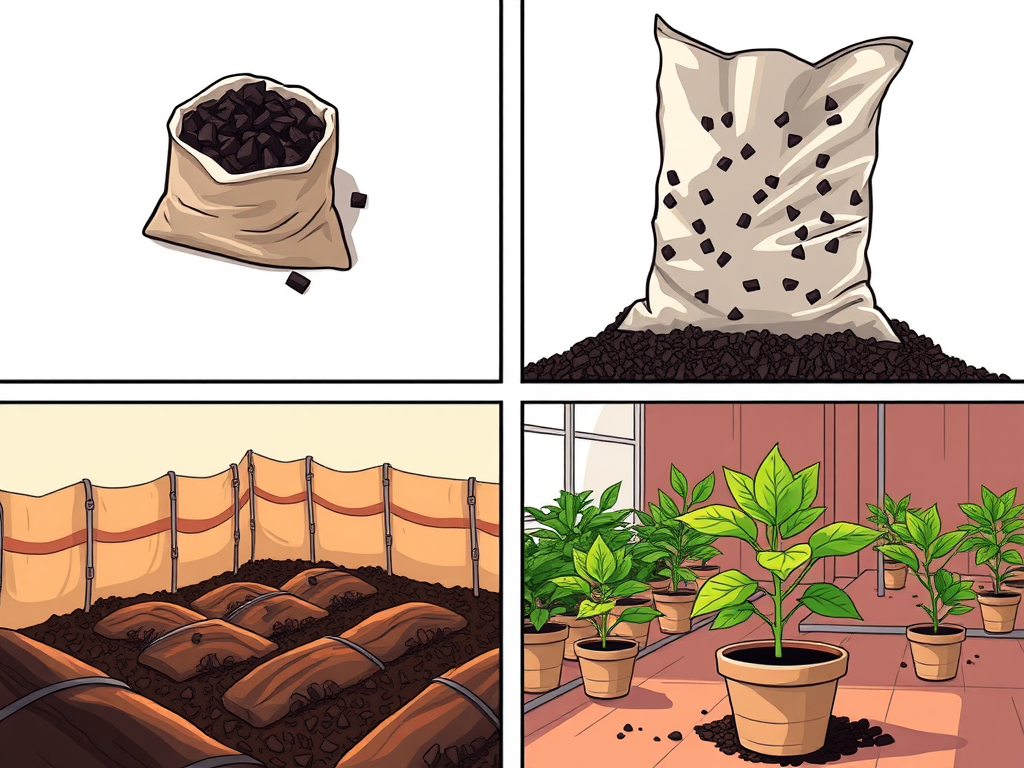
When I first started making biocharBiochar is a carbon-rich material created from biomass decomposition in low-oxygen conditions. It has important applications in environmental remediation, soil improvement, agriculture, carbon sequestration, energy storage, and sustainable materials, promoting efficiency and reducing waste in various contexts while addressing climate change challenges. More, I had vague dreams of bags of the stuff sitting neatly in a garden centre, my logo proudly stamped on the side, maybe even a few curious customers stopping to ask what it is. The reality, as I’ve found over the past year, is a lot more complicated. Selling biochar is not like selling tomatoes or firewood – it’s a product that still needs explaining, even to the most soil-savvy people.
Talking to Garden Centres
I spoke with a couple of local garden centers about biochar. Most were unfamiliar with it, but those who were cited cost as a barrier. I anticipated they would be interested in retailing it, but they were also curious about using it in their own soil.
With peat banned in compost in the UK, many garden centers are struggling with increased water consumption due to poor soil water retention. One manager mentioned they’d used nearly double the water compared to the previous year. This is where biochar, with its porous structure, can help by improving a soil’s ability to hold water, preventing drought stress and reducing water usage.
Nevertheless, as a product/solution, the sticking point for biochar was always the same:
“Can you supply it consistently, at volume, and at a price customers will pay?”
Accepting the Limitations of Scale
Producing biochar on a small scale presents a tricky but manageable challenge. My double-barrel retort can produce a decent amount, but not enough for large commercial orders. The running costs, however, are negligible, making it easier to calculate potential profit.
A basic system like mine yields 10-15kg (40-50L) per burn. If I were doing this five days a week, I could complete about 10 burns, each taking 4-5 hours. While scaling up to multiple burners is the smart long-term move, starting with a single unit is the best way to begin. This approach allows a small producer to find their footing and understand the process.
Production Volume and Income
Using this logic, I could potentially make 100-150kg of biochar a week (400-500L). And this is where decisions are made. This output is definitely not sufficient to supply to farmers, which is a shame as that is where some of the biggest impact potential lies. However, it could be utilised or sold within garden centres, as the scale would be more attainable. The options I encountered then became clear, although there may be alternatives I have not considered:
Sell char in small batches, as little 5-15L bags.
This represented the smallest level of impact but definitely the most profitable route for me at the scale I could produce. It would require a large degree of dissemination, collaboration and likely marketing; but this would position the char I made as a premium product. Therefore, commanding premium profit margins. To start offering a more holistic product, I also considered…
Selling pre-charged biochar that I had mixed with compost, manure and/or fertiliser.
Doing this would ensure better use of the char, as I could control the inoculation more closely than if I sold it ‘uncharged’. It would also result in similar financial upside. Say I buy a 50L bag of compost, if purchasing at scale for £7; I assume I could likely retail it to garden centres for £8.50-9.50, which could then be sold depending on their pricing systems (they vary quite considerably). This would be around £2 per bag, using around 0.5-1kg only, giving me a decent return. However, this approach would likely require a lot of additional work, particularly in packaging and marketing.
Sell char in bulk to garden centres for them to mix with compost, for use in their centres – particularly for plants.
This approach seemed the most logical, until I spoke with garden centre managers who noted that many of their plants came from external nurseries, so this wouldn’t be suitable for most applications. This of course led me to consider…
Selling char in bulk to plant nurseries that could mix it in with their root mixes and potting blends.
This would integrate biochar further up the supply chain, which would improve the overall health and longevity of the plant, improving the nursery’s product quality and reducing the water needs for the retailer.
Unfortunately, things come back to money, and the larger I scale up the retailing of the char, the more money I stood to lose, as I could sell small bags of pure char (2-4kg) for £10-20. Whereas selling to nurseries or other forms of wholesalers, that price could drop to £20-30 per ‘builder’s bag’ of infused compost they sold, equating to 20-25kg of actual char, assuming around a 5% weight percentage of biochar to compost. Equating to around £1/kg vs £5/kg – a very substantial difference.
Key Takeaways
Selling biochar is possible, even at scale, but it’s not a quick or simple revenue stream. At the small scale, it works best when you think of it as a byproduct of good land management, rather than a stand-alone business. If you can sell some here and there, brilliant. But if you can’t, using it in your own gardens, orchards, or fields is still a win – for your soil, for the carbon it locks away, and for the satisfaction of closing the loop on your local biomassBiomass is a complex biological organic or non-organic solid product derived from living or recently living organism and available naturally. Various types of wastes such as animal manure, waste paper, sludge and many industrial wastes are also treated as biomass because like natural biomass these More.
For me, the conversations I have with hypothetical buyers have been worth it, even if they didn’t all turn into sales. Every time I explain what biochar is and why it matters, I’m planting a little seed of curiosity. And who knows? In a few years, when biochar is more widely understood, those seeds might just grow into something worth bagging up by the palletload.


Leave a Reply