
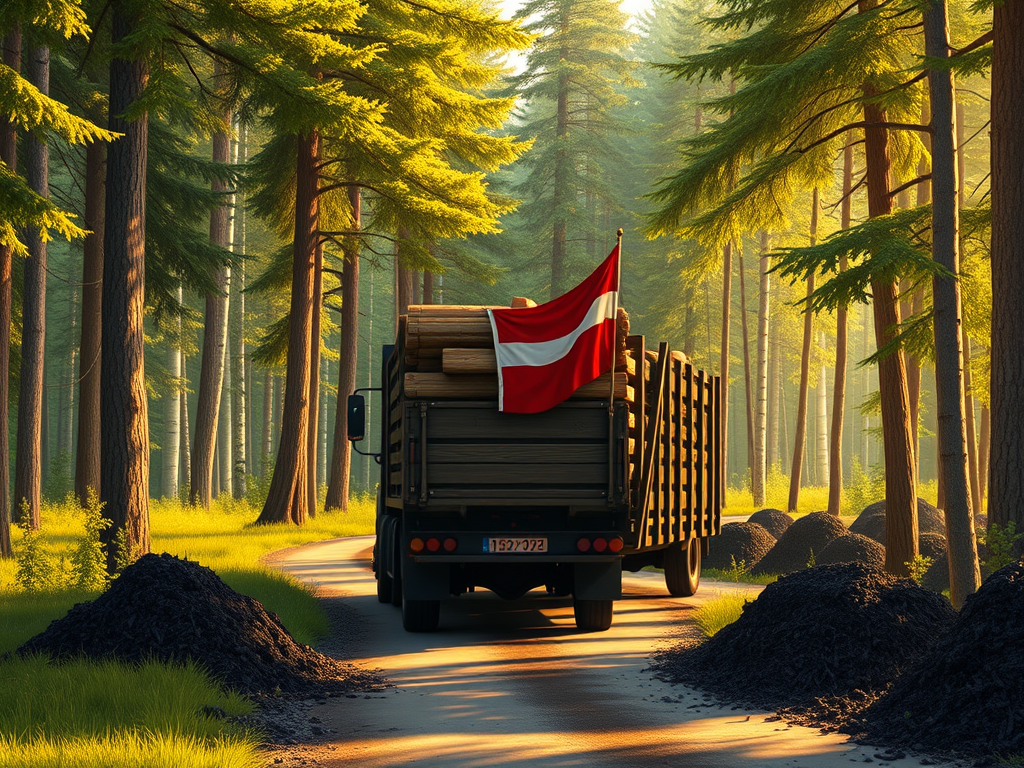
I’ve spent years exploring the incredible potential of biocharBiochar is a carbon-rich material created from biomass decomposition in low-oxygen conditions. It has important applications in environmental remediation, soil improvement, agriculture, carbon sequestration, energy storage, and sustainable materials, promoting efficiency and reducing waste in various contexts while addressing climate change challenges. More, so I’m always on the lookout for a great story. This week, I found one in a place you might not expect: Latvia. Known as the “green heart” of the Baltics, this country is covered in forests—they make up more than half its land. On the surface, it looks like a climate success story. But beneath the canopy, Latvia is facing a significant and surprising environmental crisis.
In a recent piece for our “Nations of Biochar” series, I took a deep dive into Latvia’s climate challenges. As I uncovered the data, I was struck by a powerful contradiction. Despite its lush landscape, Latvia’s timber industry—a cornerstone of its economy—has inadvertently turned the country’s forests from a carbon sink into a carbon source. This is a red flag for a nation with ambitious climate goals, and it’s an issue that requires a creative and powerful solution.
The problem, as I see it, isn’t the forests themselves but what we do with the waste they produce. Latvia’s booming timber and agricultural sectors generate enormous amounts of brash, sawdust, and other by-products. All too often, this valuable biomassBiomass is a complex biological organic or non-organic solid product derived from living or recently living organism and available naturally. Various types of wastes such as animal manure, waste paper, sludge and many industrial wastes are also treated as biomass because like natural biomass these More is left to rot, burned, or dumped—releasing the carbon it once stored back into the atmosphere. This is a massive missed opportunity and a direct contributor to the country’s climate obstacles. The timber industry supports the livelihoods of around 7% of the countries population and incorporating new value chains into the industry would likely bolster employment in the sector.
But what if this waste could become a solution? This is where biochar enters the picture. In my article, I explore how Latvia could turn this environmental liability into a strategic advantage, transforming its biggest climate challenge into a cornerstone of a new circular bioeconomy. I look at the incredible scale of this opportunity—quantifying the immense volume of forestry and agricultural waste available and modeling just how much biochar could be produced. The numbers are frankly staggering and show how this one change could make a major dent in Latvia’s carbon emissions.
I also discovered that Latvia isn’t starting from scratch. There’s a nascent but powerful ecosystem of research and industry players already laying the groundwork for a biochar revolution. From the Latvian State Institute of Wood Chemistry (LSIWC) to innovative producers like SIA “KRK Vidzeme,” the pieces are already in place for a national-scale transformation.
This isn’t just about a single country. It’s about a blueprint. The “Nations of Biochar” series is all about finding these tipping points—moments where a country can harness an existing strength to solve a major problem. Latvia’s journey from a carbon liability to a global leader in climate solutions is a fascinating case study in how we can rethink our waste streams and build a more resilient future.
If you’re interested in the full story—including a deep dive into the numbers and a detailed roadmap for Latvia’s biochar-powered future—you can read the full article by becoming a member. In the meantime, I’m already thinking about which nation to cover next. Do you have any ideas? Let me know which country you’d like me to explore!
Reach out via LinkedIn: Ralph Green



Leave a Reply