
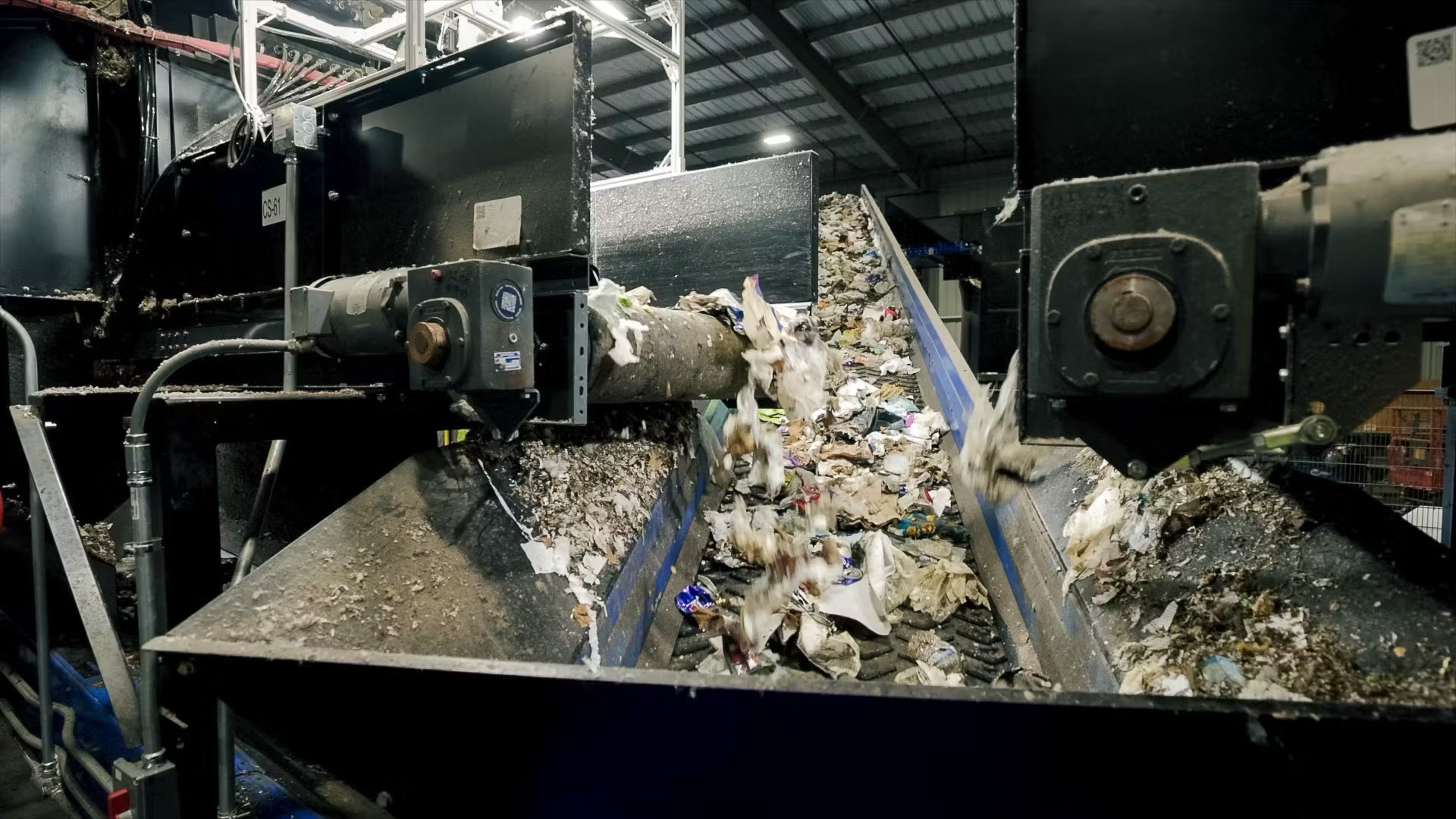
The need for sustainable waste management is driving innovation across the globe, with a particular focus on resource recovery and carbon sequestration. Within this evolving landscape, AMP (formerly AMP Robotics) is making a notable strategic pivot by integrating large-scale biocharBiochar is a carbon-rich material created from biomass decomposition in low-oxygen conditions. It has important applications in environmental remediation, soil improvement, agriculture, carbon sequestration, energy storage, and sustainable materials, promoting efficiency and reducing waste in various contexts while addressing climate change challenges. More production into its AI-driven waste processing operations.
AMP’s Foundation: Precision Sortation as a Biochar Enabler
AMP’s decade-long experience in AI-powered sortation forms the bedrock of its biochar initiative. The company was founded on the principle of applying artificial intelligence and robotics to enhance the efficiency and accuracy of recycling and waste sorting. With over 400 systems currently deployed across diverse waste streams—including recyclables, construction, and demolition (C&D) debris, and organics—AMP has amassed an extensive dataset, characterizing billions of individual waste items annually. The biggest problem with MSW is the sorting of organics, ferrous, nonferrous, and plastic materials from the incoming waste stream. AMP’s devices physically extract and sort selected pieces of waste from conveyor belts at speeds up to 600 feet per minute with high accuracy. As AMP’s Jake Fitzgerald states, they have “spent ten years characterizing waste… identifying about 50 to 70 billion individual pieces of trash a year.” This granular understanding of material composition is critical, enabling AMP to produce exceptionally pure organic feedstockFeedstock refers to the raw organic material used to produce biochar. This can include a wide range of materials, such as wood chips, agricultural residues, and animal manure. More, a prerequisite for high-quality biochar.
The proprietary machine vision and neural network systems allow AMP to identify and sort waste at speeds at thousands of objects per minute, significantly surpassing manual capabilities. This efficiency, coupled with the ability to dynamically adjust sorting parameters based on real-time data, ensures that the organic stream directed for biochar conversion is consistently high in purity, minimizing contaminants that could compromise the end product’s utility. This full automation and vertical integration of their technology stack provides AMP with a distinct advantage in controlling the feedstock quality, which is paramount for a successful biochar operation.
The Strategic Imperative: Biochar from MSW Organics
While AMP initially explored various organic waste treatment technologies, including anaerobic digestion and composting, the focus converged on biochar production for municipal solid waste (MSW)Municipal Solid Waste (MSW) is the everyday trash or garbage produced by households and businesses. It includes a variety of materials, such as food scraps, paper, plastics, and yard waste. MSW forms a potential feedstock category for biochar production provided that it should be free More organics. The decision was driven by the relative maturity and scalability of pyrolysisPyrolysis is a thermochemical process that converts waste biomass into bio-char, bio-oil, and pyro-gas. It offers significant advantages in waste valorization, turning low-value materials into economically valuable resources. Its versatility allows for tailored products based on operational conditions, presenting itself as a cost-effective and efficient More technology for this specific application, alongside the inherent benefits of carbon sequestration. As AMP’s Carling Spelhaug noted, “We landed on biochar because it was the most mature solution to implement to hit the ground running with the organics.”
AMP’s pilot facility in Virginia exemplifies this strategic direction. This facility is designed and engineered to process 25 tons of MSW per hour, efficiently separating traditional recyclables and, crucially, extracting a high-purity organic stream. The yield is an organic fraction that is 90% or more pure, which then serves as the feedstock for biochar conversion via pyrolysis. AMP’s role here is not as a pyrolysis equipment manufacturer, but as a specialist in feedstock preparation, partnering with third-party vendors for the pyrolysis units themselves. This approach allows AMP to leverage existing expertise in pyrolysis while focusing on its core strength: producing clean, consistent organic input.
Expanding Biochar Applications and Value Proposition
The ultimate utility and market for MSW-derived biochar are crucial considerations. Given the inherent heterogeneity of MSW and the potential for trace contaminants, direct application in food agriculture is generally avoided. Instead, AMP is concentrating on specific, high-volume industrial and environmental applications where the benefits of biochar can be fully realized without posing undue risks.
A primary application identified is its use as an alternative daily cover (ADC) for landfills. Incorporating biochar into landfill operations offers several compelling advantages:
- Mass Reduction: Converting a portion of the organic waste to biochar significantly reduces the volume of material requiring landfill space, thereby extending the lifespan of existing landfills. This is particularly valuable for regions facing land scarcity and stringent environmental regulations.
- Methane Mitigation: Diverting organics from anaerobic decomposition in landfills and converting them into stable carbon reduces the generation of methane (CH4), a potent greenhouse gas. While biochar application as an ADC might not directly remove methane, it can contribute to a reduction in overall emissions from the landfill.
- Odor Control: Biochar’s porous structure can absorb and neutralize odors associated with decomposing waste, improving site conditions for landfill operators and nearby communities.
- Water Retention: When blended with soil or used as a cover, biochar can enhance water retention properties, which can be beneficial in certain landfill management practices.
Beyond landfill applications, AMP is actively exploring industrial uses, notably as an additive or substitute in construction materials like concrete and asphalt. The potential for biochar to improve the strength, durability, or thermal properties of these materials is an area of ongoing research across the industry. Furthermore, the stable carbon content of biochar makes it a viable candidate for carbon removal markets, with potential for carbon credit certification. This represents an additional revenue stream and aligns with broader climate goals, positioning MSW-derived biochar as a dual-purpose product: waste solution and carbon sink.
Scaling Up: The SPSA Project
AMP’s ambition to scale biochar production is underscored by its forthcoming collaboration with the Southeastern Public Service Authority (SPSA) in Virginia. This project represents a significant leap from the current pilot, with plans to process 500,000 tons of MSW annually. Of this, an estimated 250,000 tons of organics will be directed for biochar conversion, yielding approximately 80,000 tons of biochar per year.
This undertaking validates AMP’s “sortation as a service” business model, where the company assumes responsibility not just for technology provision but also for operational management and maintenance. For municipalities like SPSA, this comprehensive approach offers a de-risked pathway to achieving substantial waste diversion targets—potentially up to 50-60% of incoming waste—and extending landfill lifespans well into the future, potentially through the end of the century. As Biochar Today’s technical advisor, Don Harfield notes regarding the project, it represents “the very real practical solutions to keeping landfills open longer.” The project’s scale and its long-term contract structure highlight a growing confidence in MSW-to-biochar solutions as a viable and sustainable component of regional waste infrastructure.
Navigating Challenges in Biochar Production
While the opportunities are substantial, the transition from mixed solid waste to a consistent biochar product is not without its challenges. The inherent variability of MSW feedstock is a primary concern, particularly regarding moisture content, which can fluctuate significantly and impact pyrolysis efficiency. Maintaining high system uptime in the demanding, abrasive environment of waste processing is also a continuous operational challenge.
AMP addresses these by leveraging its AI foundation. AMP’s AI drives sortation systems that are removing contamination from the organics that are later pyrolyzed into Biochar. This AI runs live on the edge and has been trained on AMP’s massive dataset of organics images. AMP’s dedicated team of data professionals and “labelers”, who analyze images and AI predictions, allows for rapid identification of anomalies and ongoing refinement of the neural network models. As Jake Fitzgerald explains, “We have a dedicated team of labelers.. who are reviewing images., looking for exceptions, and improving the neural network models on a daily basis.” This iterative feedback loop helps the system adapt to new materials or unexpected issues, ensuring consistent feedstock quality and, by extension, more stable biochar production. The robust AI system’s ability to maintain high precision and recall, even with diverse and variable input, directly mitigates some of the most common hurdles in large-scale waste-to-resource operations.
Outlook: Expanding Biochar’s Role
Looking forward, AMP is poised to solidify its leadership in automated waste processing, with biochar production central to its growth strategy. Beyond its established value proposition in landfill management, the company continues to explore novel, high-value applications for its MSW-derived biochar. The pursuit of rigorous carbon removal certification is a strategic move, positioning AMP to access and contribute to the rapidly growing voluntary and compliance carbon markets.
The industry’s broader interest in integrating biochar into materials like concrete and asphalt suggests a nascent yet promising market. While widespread adoption will require continued research, standardization, and demonstration of consistent product properties, AMP’s capacity to produce a durable, carbon-rich biochar places it favorably to capitalize on these emerging opportunities. As the global push for circular economy principles and effective carbon sequestration intensifies, AMP’s pragmatic and technologically driven approach to transforming municipal solid waste into a valuable, climate-positive resource positions it as a significant contributor to a more sustainable future.



Leave a Reply