

Dr. Lakshmi Durga Mattaparthi is an agricultural engineer and biocharBiochar is a carbon-rich material created from biomass decomposition in low-oxygen conditions. It has important applications in environmental remediation, soil improvement, agriculture, carbon sequestration, energy storage, and sustainable materials, promoting efficiency and reducing waste in various contexts while addressing climate change challenges. More researcher whose work bridges advanced thermochemical science with real-world sustainability challenges. With a PhD from the Indian Agricultural Research Institute and current engagement as a National Consultant at theInternational Rice Research Institute, India her research focuses on transforming agricultural residues—particularly paddy straw—into high-value porous carbon materials through pyrolysisPyrolysis is a thermochemical process that converts waste biomass into bio-char, bio-oil, and pyro-gas. It offers significant advantages in waste valorization, turning low-value materials into economically valuable resources. Its versatility allows for tailored products based on operational conditions, presenting itself as a cost-effective and efficient More and activation technologies. Her work directly addresses critical issues of crop-residue burning, air pollution, and climate-smart resource management.
Recognized for her rigorous contributions to biochar science, Dr. Mattaparthi has authored peer-reviewed studies in leading journals, advancing understanding of biomassBiomass is a complex biological organic or non-organic solid product derived from living or recently living organism and available naturally. Various types of wastes such as animal manure, waste paper, sludge and many industrial wastes are also treated as biomass because like natural biomass these More degradation, adsorption behavior, and carbon material design. Her expertise spans biochar for soil and water remediation, pollution control, and emerging energy applications, positioning her at the forefront of efforts to convert agricultural waste into scalable solutions for circular bioeconomies and climate resilience.
It is a privilege to bring her voice to our platform and offer our readers the opportunity to engage with her insights on biochar science and climate-smart innovation
Shanthi Prabha : Lakshmi, your journey spans agricultural engineering, pyrolysis, and high-porosity carbon from paddy straw—what was the moment that made you realize, “This is where I can make a real difference”?
Dr. Lakshmi Durga Mattaparthi: During my doctoral research, when I first saw paddy straw, it widely treated as a waste and burned in field and transform into a structured, high-porosity carbon material, it felt like a turning point. That moment connected multiple challenges at once: residue burning, air pollution, and the need for sustainable materials. Realizing that a locally abundant agricultural residue could be converted into something scientifically valuable and environmentally meaningful made me confident that this is where my work could truly create impact.
SP: What drew you to work specifically with agricultural residues like paddy straw, a material often seen as waste but now a powerful climate solution?
LM: As an agricultural engineer, I’ve always wanted my research to stay connected to farmers and real field problems. Paddy straw is everywhere in India, yet it’s treated as a burden rather than a resource. Once I understood its rich biopolymer composition, I saw its potential. Working with such a material allows science to directly address real, visible environmental problems.
SP: In simple terms for our readers—how does paddy straw transform into high-value biochar or porous carbon, and why is this transformation so important today?
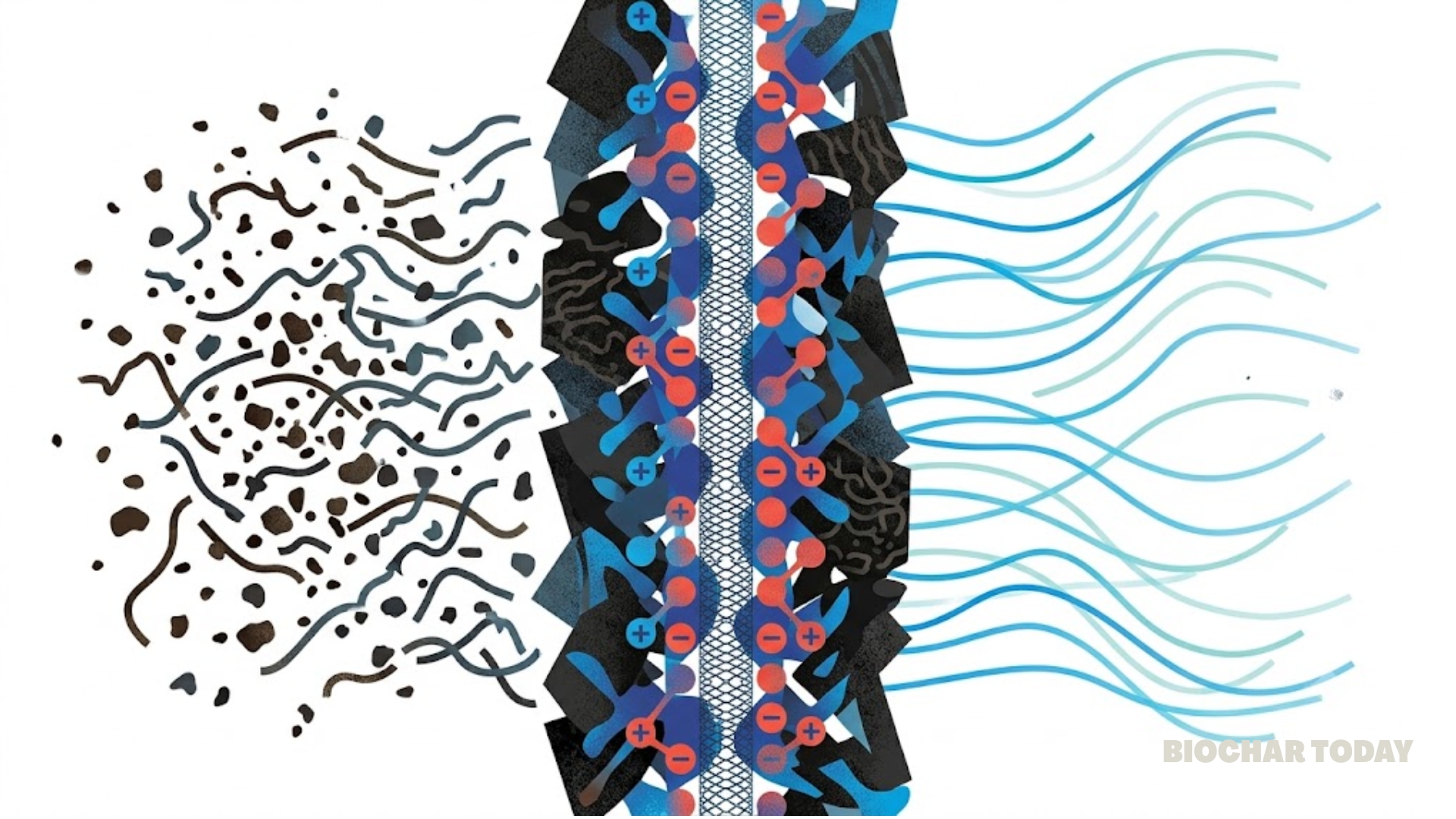
LM: The process is quite simple. Paddy straw is heated in the absence of oxygen, which turns it into a carbon-rich material called biochar. We then activate it using steam or carbon dioxide to create tiny pores across its surface. This step is what gives it value. This transformation is crucial because it converts a pollution causing waste into a material that can clean water, improve soils, and even help fight climate change.
SP: Your work explores pyrolysis, activation, and adsorption—what is the most exciting scientific insight you’ve discovered about how biochar actually works?
LM: What excites me most is how sensitive biochar is to processing conditions. Small changes in temperature or activation method can completely change its structure and behaviour. For example, CO₂ activation enhances microporosity, while steam activation creates larger pores, each suited to different applications. The design of biochar properties through controlled processing makes it for specific applications.
SP: Crop residue burning is a major environmental issue in India. How can biochar offer a practical, scalable alternative for farmers and policymakers?
LM: Biochar offers a solution that enhance the rural livelihoods. Instead of burning residues, farmers can convert them into something useful and even profitable. farmers can channel them into decentralized pyrolysis systems, producing biochar that can be reused on farms or sold as a value-added product. For policymakers, biochar fits perfectly into climate smart agriculture, pollution control, and carbon sequestration strategies.
SP: Many people think of biochar only for soil health, but your research shows applications in water purification, supercapacitors, and pollution control. Which application excites you the most—and why?
LM: While soil applications are important, I’m especially excited about biochar’s role in adsorption and energy storage. It’s incredibly rewarding to see a material made from agricultural waste perform well in advanced applications like water purification and supercapacitors. It challenges the idea that high performance materials must come from expensive or non renewable sources.
SP: What are the biggest challenges in taking biochar technologies from controlled lab studies to real-world farming systems?
LM: The biggest challenge is moving from controlled conditions to real life variability. In the field, residue quality, moisture, and farming practices all differ. Ensuring consistent biochar quality at scale, keeping costs low, and clearly demonstrating benefits to farmers are key hurdles. Also, farmers need clear evidence of benefits, simple application methods, and policy incentives to adopt biochar at scale.
SP: At the International Rice Research Institute, how does your work contribute to sustainable rice systems and climate-smart agriculture?
LM: I have worked on composting rice straw using a mechanical turner, with the dual objectives of reducing compost maturity time and evaluating the turner’s performance under Indian conditions. I also developed expertise in mechanized rice establishment methods, including Direct Seeded Rice (DSR). Additionally, I collected greenhouse gas (GHG) samples from rice–wheat systems and contributed to report writing, documentation, and data management to support accurate and impactful research outcomes. To summarise, my work supports efforts to improve residue management and reduce environmental impacts in rice systems. By integrating mechanization, residue utilization, and climate-smart practices, the research helps promote alternatives to burning. It strengthens the idea that sustainability in rice systems must combine engineering, agronomy, and climate science.
SP: As a woman scientist in a highly technical field, what has your journey been like—and what message would you share with young women entering agricultural engineering and bioenergy research?
LM: My journey as a woman scientist in agricultural engineering hasn’t always been easy, but it has been very fulfilling. Working in a technical field required resilience, self-belief, and a commitment to lifelong learning, often alongside societal expectations, especially as a woman. To young women, I would say don’t limit yourself do not hesitate to enter core engineering and energy research spaces. Engineering and bioenergy research need your ideas, your skills, and your perspective. If you’re passionate, you absolutely belong here.
SP: Looking ahead 10 years, how do you see biochar shaping sustainable agriculture, circular carbon economies, and climate resilience?
LM: I believe biochar will become an important part of sustainable agriculture and carbon management strategies. By converting surplus agricultural residues into long-lived carbon, biochar will support circular carbon economies, reduce dependence on residue burning, and create new value chains for farmers. It can help close carbon loops, improve soil and water systems, and reduce dependence on fossil-based materials. In the coming years, biochar has the potential to move from research labs into mainstream climate solutions. At scale, biochar systems can simultaneously address climate mitigation, soil health restoration, and farm profitability, positioning agriculture as a resilient and climate-positive sector.
SP: What does a typical day look like for you—are you more at home in the lab, the field, or buried in data and papers?
LM: My days are usually a mix of all three. During my PhD in agricultural engineering, I divided time between the lab preparing and characterizing biochar from paddy straw and intensive data analysis and research writing. Afterward, at the International Rice Research Institute, my work became more field-oriented, monitoring crop growth and evaluating paddy-straw-based compost under real farming conditions. At present, motherhood defines my daily rhythm, yet I remain closely connected to my discipline through continuous reading, critical thinking, and shaping ideas for future research and field engagement.
SP: If biochar were a person, how would you describe its personality—and where can our readers follow your work to stay updated on your latest research and innovations?
LM: If biochar were a person, I would describe it as quietly powerful humble in origin but capable of remarkable transformation. It doesn’t demand attention, yet it delivers long-term benefits across systems. Readers can stay connected with my work through my professional engagements, research publications, and knowledge-sharing platforms, where I aim to contribute insights on biochar, residue management, and climate-resilient farming practices.
Our readers can track the research works of Dr Lakshmi at:
https://www.researchgate.net/profile/Mattaparthi-Lakshmi-Durga?
https://www.linkedin.com/in/lakshmi-durga-mattaparthi-631345128




Leave a Reply