
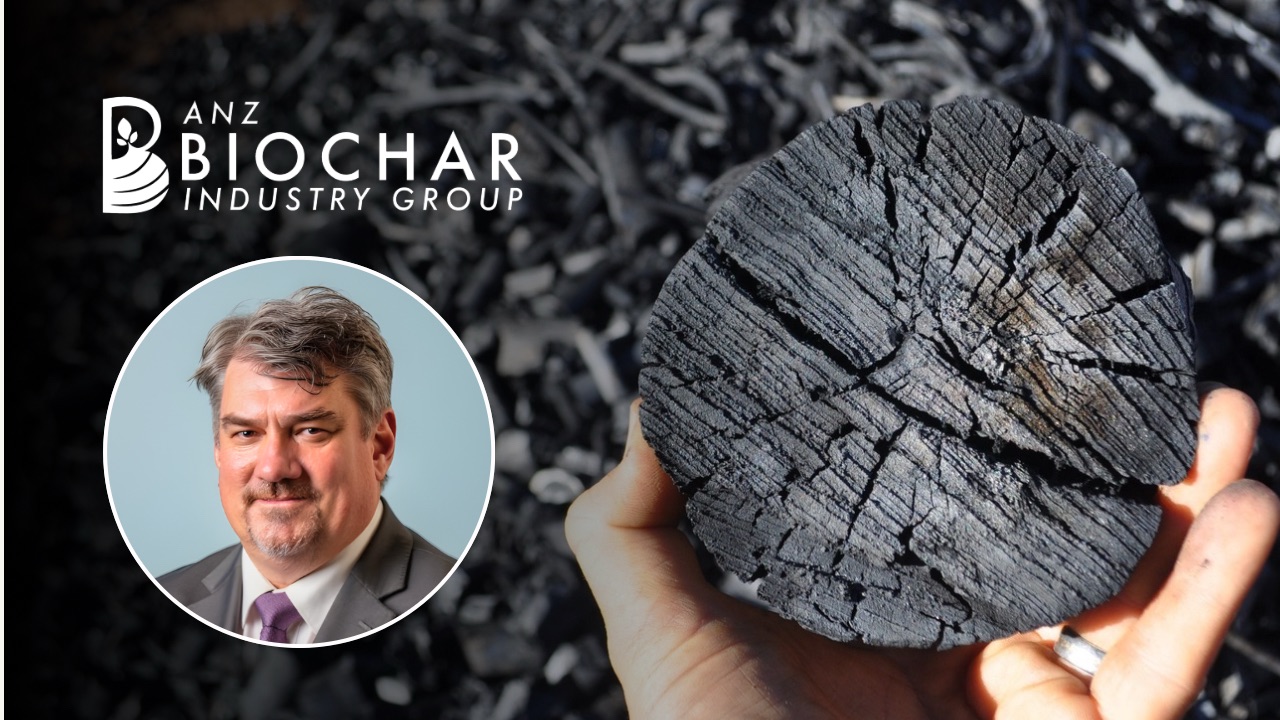
The journey to establish a professional biocharBiochar is a carbon-rich material created from biomass decomposition in low-oxygen conditions. It has important applications in environmental remediation, soil improvement, agriculture, carbon sequestration, energy storage, and sustainable materials, promoting efficiency and reducing waste in various contexts while addressing climate change challenges. More industry in Australia and New Zealand is a story of transition, scientific application, and strategic commercialization, personified by Don Coyne. Driven by a practical desire to address anthropogenic global warming, Coyne shifted from landscape gardening and permaculture to become the principal founder of the Australian New Zealand Biochar Industry Group (ANZBIG). His path illustrates the effort required to translate a passionate, voluntary movement into a robust, global industry.
The Early Transition and Commercial Imperative
The catalyst for Coyne’s shift was the Global Financial Crisis (GFC), prompting him to seek a more meaningful, climate-focused profession. An introductory workshop on the “biochar revolution,” led by Dr. Paul Taylor, provided the initial focus. This early exposure introduced him to key figures, including Professor Steven Joseph, and underscored the intellectual rigor involved, particularly regarding the optimal production temperatures for biochar in Australian soils.
His early work was grassroots and volunteer-driven, making biochar from local materials and focusing on strict quality control. This foundational commitment to product quality became essential when he began professionalizing the sector.
A significant early public engagement was the 2013 “Biochar Fest” at the Living Earth Festival. This led to a technical officer role for the New South Wales Department of Primary Industries (DPI), where he worked with Dr. Lukas Van Zwieten to measure greenhouse gas emissions on biochar trials in sugarcane fields. This experience provided him with crucial, hands-on scientific validation.
Following his DPI tenure, Coyne launched his commercial entity, Byron Biochar. The business model was pragmatic, addressing the logistical and regulatory challenges of the time: he offered a mobile biochar production service using a Kontiki kiln to produce and apply the material directly on customers’ properties. He also acted as a distributor for established commercial producers like Green Man Char, strategically mitigating the high costs and emissions associated with long-distance transport in the Australian market.
The Catalyst: Biochar, Cows, and Global Recognition
A pivotal event occurred during a financially challenging 2014 conference. Despite low attendance (about 30 people), the gathering was the venue for an introduction between Western Australian farmer Doug Pow, Professor Stephen Joseph, and Dr. Lukas Van Zwieten. This meeting initiated the development of a groundbreaking application.
Doug Pow had experimented with mixing biochar and molasses to feed his cattle, leading to the creation of biochar-laden dung. The innovation centered on the native Bubas bison dung beetle, which effectively buried this enriched manure up to 600mm deep into the subsoil. This process generated a “biochar mineral complex” deep in the pasture root zone.
The subsequent paper, “Feeding Biochar to Cows,” gained substantial international traction. Key findings demonstrated tangible benefits:
- Reduced Methane Emissions — The biochar mitigated methanogenic bacteria in the cattle’s gut.
- Increased Productivity — The converted methane led to healthier animals and higher meat production.
- Enhanced Soil Health — The process improved pasture quality, reduced nutrient runoff, and effectively built soil carbon.
This episode provided robust, real-world evidence of biochar’s multifaceted utility, serving as a powerful international reference point for the industry.
Professionalizing the Industry: The Rise of ANZBIG
Recognizing the need for a unified, commercial voice, Coyne established the initial voluntary organization, the Australian New Zealand Biochar Initiative (ANZBI), in 2017, with support from figures like Dr. Annette Cowie (whose work informed the IPCC report on biochar).
In 2020, this effort transitioned into the professional, membership-funded ANZBIG. This move was crucial to professionalize the industry and close the gap between academic research and commercial implementation. The new structure, featuring a professional board and a cluster manager, gave the industry the corporate governance and strategic focus needed for scaling.
Under Coyne’s stewardship, ANZBIG delivered several essential achievements that established the framework for the industry’s growth:
- Australian Biochar Industry 2030 Roadmap — The 2023 launch of the world’s first biochar industry roadmap, achieved through significant volunteer and fundraising efforts, became a global reference. It strategically focused on end-use markets for biochar, biocarbon, and associated products.
- National Inventory Inclusion — ANZBIG successfully advocated for the inclusion of biosolids-to-biochar production in Australia’s national greenhouse gas inventory, directly linking the industry’s work to the nation’s Paris Agreement targets.
- Australian Standard Development — The most critical enduring project is the ongoing writing of the Australian standard for the grading and quality assurance of biochar. This standard is vital for enabling a reliable accreditation scheme, which will permit the safe use of biochar across diverse, high-value markets, from premium animal feed to industrial applications in construction and metallurgy.
The Next Chapter: Commercial Focus and Legacy
Having successfully established the foundational structures, Don Coyne is transitioning out of the executive role to allow for “renewal” under new leadership, acknowledging the organization’s need for expertise in large-scale commercial scaling.
His immediate focus has returned to Byron Biochar, concentrating on commercial projects, representing technology providers, and distributing biochar and wood vinegar. This shift signifies his belief that the market is now sufficiently mature for successful, focused commercial enterprises.
Coyne’s hopes for ANZBIG remain centered on ensuring the industry’s long-term viability:
- Political Advocacy — Securing an approved method within the Australian Carbon Credit Unit (ACCU) scheme to unlock significant private sector financing.
- International Alignment — Strengthening cooperation with global bodies like the IBI and EBI.
- Sustainable Funding — Diversifying revenue through the implementation of the new certification scheme.
Don Coyne’s career demonstrates that addressing global warming is not solely an altruistic endeavor, but a necessity for long-term economic sustainability. By replacing fossil-fuel-based inputs with renewable solutions like biochar, the industry is positioned to both repair the carbon cycle and realize significant economic benefits.
Lessons Learned from the Biochar Journey
The evolution of ANZBIG and Don Coyne’s career offers valuable lessons for any emerging industry aiming to move from niche innovation to mainstream commercial viability:
- Quality Precedes Commercialization — The initial, sustained focus on strict quality control for biochar production—even in early volunteer efforts—was essential. Without establishing a reliable, high-quality product, scaling up and gaining regulatory trust would be impossible.
- The Scientific Bridge is Necessary — Successfully bridging the gap between academic research (Professor Joseph, Dr. Van Zwieten) and real-world application (the Bubas bison dung beetle trial) provided the irrefutable evidence needed to convince farmers, regulators, and international bodies of biochar’s value.
- Governance Must Evolve with Scale — The deliberate transition from the voluntary ANZBI to the professional, membership-funded ANZBIG in 2020 demonstrated the necessity of adapting governance structure. A serious, growing industry requires professional management, a formal board, and diversified funding to achieve large-scale goals like writing a national standard.
- Regulation is the Ultimate Enabler — Investing significant effort into achieving regulatory milestones—such as creating the Australian Standard and lobbying for inclusion in the ACCU scheme—is the highest-leverage activity. These frameworks are what unlock trust, insurance, and the flow of institutional capital.
- Perceived Failure Can Be a Turning Point — The poorly attended 2014 conference, which left Don in debt, ultimately facilitated the key introduction that led to the “Feeding Biochar to Cows” breakthrough. Perseverance through setbacks and maintaining connections is vital, as the greatest successes can emerge from unexpected places.
- Climate Action is an Economic Strategy — The core motivation evolved from altruism (“saving the planet”) to a recognition that repairing the carbon cycle is an economic imperative. Sustainable solutions like biochar become essential replacements for fossil-fuel-based inputs, driving not just environmental benefit but also commercial stability.





Leave a Reply