

The global challenge of climate change demands innovative solutions, and agriculture, a significant contributor to greenhouse gas (GHG) emissions, is also a key player in mitigating them. BiocharBiochar is a carbon-rich material created from biomass decomposition in low-oxygen conditions. It has important applications in environmental remediation, soil improvement, agriculture, carbon sequestration, energy storage, and sustainable materials, promoting efficiency and reducing waste in various contexts while addressing climate change challenges. More is a tool for reducing agriculture’s carbon footprint and moving us closer to net-zero emissions. But what’s the science behind this?
The Carbon Conundrum in Agriculture
Agriculture contributes to global warming primarily through the emission of carbon dioxide ( CO2), methane (CH4), and nitrous oxide (N2O). These gases are released from various farming practices, including land-use changes like deforestation, burning crop residues , and using synthetic fertilizers. For example, in 2018, 9.3 billion metric tons of CO2 equivalent was emitted worldwide because of agriculture (Mulusew & Hong, 2024). The concept of “net zero emissions” aims to balance the total amount of GHGs emitted into the atmosphere with the amount removed from the atmosphere by that sector.
Biochar to the Rescue: The Science Explained
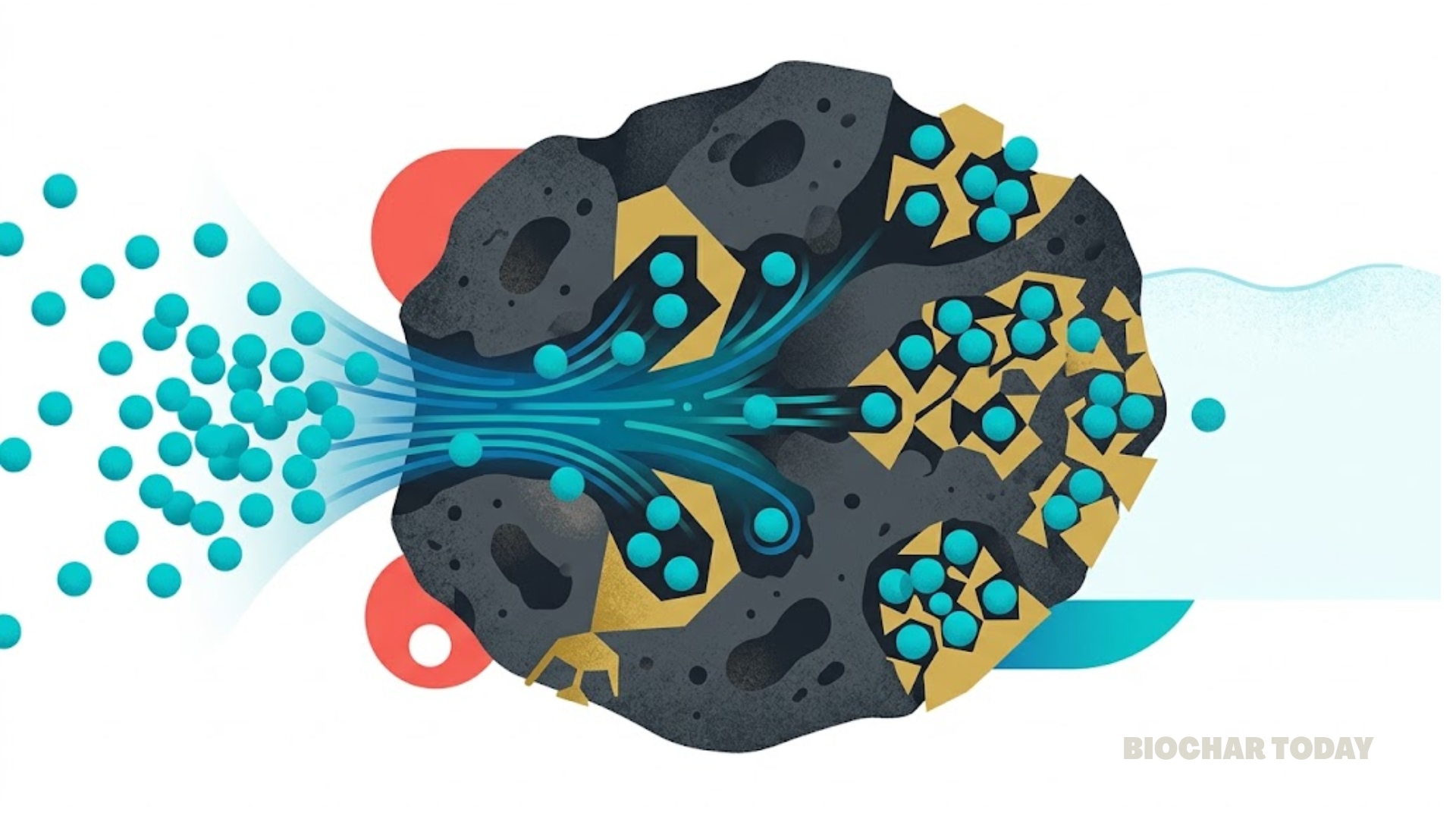
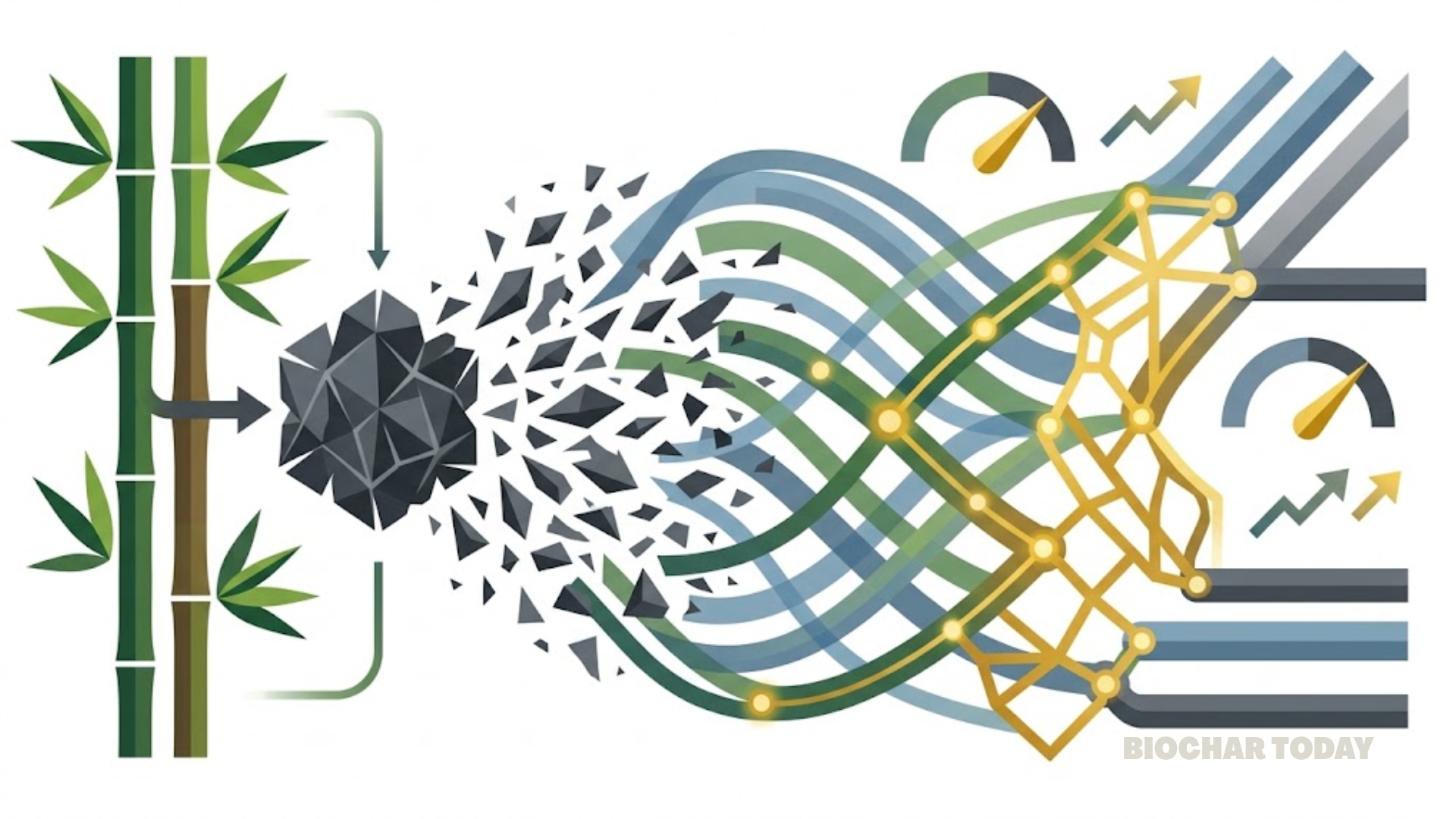
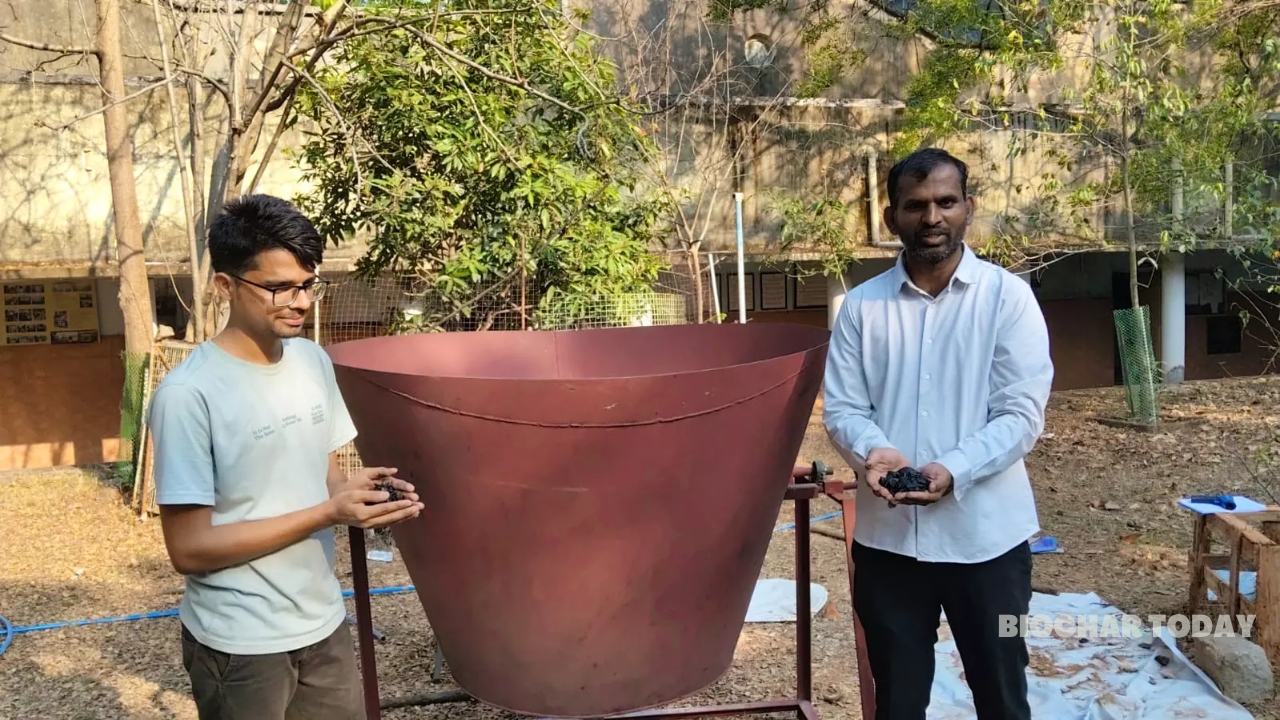
Biochar, created by heating biomassBiomass is a complex biological organic or non-organic solid product derived from living or recently living organism and available naturally. Various types of wastes such as animal manure, waste paper, sludge and many industrial wastes are also treated as biomass because like natural biomass these More (like agricultural waste) at temperatures between 350 and 700∘C in an oxygen-deficient or no-oxygen environment (pyrolysisPyrolysis is a thermochemical process that converts waste biomass into bio-char, bio-oil, and pyro-gas. It offers significant advantages in waste valorization, turning low-value materials into economically valuable resources. Its versatility allows for tailored products based on operational conditions, presenting itself as a cost-effective and efficient More). Its unique properties make it a powerful tool for carbon sequestration in soil.

Biochar helps in:
- Carbon Sequestration: Biochar acts as a stable carbon sink in the soil. Unlike untreated organic matter that decomposes relatively quickly, releasing CO2, biochar’s highly stable structure allows it to store carbon for very long periods, with a half-life typically ranging from 102 to 107 years. This directly removes CO2 from the atmosphere and locks it away in the soil. Annual biochar production has the potential to reduce net emissions of CO2, CH4, and N2O by up to 1.8 PgCO2-C−C equivalent per year (12% of current anthropogenic CO2-e emission), and total net emissions over a century by 130 Pg CO2-e. Applying biochar increases soil organic carbon (SOC) storage, essential for achieving an equilibrium of carbon and non-carbon GHG emissions in agroecosystems (Rahim et al., 2024).
- Reduction of Greenhouse Gas Emissions: Biochar helps in mitigating other potent greenhouse gases like methane (CH4) and nitrous oxide (N2O) from agricultural soils (Cayuela et al., 2013)(Jankowski et al., 2022) (Bolan et al.,2022) .
- Nitrous Oxide (N2O): Biochar application has been shown to significantly reduce N2O emissions by 19% and 15% in both field and laboratory studies, respectively, for an average reduction of 16%. This reduction is often attributed to biochar’s influence on soil microbial conversion and denitrification processes.
- Methane (CH4): In laboratory conditions, biochar application has been observed to significantly reduce CH4 emissions by 18%. Adding biochar to waterlogged paddy soil lowered CH4 and CO2 emissions.
- Carbon Dioxide (CO2): While biochar helps sequester carbon, its impact on CO2 fluxes can vary. Biochar dramatically reduced CO2 emissions by 5% in rice fields but raised them by 12% in upland areas in field trials. However, biochar application can also have a negative priming effect, inhibiting native SOC degradation and reducing CO2 emissions from native SOC by 64.9%-68.8% when combined with nitrogen amendment.
- Improving Soil Health and Productivity: Biochar enhances several soil properties, including its large specific surface area, abundant hydrophilic surface functional groups, high liming capability, and substantial cation exchange capacity. These improvements lead to increased soil fertility, improved soil structure, better nutrient availability, and enhanced soil-water retention. By increasing soil organic carbon, biochar also contributes to improved crop growth and soil productivity. Healthier soils with higher organic carbon pools are more efficient at storing carbon, thus reducing the overall carbon footprint of agricultural production systems.
- Reducing On-Farm Burning: In India, a considerable amount of biomass is produced each year, and most of the surplus biomass residues (93-141 million tons annually) are subjected to on-farm burning. This malpractice releases large amounts of GHGs, including CO2, CH4, and N2O. Converting these residues into biochar transforms a costly liability into a profitable asset, reducing GHG emissions from burning while also providing a valuable soil amendmentA soil amendment is any material added to the soil to enhance its physical or chemical properties, improving its suitability for plant growth. Biochar is considered a soil amendment as it can improve soil structure, water retention, nutrient availability, and microbial activity. More.
The Bigger Picture: A Path to Net Zero
Implementing biochar in agricultural practices is a key strategy within a broader approach to achieve net-zero emissions. This includes other climate-innovative farming methods such as conservation tillage , diversified crop rotations , improved manure and fertilizer management , and genetic enhancement of crops and animals. While the effects of biochar can vary depending on factors like feedstockFeedstock refers to the raw organic material used to produce biochar. This can include a wide range of materials, such as wood chips, agricultural residues, and animal manure. More, pyrolysis temperature, and application rate , the scientific evidence points to its strong potential in reducing agriculture’s carbon footprint. Continued research, especially in long-term, multi-regional field studies, will further solidify biochar’s role in creating a more sustainable and climate-resilient agricultural future.
References
Cayuela, M. L., Zwieten, L. Van, Singh, B. P., Jeffery, S., & Roig, A. (2013). Biochar’s role in mitigating soil nitrous oxide emissions: A review and meta-analysis. “Agriculture, Ecosystems and Environment.” https://doi.org/10.1016/j.agee.2013.10.009
Jankowski, W., Li, G., Kujawski, W., & Kujawa, J. (2022). Recent development of membranes modified with natural compounds: Preparation methods and applications in water treatment. Separation and Purification Technology, 302(September), 122101. https://doi.org/10.1016/j.seppur.2022.122101
Mulusew, A., & Hong, M. (2024). A dynamic linkage between greenhouse gas (GHG) emissions and agricultural productivity: evidence from Ethiopia. Humanities and Social Sciences Communications, 11(1), 1–17. https://doi.org/10.1057/s41599-023-02437-9
Rahim, H. U., Allevato, E., Vaccari, F. P., & Stazi, S. R. (2024). Biochar aged or combined with humic substances: fabrication and implications for sustainable agriculture and environment-a review. Journal of Soils and Sediments, 24(1), 139–162. https://doi.org/10.1007/s11368-023-03644-2
Bolan, N., Hoang, S. A., Beiyuan, J., Gupta, S., Hou, D., Karakoti, A., … & Van Zwieten, L. (2022). Multifunctional applications of biochar beyond carbon storage. International Materials Reviews, 67(2), 150-200. 139(4), 469–475.


Leave a Reply