
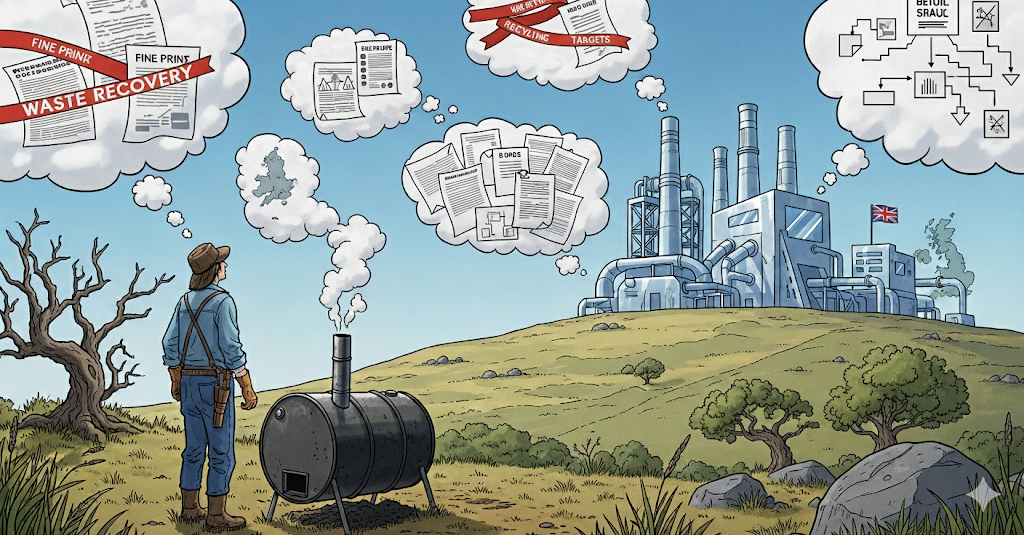
Following an inspiring tour around some of the UK’s biggest and boldest biocharBiochar is a carbon-rich material created from biomass decomposition in low-oxygen conditions. It has important applications in environmental remediation, soil improvement, agriculture, carbon sequestration, energy storage, and sustainable materials, promoting efficiency and reducing waste in various contexts while addressing climate change challenges. More facilities in August – organised masterfully by the International Biochar Initiative – I was left thinking about how small-scale char production can still play a role. Seeing large facilities fills me with hope, as we ultimately need biochar to become industrially viable to ensure impact is achieved at the magnitude we want (and likely need). However, it can make what I’m doing in a drum feel a little inconsequential…
The Problem as I See It
Though the work small producers and hobbyists do in their kilns may not have the impact we are looking for, they may serve as useful catalysts, prompting government bodies to act. However, advancements in biochar technology and production have been slow and I see this being owed to two main issues. One being a simple lack of awareness, and the other being the more complex dilemma of waste classification.
Awareness
Biochar is still in a nascent stage within sustainability discourse, and this means there are many people – who are otherwise well versed in waste – who simply aren’t aware of it. I speak with people from the council, keen domestic composters, and commercial gardeners, and there is a near unanimous unfamiliarity. I practically jumped for joy when someone mentioned that they had seen it referenced in an old rerun of Gardeners’ World from 2019. This, coupled with it being routinely equated to charcoalCharcoal is a black, brittle, and porous material produced by heating wood or other organic substances in a low-oxygen environment. It is primarily used as a fuel source for cooking and heating. More, makes understanding biochar a challenge.
Biochar as Waste Recovery, Not Recycling
The second issue is thornier: the way biochar production is categorised in waste law. In the UK, biochar production from woody materials like arboricultural arisings and woodchip is typically considered waste recovery, not recycling, and may even negatively affect a council’s recycling targets. This stems from retained EU law that prohibits the free use of waste until it meets “end-of-waste” criteria.
So even if I transform a pile of tangled brash into stable, usable biochar, the process is technically classified as recovery, not recycling.
It sounds like semantics but it has real, tangible implications. Here in the Wealden region in the South East of England, the household waste recycling rate has hovered around 45%, dropping from nearly 49% in recent years. It’s a respectable rate, but still short of the government’s 55% by 2025 target. And the key point: timber residues like coppice, crown cuts, and garden trimmings aren’t counted in those figures unless they’re sent off to compost or transformed into approved recycled products such as particleboard or animal bedding.
From a legal standpoint, most arboricultural woodchip is deemed “discarded waste.” Even when transformed into biochar, that process is classed as recovery. As a result, local councils can’t count it towards their recycling stats – even though, biologically and environmentally, it’s a valuable reuse of biomassBiomass is a complex biological organic or non-organic solid product derived from living or recently living organism and available naturally. Various types of wastes such as animal manure, waste paper, sludge and many industrial wastes are also treated as biomass because like natural biomass these More. I would dare to say that it could be even more valuable…
Why It Matters
That distinction matters for policy and investment. Councils in the South East, constrained by recycling targets typically set above 50%, aren’t incentivised to support biochar systems. If another use, like mulch or biomass fuel, boosts the recycling numbers, that often takes priority – even if biochar would offer greater long-term soil and carbon benefits.
With the vast swathes of unmanaged, formerly coppiced woodlands in the South East, something needs to change. Forestry in this region is facing an economic crunch: coppicing and felling are not profitable. Adding value through biochar could make management more viable, keeping woodlands healthier, safer and more biodiverse; but the current classification discourages that route.
Alternative Views
Of course, there are counterpoints worth considering. Some argue that strict legal definitions exist for a reason: to prevent poor-quality products or unsafe materials from being passed off as useful. Waste wood, for example, can contain contaminants such as paints, glues, or preservatives, and regulators don’t want these slipping into soils unchecked. Seen in this light, the “waste recovery” label provides important safeguards. But really this is a due diligence issue and can be a barrier for mature industries and waste streams as well.
Others suggest that pyrolysisPyrolysis is a thermochemical process that converts waste biomass into bio-char, bio-oil, and pyro-gas. It offers significant advantages in waste valorization, turning low-value materials into economically valuable resources. Its versatility allows for tailored products based on operational conditions, presenting itself as a cost-effective and efficient More is better positioned as an energy recovery pathway. After all, many larger-scale biochar facilities capture and use the syngasSyngas, or synthesis gas, is a fuel gas mixture consisting primarily of hydrogen and carbon monoxide. It is produced during gasification and can be used as a fuel source or as a feedstock for producing other chemicals and fuels. More or heat released during the process. From that perspective, biochar is a by-product of an energy system, not the other way around. This framing might actually help biochar gain a foothold – especially given the UK’s push towards low-carbon heating and energy security.
And some local authorities quietly point out that while biochar is exciting, it’s still relatively unproven compared to tried-and-tested routes like composting or anaerobic digestion, both of which are backed by decades of infrastructure and data. Why would a council risk missing recycling targets on an approach still seen as experimental?
Where That Leaves Me
If biochar is ever to gain traction in local waste strategies, it needs to shed the “waste” label – and that means meeting strict “end-of-waste” criteria, usually via regulatory processes associated with fertiliser classification. That’s a high bar for small-scale producers like me to clear.
But knowing this helps me frame conversations more realistically – with councils, contractors, or community projects – and think strategically about where biochar fits in. Not just as a concept, but as part of a circular system that makes sense within existing rules.
And on a personal level, the tours of large facilities have been invaluable. They’ve reminded me that while my little double-barrel drum might not shift the dial on national waste policy, it keeps me connected to the material, the process, and the potential. If councils are slow to move, perhaps the grassroots – gardeners, allotment groups, local farmers – can demonstrate the value first.
Because whether it’s a gleaming pyrolysis unit in an industrial park or a rusty barrel in a back garden, biochar’s promise depends on one thing above all: people actually making and using it.
If you are a council member, someone involved with waste policy, or just interested in this issue; please reach out to me on LinkedIn or via email: ralph@biochartoday.com



Leave a Reply