
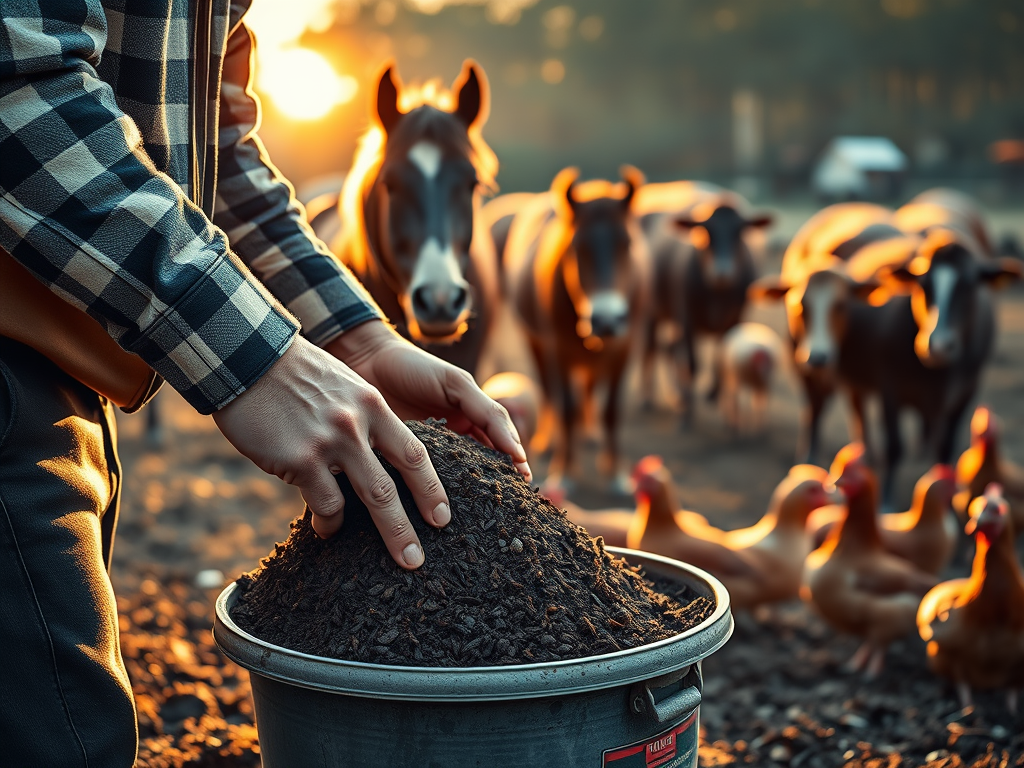
Forget fancy supplements – the next big thing in animal feed might be something ancient! BiocharBiochar is a carbon-rich material created from biomass decomposition in low-oxygen conditions. It has important applications in environmental remediation, soil improvement, agriculture, carbon sequestration, energy storage, and sustainable materials, promoting efficiency and reducing waste in various contexts while addressing climate change challenges. More, created by heating biomassBiomass is a complex biological organic or non-organic solid product derived from living or recently living organism and available naturally. Various types of wastes such as animal manure, waste paper, sludge and many industrial wastes are also treated as biomass because like natural biomass these More without oxygen, is making a comeback in animal farming. While it might seem like a new trend, think again: our ancestors used charcoalCharcoal is a black, brittle, and porous material produced by heating wood or other organic substances in a low-oxygen environment. It is primarily used as a fuel source for cooking and heating. More (a type of biochar) for centuries to keep their animals healthy. Imagine farmers in ancient times, reaching not for a pill, but for a piece of charcoal to soothe a sick ox!
Yes! The use of charcoal, a form of biochar, in animal care dates back centuries. Ancient texts and early agricultural journals document its historical use for various purposes, including treating digestive disorders and improving animal health. This historical perspective provides a foundation for understanding the renewed interest among modern livestock farmers in incorporating biochar as a regular feed supplement to enhance animal health, improve nutrient absorption, and boost overall productivity This historical perspective provides a foundation for understanding the renewed interest in biochar for animal feeding and this practice aims to enhance animal health, improve nutrient absorption, and boost overall productivity (A O’Toole et al., 2016).
Recent research has explored the effects of supplementing animal diets with biochar in various livestock species, including cattle, poultry, pigs, and fish. Studies have shown that incorporating biochar into the feed of Australian dairy cattle resulted in an increase in milk production and a rise of protein and fat content of the milk. Furthermore, this practice led to a reduction in enteric methanogens, microbes that produce methane, within these cattle. Studies also demonstrated that adding biochar to the diet of laying hens increased their daily feed intake, improved laying performance and enhanced eggshell solidity(Osman et al., 2022). Horses may also benefit from the inclusion of biochar in their feed. They propose that biochar could improve fermentation efficiency and diet digestibility, enhance general health through the absorption of toxins and gases, and prevent or alleviate hindgut acidosis by buffering pHpH is a measure of how acidic or alkaline a substance is. A pH of 7 is neutral, while lower pH values indicate acidity and higher values indicate alkalinity. Biochars are normally alkaline and can influence soil pH, often increasing it, which can be beneficial More levels (Joch et al., 2022). Furthermore, the biochar that passes through the animal’s digestive system enriches manure, leading to a more valuable fertilizer and reducing environmental impacts.
Biochar used in animal feed is produced by pyrolyzing feedstockFeedstock refers to the raw organic material used to produce biochar. This can include a wide range of materials, such as wood chips, agricultural residues, and animal manure. More at 350 to 1100 °C, resulting in a unique physicochemical structure. This structure gives biochar properties like a large surface area, microorganism habitat suitability, and the ability to adsorb compounds. The specific properties of biochar depend on the biomass type, temperature, and residence timeResidence time refers to the duration that the biomass is heated during the pyrolysis process. The residence time can influence the properties of the biochar produced. More during production.
Biochar as a Performance-Enhancing Feed Additive in Animal Agriculture
The integration of feed additives is a common practice in modern animal farming, aiming to optimize growth, productivity, immunity, and nutrient uptake. Emerging research highlights the significant potential of biochar, a carbon-rich material, as a versatile feed supplement. Its unique properties contribute to a range of benefits for various animal species, impacting not only their performance and health but also offering environmental advantages. The following points summarize the key advantages of incorporating biochar into animal feed (Osman et al., 2022; Qomariyah et al., 2023):
- Increased Feed Intake and Weight Gain: Several studies indicate that adding biochar to animal feed can lead to higher feed consumption and improved body weight.
- Improved Animal Health: Biochar supplementation has been linked to better overall health in animals.
- Toxin and Contaminant Detoxification: Biochar’s porous structure and adsorption properties help in binding and removing toxins and contaminants from the animal’s digestive system.
- Increased Nutrient Intake: Biochar may enhance the absorption of essential nutrients from the feed.
- Decreased Antibiotic Residues: Biochar might play a role in reducing the presence of antibiotic residues in animal products.
- Reduced Enteric Methane Release: Biochar has shown potential in mitigating the emission of methane from the digestive processes of ruminant animals.
- Improved Substrate Digestibility: In vitro studies suggest biochar can enhance the breakdown of feed components.
- Enhanced Nutrient Utilization and Protein Synthesis: Some research indicates that biochar can improve how animals utilize nutrients and synthesize proteins.
- Improved Feed Conversion Ratio: Biochar supplementation has been shown to improve the efficiency with which animals convert feed into body mass or products like milk and eggs.
- Enhanced Milk Production and Quality: In dairy animals, biochar has been associated with increased milk yield and improved milk composition (e.g., protein, solids non-fat).
- Improved Carcass Quality: In swine, biochar has been reported to improve carcass characteristics, such as fatty acid profiles.
- Beneficial Effects on Gut Microbiota: Biochar can promote the growth of beneficial gut bacteria (e.g., lactic acid and anaerobic bacteria, Lactobacillus spp.) and reduce harmful bacteria (e.g., Salmonella spp., pathogenic coliform bacteria, Campylobacter jejuni, Gallibacterium anatis, Campylobacter hepaticus).
- Increased Immunoglobulin Levels: Biochar supplementation has been linked to higher levels of antibodies in animals, suggesting an improved immune status.
- Improved Egg Quality: In laying hens, biochar has been shown to increase egg weight, shell resistance to crushing, and shell thickness.
- Enhanced Bone Mineralization: Biochar derived from chicken litter may improve bone mineralization in poultry due to increased phosphorus and calcium bioavailability.
- Improved Pellet Quality: Adding biochar to poultry diets can enhance the quality of feed pellets.
- Increased Growth Rate and Feed Conversion in Aquaculture: Studies in fish have shown that biochar supplementation can lead to faster growth and better feed utilization.
Thus the benefits of incorporating biochar into animal feed are wide-ranging. It can improve animal health by adsorbing toxins, enhance nutrient intake efficiency, and increase productivity. Furthermore, biochar contributes to a reduction in greenhouse gas emissions from manure and improves the quality of manure as a fertilizer.
Mechanisms of Biochar Action in Animal Feed
The Scientists are beginning to unravel the mechanisms behind biochar’s beneficial effects on animals. Biochar’s positive impacts on animal health and productivity stem from a combination of several interacting mechanisms (Schmidt et al., 2019). These include its capacity to adsorb toxins, its involvement in redox reactions within the digestive process, and its ability to influence the composition and activity of the gut microbiota. The key mechanis are as follows:
- Adsorption: Biochar’s high surface area allows it to bind various substances in the digestive tract. This includes toxins like mycotoxins, plant toxins, pesticides, and toxic metabolites, preventing their absorption and promoting excretion.
- Redox Activity: Biochar can participate in redox reactions, which involve the transfer of electrons. This capacity may aid in the digestion process by facilitating electron transfer between microbes and influencing microbial activity in the gut.
- Influence on Gut Microbiota: Biochar can affect the composition and activity of the microbial community in the digestive system. It may selectively adsorb certain types of bacteria, potentially favoring beneficial species over harmful ones.
In essence, biochar functions through a combination of toxin binding, electron exchange, and modulation of the gut’s microbial environment to improve animal health and productivity.
However, the effectiveness of biochar as a feed additive can be influenced by several factors. These include the properties of the biochar itself (derived from the source material and production process), the animal species, the dosage and application method, and the animal’s diet. Biochar for feed must adhere to regulations set by authorities like the European Food Safety Authority, and organizations such as the European Biochar Certification Foundation (EBC) establish standards for sustainable production. These standards classify biochar based on its intended use, characteristics, and toxicant content. Notably, certified feed-grade biochar must be produced from untreated and natural biomass.
While research shows promising results, there are still challenges and a need for further investigation. Inconsistent results across studies highlight the complexity of biochar’s interactions within animal systems. Future research should focus on standardizing biochar characterization, conducting long-term studies, optimizing application strategies, and gaining a deeper understanding of the underlying mechanisms involved. Overall, biochar presents a potential avenue for improving animal health, production efficiency, and environmental sustainability in animal husbandry. However, continued research is crucial to fully unlock its benefits and ensure its effective and responsible application in animal feeding practices.
Reference
A O’Toole, D Andersson, A Gerlach, B Glaser, C Kammann, J Kern, K. K. (2016). Current and future applications for biochar. In Biochar in European soils and agriculture.
Joch, M., Výborná, A., Tyrolová, Y., Kudrna, V., Trakal, L., Vadroňová, M., Tichá, D., & Pohořelý, M. (2022). Feeding biochar to horses: Effects on nutrient digestibility, fecal characteristics, and blood parameters. Animal Feed Science and Technology, 285. https://doi.org/10.1016/j.anifeedsci.2022.115242
Osman, A. I., Fawzy, S., Farghali, M., El-Azazy, M., Elgarahy, A. M., Fahim, R. A., Maksoud, M. I. A. A., Ajlan, A. A., Yousry, M., Saleem, Y., & Rooney, D. W. (2022). Biochar for agronomy, animal farming, anaerobic digestion, composting, water treatment, soil remediation, construction, energy storage, and carbon sequestration: a review. In Environmental Chemistry Letters (Vol. 20, Issue 4). Springer International Publishing. https://doi.org/10.1007/s10311-022-01424-x
Qomariyah, N., Ella, A., Ahmad, S. N., Yusriani, Y., Sholikin, M. M., Prihambodo, T. R., Retnani, Y., Jayanegara, A., Wina, E., & Permana, I. G. (2023). Dietary biochar as a feed additive for increasing livestock performance: A meta-analysis of in vitro and in vivo experiment. Czech Journal of Animal Science, 68(2), 72–86. https://doi.org/10.17221/124/2022-cjas
Schmidt, H. P., Hagemann, N., Draper, K., & Kammann, C. (2019). The use of biochar in animal feeding. PeerJ, 2019(7), 1–54. https://doi.org/10.7717/peerj.7373



Leave a Reply