
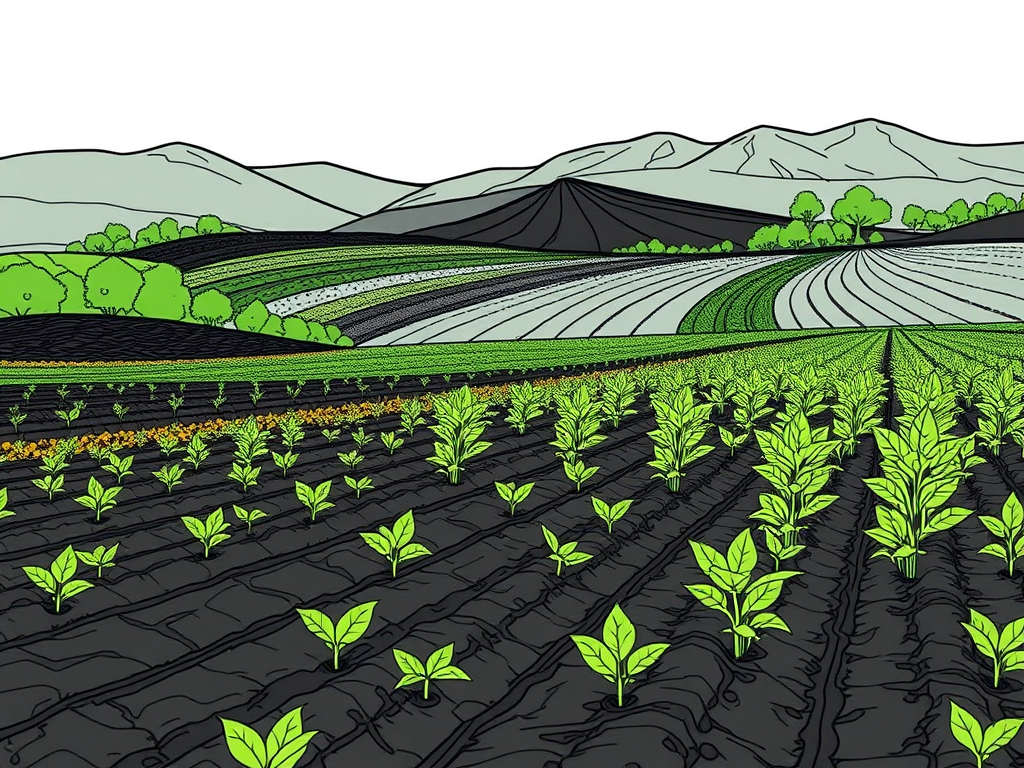
The urgency of climate change has spurred a global effort to achieve Net-Zero emissions, a goal that necessitates reducing emissions and actively removing carbon dioxide from the atmosphere. In this context, biocharBiochar is a carbon-rich material created from biomass decomposition in low-oxygen conditions. It has important applications in environmental remediation, soil improvement, agriculture, carbon sequestration, energy storage, and sustainable materials, promoting efficiency and reducing waste in various contexts while addressing climate change challenges. More has emerged as a promising technology for Carbon Dioxide Removal (CDR), gaining increased attention for its ability to provide a durable and scalable solution (Senadheera et al., 2025)(Chiaramonti et al., 2024). For biochar to truly take off in carbon markets and attract investment, we urgently need practical and affordable ways to set carbon credit standards. This will pave the way for biochar to be a key player in global carbon dioxide removal efforts and drive growth in the biochar industry (Salma et al., 2024). This piece highlights biochar’s significant potential for capturing and storing carbon.
Role of Biochar in Carbon Dioxide Removal
Biochar stands out as one of the most technologically ready and scalable CDR methods available (Lefebvre et al., 2023). Its significance is underscored by its substantial share in the voluntary carbon market, accounting for 87% of all permanent carbon removal deliveries while maintaining cost-effectiveness (Chiaramonti et al., 2024). Beyond its primary function of carbon removal, biochar offers a range of co-benefits that enhance its appeal. It plays a crucial role in the transition towards regenerative agriculture and sustainable forestry practices (Waheed et al., 2025). Additionally, biochar aids in adapting agriculture to the impacts of climate change and fosters socio-economic development by creating new income opportunities and enabling continued farming in marginal areas through soil restoration( Pandian et al., 2024)(Ayaz et al., 2021).
Biochar as a long-term carbon sink
A critical aspect of biochar’s effectiveness in mitigating climate change is its persistence in the environment. Scientific evidence has firmly established biochar’s capacity for long-term carbon sequestration, with research highlighting its stability over extended periods, spanning centuries and even millennia.
This enduring nature stems from biochar’s distinct characteristics, a direct outcome of the pyrolysisPyrolysis is a thermochemical process that converts waste biomass into bio-char, bio-oil, and pyro-gas. It offers significant advantages in waste valorization, turning low-value materials into economically valuable resources. Its versatility allows for tailored products based on operational conditions, presenting itself as a cost-effective and efficient More process, which yields a stable material rich in carbon and highly resistant to microbial breakdown. Two long-term studies highlight the exceptional stability of biochar. An eight-year analysis of ryegrass-derived biochar showed a minuscule daily carbon loss (7×10⁻⁴%), projecting about 400 years for a 1% reduction. Similarly, research on Eucalyptus saligna biochar indicated a mean residence timeResidence time refers to the duration that the biomass is heated during the pyrolysis process. The residence time can influence the properties of the biochar produced. More in soil ranging from 732 to 1061 years, underscoring its significant longevity (Li & Tasnady, 2023). These compelling findings strongly support the long-lasting nature of biochar as an effective carbon sink, reinforcing its potential as a sustainable and enduring solution for carbon sequestration in soils. This durability is attributed to biochar’s unique properties, resulting from the pyrolysis process, which produces a stable, carbon-rich material resistant to microbial decomposition (Tomczyk et al., 2020). The Intergovernmental Panel on Climate Change (IPCC) and the United States Department of Agriculture (USDA) have acknowledged biochar’s role in long-lived carbon removal, further validating its significance in climate change mitigation strategies (https://biochar-international.org/about-biochar/sustainability-climate-change)
Natural Pathways and Biochar’s Contribution to Carbon Storage
The Earth naturally removes carbon dioxide from the atmosphere through two main pathways: the chemical processing of dissolved CO2, leading to the formation of carbonates, and the sequestration of CO2 through photosynthesis into biomassBiomass is a complex biological organic or non-organic solid product derived from living or recently living organism and available naturally. Various types of wastes such as animal manure, waste paper, sludge and many industrial wastes are also treated as biomass because like natural biomass these More, with a fraction preserved through geological processes like organic carbon maturation. Biochar production mimics and accelerates the latter process. Pyrolysis, the high-temperature conversion of biomass without oxygen, produces a carbonized material with properties similar to inertinite, a stable form of organic carbon found in geological formations(Sanei et al., 2024). This similarity contributes to biochar’s resistance to decomposition and its long-term carbon storage potential.
Quantifying and Certifying Biochar’s Carbon Removal
Accurate quantification, tracking, and certification of carbon removal are crucial for ensuring the credibility and effectiveness of climate action. While precisely determining the durable carbon fraction in biochar can be challenging, various analytical techniques provide reliable assessments of its permanence. Methods such as Hydrogen to Organic Carbon ratio, Random Reflectance analysis, and Fixed Carbon measurements have shown strong correlations with biochar decomposition data and are valuable tools for verifying biochar’s role in carbon sequestration projects (Adhikari et al., 2024). These advancements, combined with certification systems, facilitate the integration of biochar into carbon accounting and trading frameworks (Budai et al., 2013).
Biochar’s Diverse Benefits Beyond Carbon Removal
Biochar’s contribution extends beyond carbon removal, offering various environmental and societal co-benefits. In agriculture, biochar improves soil health, enhances water retention, and increases crop resilience, particularly in the face of changing precipitation patterns and extreme weather events. It also fosters a thriving soil ecosystem, supporting microbiological life and biodiversity. Moreover, biochar application can support socio-economic development in rural areas by creating new income opportunities and enabling sustainable farming practices (Kundu & Kumar, 2024). Biochar also has the potential to be used as a partial replacement for cement in concrete production, improving the concrete’s properties and sequestering carbon (Bano et al., 2025).
Biochar as a Sustainable Solution
Biochar represents a compelling solution for addressing climate change and promoting sustainability. Its ability to provide long-term carbon removal, coupled with its diverse co-benefits, positions it as a valuable tool in the transition to a Net-Zero and Net-Negative economy. As research and technological advancements continue to enhance our understanding and application of biochar, its role in mitigating climate change and fostering a more sustainable future is set to expand.
References
Adhikari, S., Moon, E., Paz-Ferreiro, J., & Timms, W. (2024). Comparative analysis of biochar carbon stability methods and implications for carbon credits. Science of the Total Environment, 914(October 2023), 169607. https://doi.org/10.1016/j.scitotenv.2023.169607
Ayaz, M., Feizienė, D., Tilvikienė, V., Akhtar, K., Stulpinaitė, U., & Iqbal, R. (2021). Biochar role in the sustainability of agriculture and environment. Sustainability (Switzerland), 13(3), 1–22. https://doi.org/10.3390/su13031330
Bano, A., Aziz, M. K., Prasad, B., Ravi, R., Shah, M. P., Lins, P. V. D. S., Meili, L., & Prasad, K. S. (2025). The multifaceted power of biochar: A review on its role in pollution control, sustainable agriculture, and circular economy. Environmental Chemistry and Ecotoxicology, 7(January), 286–304. https://doi.org/10.1016/j.enceco.2025.01.004
Budai, A., Zimmerman, A. R., Cowie, A. L., Webber, J. B. W., Singh, B. P., Glaser, B., Masiello, C. A., Andersson, D., Shields, F., Lehmann, J., Camps Arbestain, M., Williams, M., Sohi, S., & Joseph, S. (2013). Biochar Carbon Stability Test Method : An assessment of methods to determine biochar carbon stability. International Biochar Initiative, 1–10. www.biochar-international.org/sites/default/files/IBI_Report_Biochar_Stability_Test_Method_Final.pdf
Chiaramonti, D., Lehmann, J., Berruti, F., Giudicianni, P., Sanei, H., & Masek, O. (2024). Biochar is a long-lived form of carbon removal, making evidence-based CDR projects possible. Biochar, 6(1). https://doi.org/10.1007/s42773-024-00366-7
Kundu, B., & Kumar, R. (2024). Enhancing Crop Resilience to Climate Change through Biochar: A Review. International Journal of Environment and Climate Change, 14(6), 170–184. https://doi.org/10.9734/ijecc/2024/v14i64219
Lefebvre, D., Fawzy, S., Aquije, C. A., Osman, A. I., Draper, K. T., & Trabold, T. A. (2023). Biomass residue to carbon dioxide removal: quantifying the global impact of biochar. Biochar, 5(1). https://doi.org/10.1007/s42773-023-00258-2
Li, S., & Tasnady, D. (2023). Biochar for Soil Carbon Sequestration: Current Knowledge, Mechanisms, and Future Perspectives. C-Journal of Carbon Research, 9(3). https://doi.org/10.3390/c9030067
Pandian, K., Vijayakumar, S., Mustaffa, M. R. A. F., Subramanian, P., & Chitraputhirapillai, S. (2024). Biochar – a sustainable soil conditioner for improving soil health, crop production and environment under changing climate: a review. Frontiers in Soil Science, 4(May), 1–17. https://doi.org/10.3389/fsoil.2024.1376159
Salma, A., Fryda, L., & Djelal, H. (2024). Biochar: A Key Player in Carbon Credits and Climate Mitigation. Resources, 13(2). https://doi.org/10.3390/resources13020031
Sanei, H., Rudra, A., Przyswitt, Z. M. M., Kousted, S., Sindlev, M. B., Zheng, X., Nielsen, S. B., & Petersen, H. I. (2024). Assessing biochar’s permanence: An inertinite benchmark. International Journal of Coal Geology, 281. https://doi.org/10.1016/j.coal.2023.104409
Senadheera, S. S., Withana, P. A., You, S., Tsang, D. C. W., Hwang, S. Y., & Ok, Y. S. (2025). Sustainable biochar: Market development and commercialization to achieve ESG goals. Renewable and Sustainable Energy Reviews, 217. https://doi.org/10.1016/j.rser.2025.115744
Tomczyk, A., Sokołowska, Z., & Boguta, P. (2020). Biochar physicochemical properties: pyrolysis temperature and feedstockFeedstock refers to the raw organic material used to produce biochar. This can include a wide range of materials, such as wood chips, agricultural residues, and animal manure. More kind effects. Reviews in Environmental Science and Biotechnology, 19(1), 191–215. https://doi.org/10.1007/s11157-020-09523-3
Waheed, A., Xu, H., Qiao, X., Aili, A., Yiremaikebayi, Y., Haitao, D., & Muhammad, M. (2025). Biochar in sustainable agriculture and Climate Mitigation: Mechanisms, challenges, and applications in the circular bioeconomy. Biomass and Bioenergy, 193. https://doi.org/10.1016/j.biombioe.2024.10753



Leave a Reply