
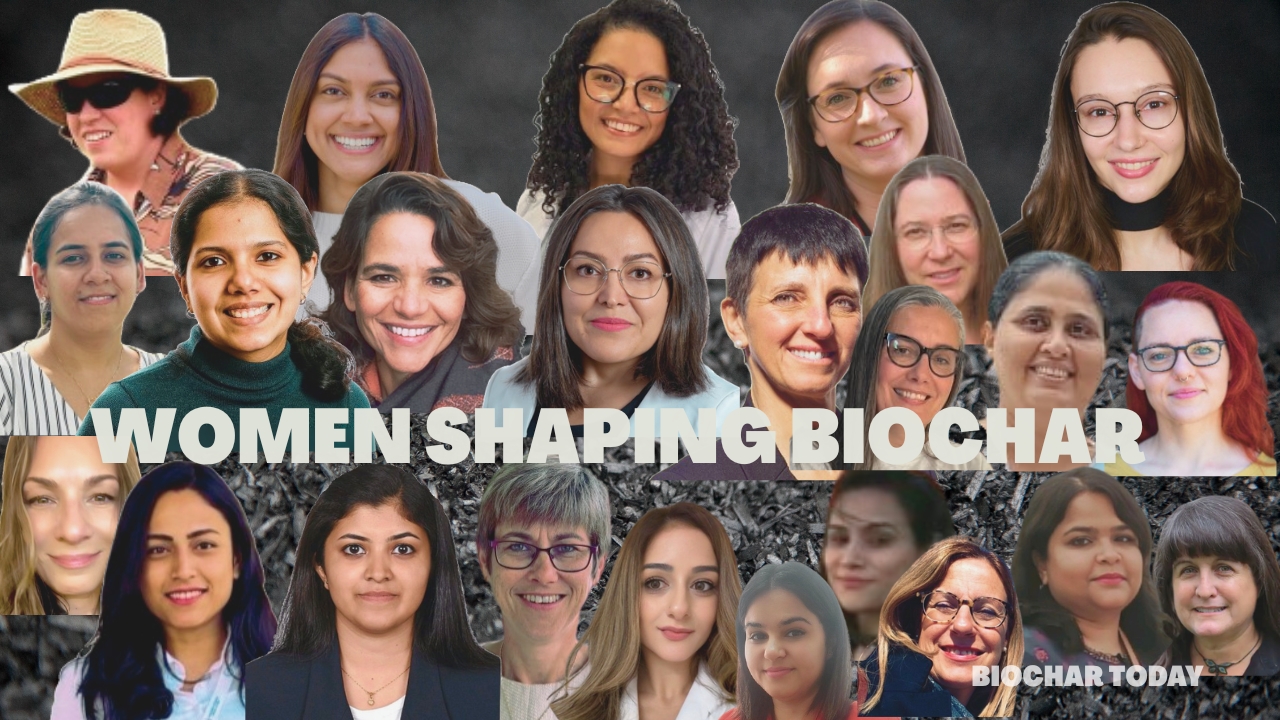
As the world celebrates International Women’s week and day, it feels meaningful to pause and reflect on the people shaping the spaces we work in. The biocharBiochar is a carbon-rich material created from biomass decomposition in low-oxygen conditions. It has important applications in environmental remediation, soil improvement, agriculture, carbon sequestration, energy storage, and sustainable materials, promoting efficiency and reducing waste in various contexts while addressing climate change challenges. More sector—once a relatively small research niche—has grown steadily into a dynamic and interdisciplinary field connecting soil science, climate mitigation, carbon removal strategies, and circular bioeconomies.
This evolution has not happened overnight. It has been built through the dedication of researchers, engineers, entrepreneurs, sustainability professionals, and practitioners across the world. Among them are many thoughtful and capable women whose work continues to strengthen the scientific foundations, practical applications, and institutional frameworks of biochar.
The individuals mentioned here are certainly not the only women contributing to this field. The biochar ecosystem today includes many talented professionals whose work deserves recognition. The names shared here simply represent those whose work I have come to know a little more closely over time through research, professional engagement, or shared interests in sustainability and biochar innovation. In many ways, biochar today is fortunate to feature such strong and thoughtful contributors across science, entrepreneurship, climate initiatives, and sustainability practice.
Within the scientific community, researchers such as Larissa Nicholas, Sara De Jesus Duarte, Cecilia Sundberg, Naeimeh Vali, Anjali Jayakumar, Maria-Elena Vorrath and Meredith Rose Barr contribute to advancing knowledge on biochar systems, environmental sustainability, and biomass-based technologies. Their work deepens our understanding of how biochar interacts with soil health, nutrient dynamics, carbon stability and thermal conversion of biomassBiomass is a complex biological organic or non-organic solid product derived from living or recently living organism and available naturally. Various types of wastes such as animal manure, waste paper, sludge and many industrial wastes are also treated as biomass because like natural biomass these More. These scientific contributions are essential for ensuring that biochar applications remain grounded in careful research and responsible environmental practice.
Alongside scientific work, the growth of the biochar ecosystem also depends on individuals who connect research to implementation and innovation. Professionals such as Natacha Rousseau, Suzanne E. Allaire, Chloe Hung, Kelpie Wilson, and Kathleen Draper have contributed significantly through entrepreneurship, consulting, and leadership within sustainability initiatives. By engaging with industry dialogue, climate networks, and emerging carbon removal systems, they help translate scientific knowledge into practical solutions and broader public awareness.
The field is further strengthened by sustainability professionals and environmental practitioners including Kirtika Singh, Varsha Ramesh, Nilanjana Banerjee, Abhilasha Tripathi, Narghis Sarwari, and Sue Rawlings, whose work often bridges research, carbon credit and verification, climate strategy, and environmental policy. Their engagement helps integrate biochar into wider conversations about regenerative agriculture, climate accountability, and responsible carbon management.
Equally encouraging is the presence of many emerging researchers and sustainability professionals exploring the possibilities of biochar and related environmental systems. Individuals such as , Harsimranpreet Kaur Virk, Iqra Abid, Giya Merline Kuriakose, and Smitha John Kundukulam represent a growing generation of scientists and practitioners engaging with soil science, climate innovation, and sustainability transitions.
Alongside them, contributors including Luisa Marin, Berta Moya, Menka Pun, Jennifer Yin, Putri Rizka Lestari, Lucia Brusegan, Chintan Mahida, Chinua Umano, Meredith Barr, Annie Nichols, and Debarati Chakraborty reflect the geographic and professional diversity of the biochar community. Their involvement illustrates how the field continues to expand beyond traditional academic boundaries into broader networks of sustainability practice, environmental research, and climate-oriented initiatives.
Research within the broader bioenergy and biochar sectors also suggests that diverse professional communities often strengthen collaboration, creativity, and innovation. Mentorship networks, interdisciplinary research environments, and inclusive professional spaces help bring new perspectives into emerging sustainability fields. As biochar continues to evolve within climate mitigation and circular bioeconomy discussions, these diverse voices help enrich the dialogue and strengthen the direction of the field.
Beyond its role in soil improvement and carbon sequestration, biochar is increasingly recognized as part of a larger bio-based economy, linking sustainable biomass management, environmental stewardship, and climate resilience. The continued contributions of scientists, entrepreneurs, and sustainability practitioners will play an important role in shaping how responsibly and effectively this field develops in the coming years.
As we mark International Women’s Day, it feels fitting to acknowledge and appreciate the women who are helping build this growing ecosystem. Their research, leadership, and curiosity contribute not only to the advancement of biochar but also to the broader effort of restoring soils, strengthening climate solutions, and supporting sustainable systems.
When thoughtful minds, collaborative spirit, and environmental responsibility come together, fields like biochar become more than technical disciplines—they become communities of learning and action. The presence of dedicated women across research, innovation, and practice helps make this sphere richer, more balanced, and ultimately more impactful for both people and the planet we share.






Leave a Reply