

This is the twelfth in a new series of Biochar Expert Profiles, where we celebrate those who have dedicated their passion, expertise, and innovation to advancing the field of biocharBiochar is a carbon-rich material created from biomass decomposition in low-oxygen conditions. It has important applications in environmental remediation, soil improvement, agriculture, carbon sequestration, energy storage, and sustainable materials, promoting efficiency and reducing waste in various contexts while addressing climate change challenges. More. These experts come from all walks of life: renowned scientists whose groundbreaking research has redefined possibilities, emerging researchers whose fresh perspectives are shaping the future, industry leaders who are growing the market through new technologies and business models, and unsung heroes who work tirelessly to enrich soils with biochar. Whether it’s their pioneering techniques, insightful discoveries, or unwavering dedication, these individuals are the heart and soul of the biochar revolution. By highlighting their contributions and sharing their knowledge, this series aims to inspire the biochar community at large.
Welcome to another insightful session of Biochar Today’s expert interview! Today, we’re thrilled to introduce Bangun Adi Wijaya, a highly experienced researcher with a profound specialization in biochar production for both soil application and as a solid fuel.
Bangun’s expertise is underpinned by a strong academic background, holding an MSc in Forest Resource. He boasts an impressive track record in the field, demonstrated by his role as a Natural Resource Management Specialist at the Korea Institute of Energy Research (KIER). During his fellowship, he not only garnered recognition for his research at international conferences and published numerous peer-reviewed journal articles, but also played a pivotal role in securing significant grant funding for biochar projects. His practical contributions extend to managing the procurement of biochar pyrolysisPyrolysis is a thermochemical process that converts waste biomass into bio-char, bio-oil, and pyro-gas. It offers significant advantages in waste valorization, turning low-value materials into economically valuable resources. Its versatility allows for tailored products based on operational conditions, presenting itself as a cost-effective and efficient More reactors and, as a team member, participating in the fabrication of innovative reactors whose tests demonstrated substantial improvements in energy efficiency. He also conducted Life Cycle Assessment (LCA) studies for various industries, contributing to notable reductions in annual CO2 emissions.
Prior to his work at KIER, Bangun served as a Silviculture Lab Assistant at Universitas Lampung, a prominent university in Indonesia, where he contributed to peer-reviewed papers on biochar-driven soil restoration. He also significantly impacted local communities by coaching farmers in biochar application and restoring agricultural land through biochar projects. Bangun’s comprehensive skill set includes advanced biochar characterization techniques, biochar-soil application (including land-health monitoring and nutrient profiling), and robust data analysis.
Join us as Bangun Adi Wijaya shares his extensive knowledge on biochar’s versatile applications, from enhancing soil health to serving as an alternative fuel, and discusses the future of sustainable resource management. Get ready for an illuminating discussion!
Shanthi Prabha : Bangun, your work spans from the lab to significant field projects. What initially drew you to the world of biochar, and what continues to ignite your passion for its potential?
Bangun Adi Wijaya :I began working on biochar research during my undergraduate studies. At that time, I only knew that biochar could improve soil quality. Since then, my journey has evolved, from studying biochar’s agricultural benefits to now focusing on its production and application in decarbonizing the industrial sector. There are two main reasons why I’ve remained committed to biochar research for over seven years. First, we still know very little about it. Its versatility in addressing climate challenges, ranging from waste management and AFOLU, to energy generation and emissions reduction, is immense. I believe we’ve only unlocked less than 5% of biochar’s potential applications so far. This makes it a promising and strategic field for long-term research. Second, the more we learn, the more we see its potential as a business opportunity. While I currently work as a scientist, I envision transitioning into biochar business development in the future. Every country is looking for biochar expertise, and that global demand reinforces my commitment to this field.
SP:You’ve been characterizing biochar using a wide range of advanced techniques, from spectroscopic analyses to microscopic imaging. How do these detailed investigations inform the practical applications of biochar, especially in soil improvement?
BW: Researching biochar’s capabilities requires us to look within, meaning, its effects must be understood through its molecular characteristics. For example, in 2021, I conducted a one-year field experiment to study the impact of waste-derived biochar on tree growth, specifically assessing its influence on soil phosphorus (P) availability. The results showed that soils treated with biochar had higher P content than the control group, indicating that the biochar was enhancing phosphorus availabilityPhosphorus is another essential nutrient for plant growth, but it can sometimes be locked up in the soil and unavailable to plants. Biochar can help release phosphorus from the soil and make it more accessible to plants, reducing the need for chemical fertilizers. More. We later discovered that phosphorus can be retained on the biochar surface through several bonding mechanisms. To understand this, we had to examine the surface properties of the biochar, what types of functional groups it has, and which structural features enable physical or chemical bonding. This kind of detailed characterization (using spectroscopic and microscopic techniques) is essential. It helps explain the “why” behind biochar’s observed effects in the field, especially in soil systems. Ultimately, this deeper understanding allows us to design or select biochars with tailored properties for specific soil improvement goals.
SP:Your experience includes hands-on land restoration and farmer education in Indonesia. What was the most compelling lesson you learned when translating scientific biochar principles to real-world agricultural practices?
BW: To be honest, it’s tricky. As scientists, we often view biochar as a “noble” material, almost a silver bullet for saving the planet. But for farmers, it’s just black dust that someone is trying to convince them to apply to their soil. The most compelling lesson I’ve learned is that we can’t introduce biochar as a solution to problems farmers don’t relate to, like the global climate crisis. Instead, we need to frame biochar as a practical, immediate solution to challenges they actually face. For example, biochar is not a fertilizer, and if we fail to communicate that clearly, farmers may find it unconvincing or even useless, especially if they still need to apply additional fertilizer. That’s why it’s essential to show measurable benefits, like how biochar can reduce fertilizer needs by a specific percentage, so farmers can clearly see the value. Sustaining their motivation to use biochar is something I’ve come to care deeply about. It requires a human-centered approach. We must engage with empathy, speak their language, and sometimes put aside our scientific lens to truly connect biochar research to real-world impact.
SP: At the Korea Institute of Energy Research, you’ve contributed to developing biochar pyrolysis reactors that show substantial improvements in energy efficiency. Can you describe the innovative approaches that led to these advancements in reactor performance?
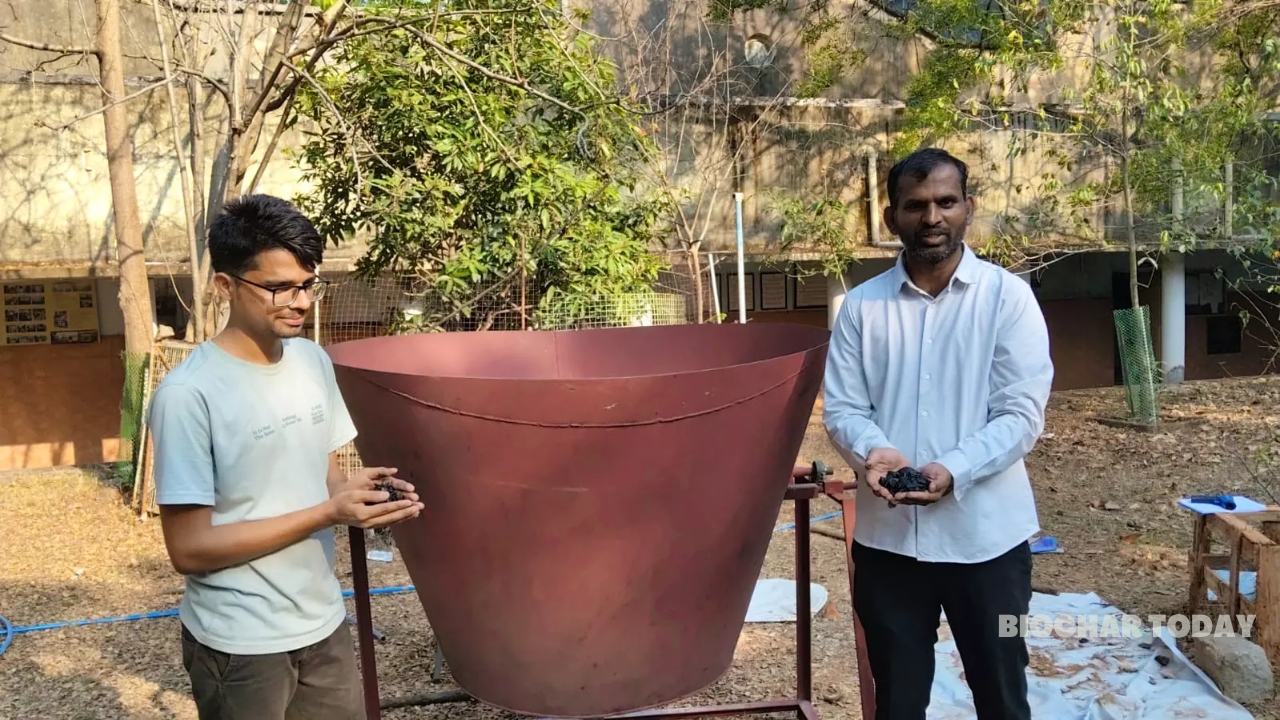
BW: We realized that most industrial-scale biochar reactors, over 50% of them, particularly rotary kilns, rely on indirect heat transfer, which presents two major challenges. First, low energy efficiency, as a significant portion of heat is lost during the process. Second, limited scalability, since feedstockFeedstock refers to the raw organic material used to produce biochar. This can include a wide range of materials, such as wood chips, agricultural residues, and animal manure. More must maintain contact with the reactor wall, meaning higher production requires much larger reactor sizes. To address these issues, we developed a reactor based on direct heat transfer. Our design captures and utilizes 99% of the flue gas produced during pyrolysis to sustain the process, significantly improving energy efficiency. As a result, we can achieve the same biochar output with a reactor that is 5 to 8 times smaller than conventional designs, drastically reducing both capital (CAPEX) and operating (OPEX) costs. I see this as a critical breakthrough. If we are serious about reaching carbon neutrality and scaling carbon storage solutions, then efficient, large-scale biochar production is not just beneficial, it’s urgent. Our reactor design is a step toward making that a reality.
SP: You’ve explored the use of biochar as a component for industrial processes, such as steel production, with positive impacts on emissions. What are the primary environmental advantages of integrating biochar into heavy industries?
BW: Quantitatively, integrating biochar into certain steelmaking processes can reduce emissions by 60–80%, primarily by replacing fossil-based carbon with a carbon-neutral material. Substituting coal with biochar not only cuts emissions but also helps decarbonize one of the most hard-to-abate industrial sectors. However, what I find even more compelling is biochar’s ability to address multiple problems simultaneously. For example, using empty fruit bunches (EFB) from the palm oil industry, a major agricultural waste, prevents them from decomposing in the field, which can otherwise lead to pest outbreaks and environmental degradation in plantations. By converting problematic biomassBiomass is a complex biological organic or non-organic solid product derived from living or recently living organism and available naturally. Various types of wastes such as animal manure, waste paper, sludge and many industrial wastes are also treated as biomass because like natural biomass these More waste from one sector into a climate solution for another, biochar creates a circular, cross-sectoral impact. Moreover, utilizing agricultural waste like EFB provides economic benefits to farmers, adding value to a byproduct that would otherwise be discarded. This strengthens rural livelihoods and enhances the sustainability of both agriculture and industry. In this way, biochar becomes not just a tool for climate mitigation, but a means to create inclusive, economically viable pathways for decarbonization.
SP: Your research has shown that biochar from various waste materials can significantly enhance the growth of important tree species. How do you determine the optimal conditions for biochar production and application to best suit different feedstocks and target plants?
BW: I tend to take a more conservative, hands-on approach, relying heavily on experimental methodology. While some researchers use AI and modeling to predict optimal pyrolysis settings or biochar performance, I believe that pyrolysis, and especially its integration into plant growth systems, is far too complex to be fully captured by models alone. That’s not to say those approaches aren’t valuable, but I prefer to validate everything through real-world testing.
Coming from a forestry background with a focus on silviculture, designing and running growth trials is very much my strength. I usually begin with greenhouse experiments, testing different biochar types and application rates to see how they interact with specific species under controlled conditions. From there, I assess performance based on parameters like nutrient uptake, root development, and biomass growth. Although I’m not a modeling expert, I do have a strong foundation in statistics, I even worked as a statistics teaching assistant at my former university while conducting biochar research. So while my approach is grounded in traditional experimentation, it’s always backed by rigorous data analysis to ensure the results are meaningful and reproducible.
SP: In Indonesian oil palm plantations, your projects have demonstrated notable improvements in soil organic carbon and reductions in fertilizer use through biochar application. What do you consider to be the most critical long-term benefits of these changes for agricultural sustainability?
BW: Yes, we can achieve a better circular economy, and biochar plays a central role. In our project, we produced biochar from oil palm waste and applied it back to the same plantations. This closes the carbon loop, keeping nutrients and carbon within the system instead of releasing them into the atmosphere.
The long-term benefits are clear: improved soil organic carbon, better soil health, and reduced need for chemical fertilizers. This not only cuts costs for farmers but also reduces environmental impacts like nutrient runoff. By turning waste into a resource, we support both sustainable agriculture and local livelihoods
SP: You mentioned your team developed a particularly fast slow pyrolysis reactor. What are the core innovations behind this technology, and how does it manage to produce high-quality biochar so rapidly while maintaining its essential characteristics?
BW: The key innovation behind our fast slow pyrolysis reactor, known as the Flexible Counter-Flow Multi-Baffle (F-COMB) reactor, lies in its unique design and process integration. The reactor uses a multi-baffle structure that forces hot pyrolysis gases to flow counter to the biomass feed, enhancing heat transfer and ensuring uniform thermal distribution. It combines drying and pyrolysis in a single step, using over 99% of the pyrolysis gas to sustain the process, which maximizes energy efficiency. Additionally, it allows precise control of temperature, residence timeResidence time refers to the duration that the biomass is heated during the pyrolysis process. The residence time can influence the properties of the biochar produced. More, and gas flow, enabling consistent production of high-quality biochar with stable carbon structure, high porosityPorosity of biochar is a key factor in its effectiveness as a soil amendment and its ability to retain water and nutrients. Biochar’s porosity is influenced by feedstock type and pyrolysis temperature, and it plays a crucial role in microbial activity and overall soil health. Biochar More, and desirable surface properties. This design achieves significantly faster biochar production, within 15 minutes, while maintaining the essential characteristics expected from slow pyrolysis.
SP: Given your involvement in projects promoting a circular bioeconomy, such as converting agricultural waste into valuable resources, what do you see as the biggest opportunity for biochar to transform waste management globally?
BW: The carbon credit market has significantly boosted global interest in biochar production, especially in Indonesia. While it presents a strong business model, I believe there’s still much room for improvement. Ideally, biochar should have its own value and market recognition, not just be seen as a byproduct of carbon trading.
In Indonesia, the biochar market remains underdeveloped, but the potential is vast. To truly transform global waste management, we need to expand biochar applications beyond soil remediation. For example, using biochar in building materials could be more commercially viable, especially when adopted at an industrial scale. Sectors like water purification also offer promising opportunities that should be further explored. By diversifying its uses, biochar can become a key player in a sustainable, circular bioeconomy.
SP: With your extensive experience and recognition through various awards, what advice would you offer to emerging researchers or professionals aiming to make a significant impact in the field of biochar?
BW: It would be cliché, but working with biochar is like carrying a Swiss Army knife, it’s incredibly versatile, but to unlock its full potential, you need to understand each function and when to use it. As a researcher, I spend a lot of time in the lab, but I also write project proposals, engage with stakeholders, and think about how to sustain real-world biochar applications. That’s where real impact starts. My advice for emerging researchers is this: don’t isolate your work from reality. Great research ideas often come from the field, from listening to the challenges faced by farmers, industries, or communities. Build strong communication skills, learn how to connect your science to business models, and understand feasibility, these are just as important as your lab techniques.
You can spend your days chasing high-impact publications, but if you want to make a real difference, go outside the lab. Talk to people, build relationships, and be part of the solution. The power of biochar isn’t just in its chemistry, it’s in how we use it to change systems. Stay curious, stay connected, and never stop learning. That’s where impact begins.
SP: Looking ahead, what is one major area of biochar research or application that you are most excited about exploring further in the coming years?
BW: It might sound unusual, but what excites me most now is exploring the economic and business potential of biochar. I’ve already covered a wide range of technical aspects in my research, soil application, energy generation, adsorbent use, emissions quantification, and production methods. But now, I feel it’s time to take this knowledge further and contribute to mainstreaming biochar through business innovation.
I’m particularly interested in how we can scale up biochar production and integrate it into daily-use applications. How can we move from pilot projects to a viable industry? I don’t have all the answers yet, but I’m even considering pursuing an MBA to better understand market development and business strategy for biochar. I believe this direction will be key to unlocking biochar’s full potential in the years ahead.
SP: For our readers who are keen to follow your contributions to the biochar field, where can they find more information or connect with you?
BW: I share insights and updates about my work with biochar on LinkedIn platform and my profile URL is https://www.linkedin.com/in/bangun-adi-wijaya-736633157.



Leave a Reply to Asriadi SakkaCancel reply