
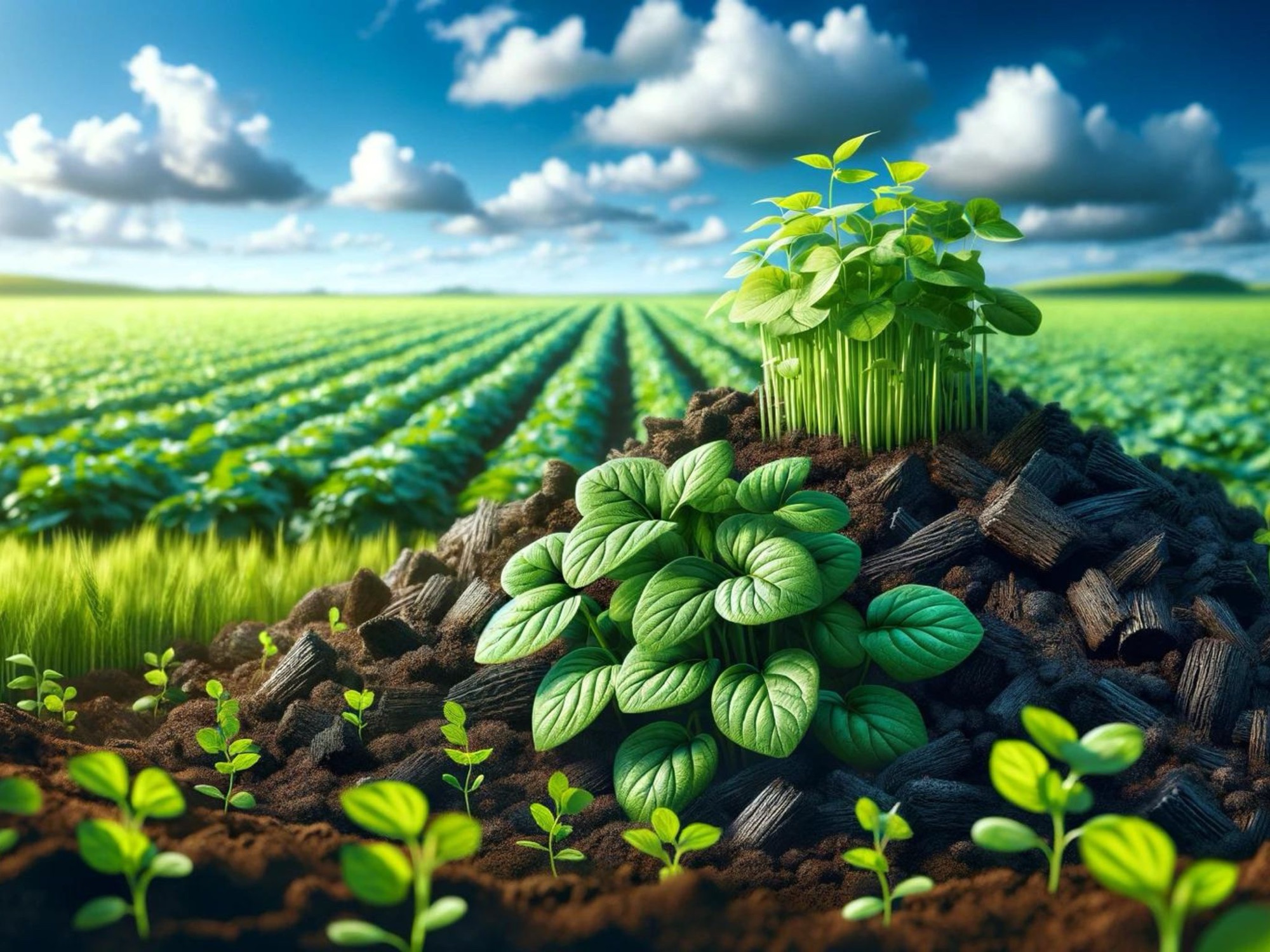

Soil salinization is a growing global concern, significantly hindering crop productivity. Biochar, a carbon-rich product known as “black gold,” has emerged as a promising solution to mitigate salinity stress in plants. Salinity stress impairs plants by inducing osmotic, ionic, and oxidative damages, which disrupt physiological processes, nutrient, and water uptake, leading to reduced growth and productivity.
Biochar enhances plant resilience against salinity stress through various mechanisms. It improves nutrient and water uptake, reduces electrolyte leakage, and lipid peroxidation. Biochar also protects the photosynthetic apparatus and boosts antioxidant activity, gene expression, and the synthesis of protein osmolytes and hormones, which counteract the toxic effects of salinity. Additionally, biochar enhances soil organic matter, microbial and enzymatic activities, and reduces the accumulation of toxic ions like sodium (Na+) and chloride (Cl-).
Despite its benefits, biochar application has limitations and potential negative impacts, such as releasing toxic compounds and altering soil properties. Therefore, selecting appropriate feedstocks and production methods is crucial. Current research highlights the need for more field studies to validate lab results and explore the molecular mechanisms of biochar’s impact on salinity tolerance. Future studies should focus on understanding biochar’s role in seed germination, nutrient uptake, osmolyte and hormone accumulation, and its combined use with other amendments.
Overall, biochar offers a sustainable approach to mitigate salinity stress, enhance crop productivity, and improve soil health, contributing to global food security amidst the challenges of climate change and increasing soil salinization.


Leave a Reply