
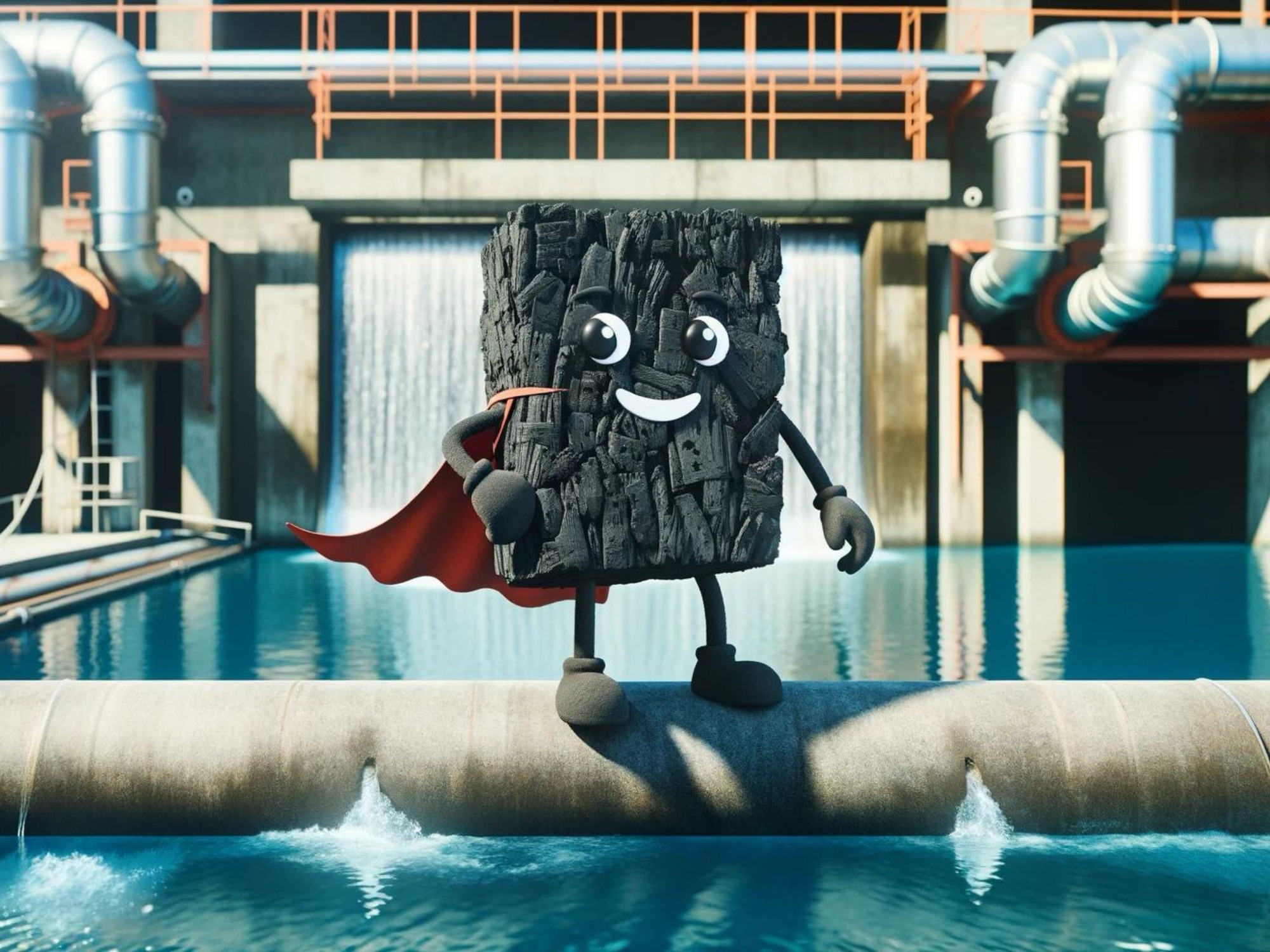

The innovative creation of manganese and iron-modified biochar (Mn/Fe-biochar) demonstrates a promising advancement in removing harmful heavy metals from wastewater, specifically lead (Pb(II)) and silver (Ag(I)). Researchers Haoyu Li, Jun Wang, and Xuejun Zhu have developed a cost-effective biochar that effectively adsorbs these toxic metals, offering a significant improvement over traditional methods.
This Mn/Fe-biochar, prepared through the pyrolysisPyrolysis is a thermochemical process that converts waste biomass into bio-char, bio-oil, and pyro-gas. It offers significant advantages in waste valorization, turning low-value materials into economically valuable resources. Its versatility allows for tailored products based on operational conditions, presenting itself as a cost-effective and efficient More of rape straw impregnated with potassium permanganate (KMnO4) and iron nitrate (Fe(NO3)3), showcases remarkable adsorption capacities—88.49 mg/g for Pb(II) and 134.80 mg/g for Ag(I). These capacities are determined using the Hill model, highlighting the biochar’s efficiency and feasibility in wastewater treatment.
A detailed adsorption mechanism analysis, utilizing density functional theory (DFT), reveals that the Mn-O groups in the biochar play a crucial role, having the highest binding energies with the metals compared to other groups like -OH, -COOH, and -Fe-O. This interaction underpins the biochar’s high effectiveness in metal adsorption.
Economic analysis indicates that Mn/Fe-biochar is not only efficient but also cost-effective, with production costs estimated at $4.94 per kilogram. Its reusability is also a notable feature, maintaining high adsorption capacity even after multiple cycles.
This breakthrough addresses the urgent need for affordable and efficient solutions to mitigate heavy metal pollution in wastewater, potentially transforming industry practices and contributing significantly to environmental sustainability. The study underlines the importance of such innovative approaches in tackling pollution and preserving ecological and human health.



Leave a Reply