
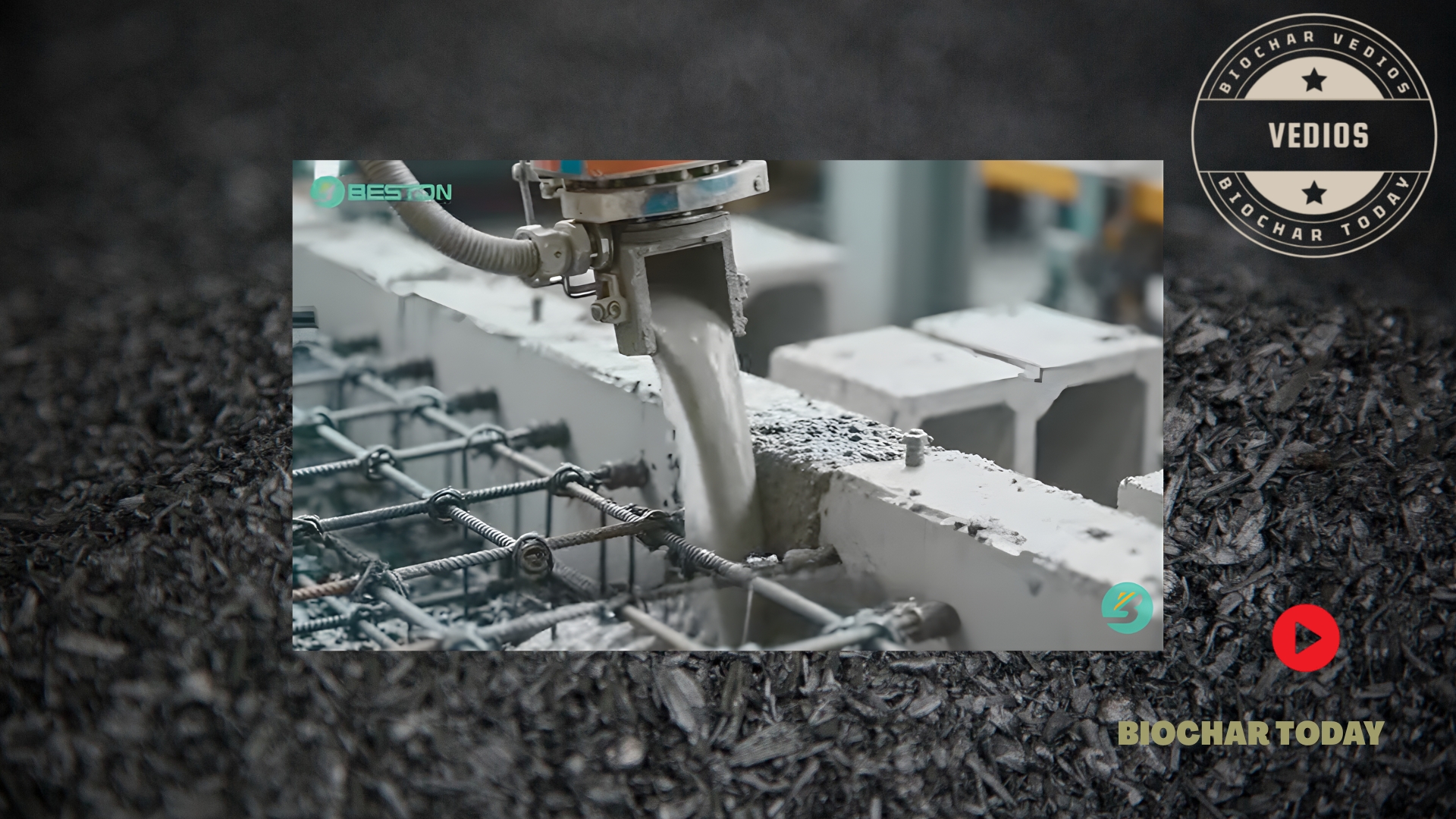
A recent video presentation by the Beston Group at their industrial manufacturing facility explains how biomassBiomass is a complex biological organic or non-organic solid product derived from living or recently living organism and available naturally. Various types of wastes such as animal manure, waste paper, sludge and many industrial wastes are also treated as biomass because like natural biomass these More carbonization technology transforms organic waste into a carbon-negative additive for the construction industry. The demonstration focuses on utilizing large-scale pyrolysisPyrolysis is a thermochemical process that converts waste biomass into bio-char, bio-oil, and pyro-gas. It offers significant advantages in waste valorization, turning low-value materials into economically valuable resources. Its versatility allows for tailored products based on operational conditions, presenting itself as a cost-effective and efficient More to create high-quality biocharBiochar is a carbon-rich material created from biomass decomposition in low-oxygen conditions. It has important applications in environmental remediation, soil improvement, agriculture, carbon sequestration, energy storage, and sustainable materials, promoting efficiency and reducing waste in various contexts while addressing climate change challenges. More that replaces traditional carbon-intensive aggregates.
The Beston Group, an industrial environmental equipment manufacturer, details a strategy for integrating biochar into the production of concrete, bricks, and asphalt. This application, demonstrated through their continuous carbonization systems, targets the construction industry because it is one of the largest global sources of carbon emissions. By utilizing agricultural and forestry residues as feedstocks, the project addresses the dual problems of waste management and the high environmental footprint of building materials.
This video is significant for the readers of Biochar Today because it provides a practical roadmap for moving biochar beyond agricultural use and into the built environment. It bridges the gap between laboratory carbonization studies and industrial-scale field application by showcasing the equipment necessary for continuous, high-volume production. This information is vital for the circular economy, as it illustrates how urban and rural waste streams can be repurposed into durable, long-term carbon sinks within city infrastructure. Furthermore, it informs current carbon sequestration practices by highlighting that the construction sector offers a permanent storage solution for biochar that is less susceptible to the biological degradation often encountered in soil restoration projects.



Leave a Reply