
Key Takeaways
- Controlling the balance of medium-sized pores inside biocharBiochar is a carbon-rich material created from biomass decomposition in low-oxygen conditions. It has important applications in environmental remediation, soil improvement, agriculture, carbon sequestration, energy storage, and sustainable materials, promoting efficiency and reducing waste in various contexts while addressing climate change challenges. More is crucial, because these pores allow carbon dioxide to move quickly to deep storage sites while maintaining high overall capture efficiency.
- Agricultural corn straw can be converted into a highly effective carbon capture material using a carefully controlled two-step activation process, turning waste into a valuable climate solution.
- The engineered pore structure allows the biochar to capture carbon dioxide both quickly and in large amounts, solving a common problem where materials perform well in the lab but poorly in real industrial conditions.
- Excessive chemical activation damages the internal structure of the biochar, reducing its ability to store carbon dioxide, showing that precise engineering is more important than aggressive processing.
- Microwave-assisted production makes the process faster, more energy-efficient, and scalable, offering a practical and environmentally friendly alternative to conventional chemical-based carbon capture technologies.
Hierarchical porous biochar can be effectively produced from agricultural corn straw waste using a two-step activation process. The specific ratio of chemical activators is critical for creating a balance between carbon storage capacity and the speed of gas intake. A specific proportion of medium-sized pore channels acts like a highway to help carbon dioxide reach deep storage sites quickly. This sustainable material offers a cost-effective and environmentally friendly alternative to traditional toxic chemical carbon scrubbing. Precise engineering of these biochar materials can significantly improve the efficiency of industrial carbon capture systems.
Engineered corn straw biochar achieved a high surface area and a carbon dioxide capacity of 3.434 millimoles per gram. Optimal performance occurred at a 40% mesopore proportion, balancing rapid kinetics with a 3.02 millimoles per gram dynamic adsorption capacity.
As global climate change intensifies, the search for sustainable carbon capture materials has led researchers to explore agricultural waste as a high-potential solution. In a study published in Sustainable Carbon Materials, authors Tianhao Qiu, Weitao Cao, Kaihan Xie, Faizan Ahmad, Wenke Zhao, Ehab Mostafa, and Yaning Zhang introduced a novel strategy to transform corn straw into a highly efficient adsorbent. This research focuses on overcoming the traditional limitations of biochar by using a microwave-assisted two-step activation process involving phosphoric acid and potassium hydroxide. The result is a hierarchically porous material that excels in both how much carbon dioxide it can hold and how fast it can grab it from industrial gas streams.
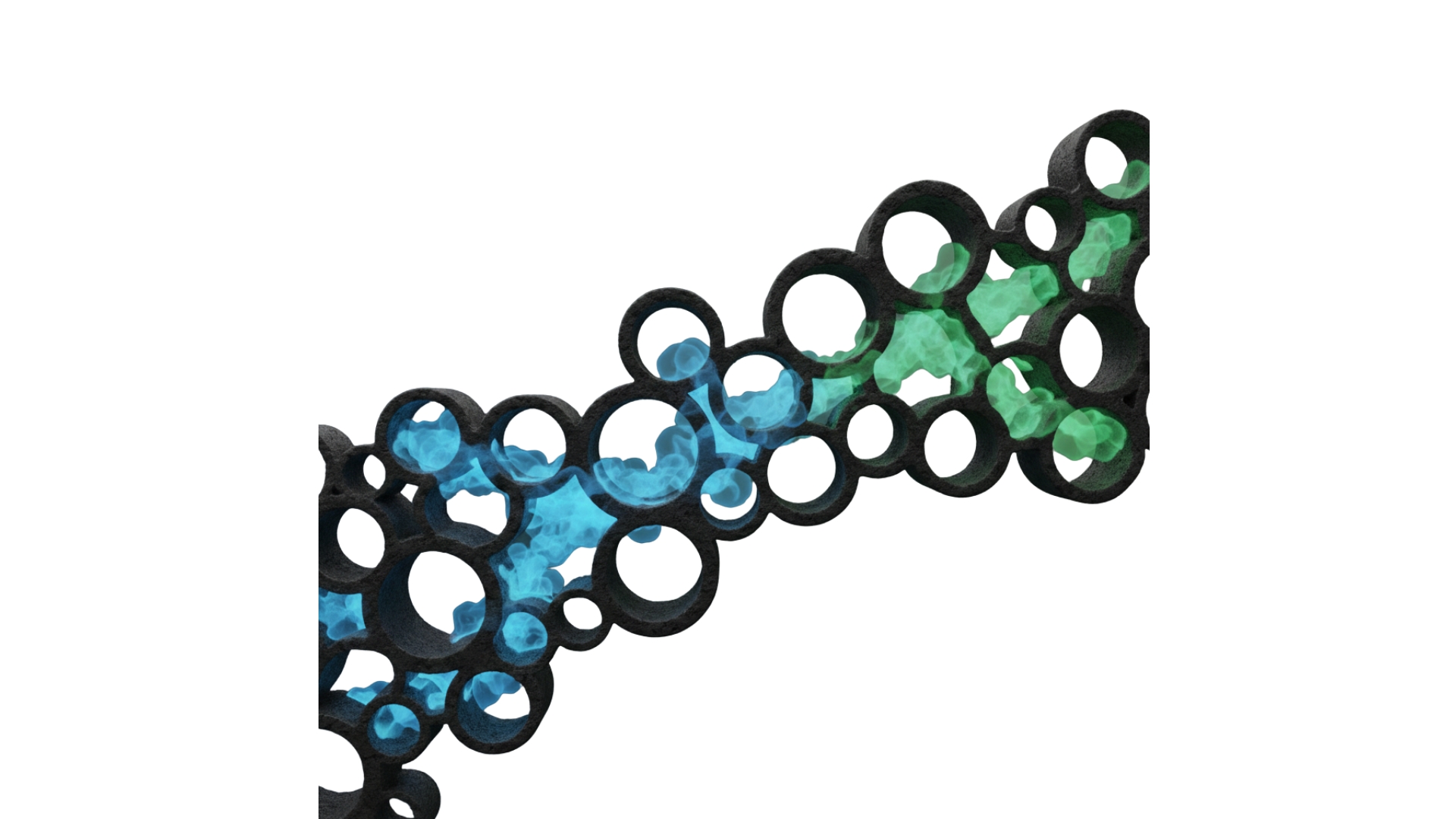
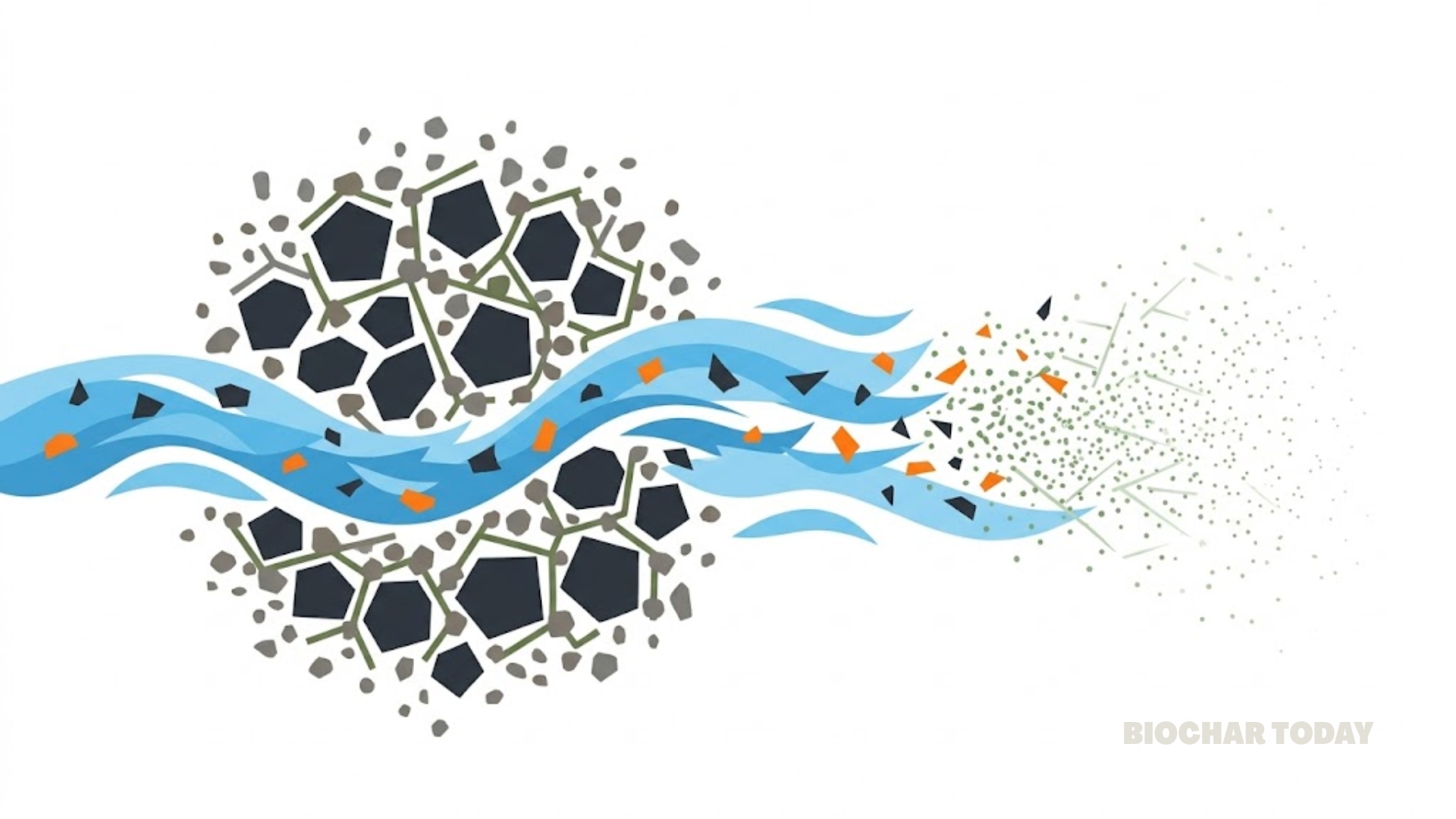
The core discovery of this work centers on the precise regulation of the internal architecture of the biochar. By adjusting the ratio of phosphoric acid used during the initial activation stage, the researchers were able to control the proportion of mesopores, which are medium-sized channels within the material. These channels are essential because they serve as rapid diffusion pathways, allowing carbon dioxide molecules to bypass congested internal routes and reach the smaller micropores where the gas is actually captured and stored. The study identified a specific threshold where the mesopore proportion is approximately 40% as the perfect balance for peak performance.
When this optimal internal structure was achieved at a three-to-one impregnation ratio, the biochar exhibited a remarkable specific surface area exceeding 3,000 square meters per gram. This massive internal surface area provided the necessary space for a maximum carbon dioxide adsorption capacity of 3.434 millimoles per gram under standard conditions. More importantly, the well-developed network of channels allowed for rapid movement of gas, resulting in a dynamic adsorption capacity of 3.02 millimoles per gram. This represents a significant improvement over traditional biochars that often suffer from slow kinetics, making them less effective for real-world industrial applications where gas flows quickly through capture systems.
The research also highlighted the dangers of over-processing the material. While some activation is necessary to open up the pores, using too much phosphoric acid led to a collapse of the delicate internal structure. When the mesopore proportion exceeded 50%, the walls between the tiny storage sites began to break down, and residual chemicals blocked the remaining pathways. This structural degradation caused a sharp decline in the total amount of carbon dioxide the material could capture, proving that more chemical activation is not always better. The study provides a clear quantitative roadmap for manufacturers to hit the sweet spot of material engineering.
Beyond the impressive numbers, the use of microwave-assisted pyrolysisPyrolysis is a thermochemical process that converts waste biomass into bio-char, bio-oil, and pyro-gas. It offers significant advantages in waste valorization, turning low-value materials into economically valuable resources. Its versatility allows for tailored products based on operational conditions, presenting itself as a cost-effective and efficient More represents a major step forward in manufacturing efficiency. Compared to conventional heating methods that are slow and energy-intensive, microwave heating creates localized hotspots that complete the carbonization process within minutes. This volumetric heating mechanism not only saves energy but also helps create a more uniform and interconnected pore network. By utilizing corn straw, an abundant agricultural byproduct, this process turns waste into a valuable tool for ecological security and sustainable development, sequestering carbon that would otherwise be released into the atmosphere.
This breakthrough offers a practical strategy for designing next-generation adsorbents that can be integrated directly into existing industrial flue gas treatment systems. The ability to achieve high capacity and rapid kinetics simultaneously resolves a long-standing trade-off in materials science. As the world moves toward carbon neutrality, these engineered biochars provide a cost-effective, stable, and hydrophobic alternative to expensive and corrosive liquid scrubbing technologies. This research establishes the mesopore proportion as a central design parameter, paving the way for the large-scale industrial application of biomass-derived carbon capture solutions.
Source: Qiu, T., Cao, W., Xie, K., Ahmad, F., Zhao, W., Mostafa, E., & Zhang, Y. (2025). CO2 capture performances of H3PO4/KOH activated microwave pyrolyzed porous biochar. Sustainable Carbon Materials, 1, e004.



Leave a Reply