
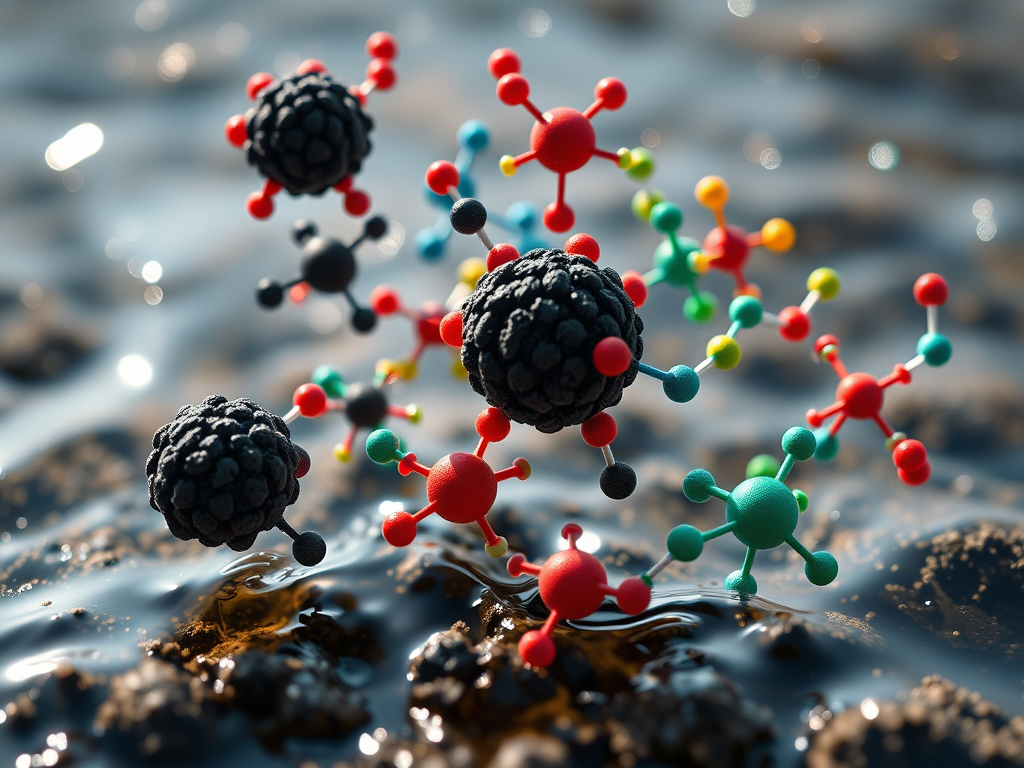
Zhou et al., in Environment International, delved into the molecular mechanisms behind the aggregation of nano-biochar in dissolved organic matter (DOM). Nano-biochar, a cutting-edge material derived from biomassBiomass is a complex biological organic or non-organic solid product derived from living or recently living organism and available naturally. Various types of wastes such as animal manure, waste paper, sludge and many industrial wastes are also treated as biomass because like natural biomass these More, holds immense potential for environmental remediation and agricultural applications. However, its aggregation behavior in the presence of DOM, a complex mixture of organic compounds found in natural waters and soils, can significantly influence its effectiveness. The researchers employed molecular dynamics simulations to investigate the interactions between nano-biochar and various aromatic components of DOM, including phenols, benzoic acids, and humic acids.
The study revealed that the aggregation of nano-biochar is strongly influenced by the type and concentration of aromatic components in DOM. The presence of π-π interactions between the aromatic rings of DOM and the graphitic structure of nano-biochar was found to be a key driver of aggregation. Additionally, the functional groups present on the surface of nano-biochar, such as carboxyl and hydroxyl groups, played a significant role in mediating its interactions with DOM.
The findings of this study provide valuable insights into the complex interplay between nano-biochar and DOM, which can inform the design and optimization of nano-biochar-based applications. By understanding the factors that govern nano-biochar aggregation, researchers can tailor its properties to enhance its performance in various environmental and agricultural settings.
SOURCE: Zhou, Z., Lu, M., Huang, Y., Zhao, C., Wang, Y., Pidou, M., Wu, M., Chen, Q., Jeffrey, P., & Pan, B. (2025). Molecular mechanistic insights towards aggregation of nano-biochar moderated by aromatic components in dissolved organic matter. Environment International, 109350. https://doi.org/10.1016/j.envint.2025.109350




Leave a Reply