
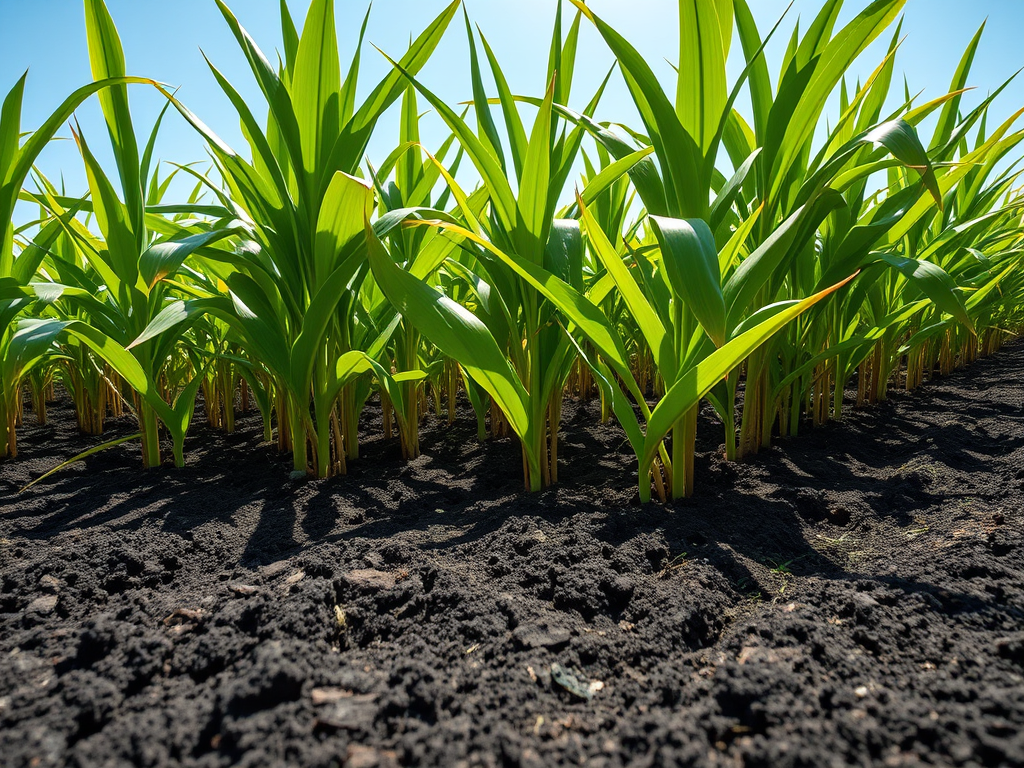
Sugarcane is a vital global crop, contributing 80% of the world’s sugar and serving as a key source for biofuel production. However, continuous sugarcane cultivation often leads to soil degradation, acidification, and nutrient imbalances, significantly reducing yields. While chemical fertilizers are commonly used to boost production, their overuse can decrease nutrient absorption efficiency and worsen soil quality. This highlights the urgent need for sustainable cultivation methods. BiocharBiochar is a carbon-rich material created from biomass decomposition in low-oxygen conditions. It has important applications in environmental remediation, soil improvement, agriculture, carbon sequestration, energy storage, and sustainable materials, promoting efficiency and reducing waste in various contexts while addressing climate change challenges. More offers a promising solution. It is widely recognized for its ability to enhance soil physicochemical properties, organic matter content, and microbial diversity due to its porous structure and high stability. When combined with chemical fertilizers, biochar can significantly improve nutrient absorption and crop yield, making fertilizer use more efficient. However, the effectiveness of biochar varies depending on its raw material, preparation method, and the specific soil type.
Sugar filter mud, a significant byproduct of sugar production (0.25 kg of mud per 1 kg of sucrose), is rich in organic matter, cane fiber, protein, and calcium phosphate, making it an ideal, low-cost feedstockFeedstock refers to the raw organic material used to produce biochar. This can include a wide range of materials, such as wood chips, agricultural residues, and animal manure. More for biochar production. Despite its potential, limited research has explored the specific effects of sugar filter mud biochar on soil properties, enzymes, and microorganisms in sugarcane fields. A recent two-year field experiment conducted by Shuifang Zhu, Penglian Liang, Lipei Yang, Benhui Wei, Shijian Han, Meiyan Wu, Xiangyi He, Weicong Zeng, Zhenli He, Jiming Xiao, Suli Li, and Zhigang Li, and published in Agronomy, investigated the impact of biochar-based fertilizers derived from sugarcane filter mud and rice straw on soil characteristics and sugarcane yield in Guangxi’s acidic red soil. The study utilized a specialized Fenlong-ridging tillage method, which can reach soil depths of 40–50 cm, known for improving soil structure and water availability. Three treatments were compared: conventional chemical fertilization (CK), straw biochar-based fertilizer (T1), and sugar filter mud biochar-based fertilizer (T2).
The findings revealed that both T1 and T2 positively impacted soil physical properties, especially in the second year (2022). Compared to CK, soil bulk density under T1 and T2 decreased by 2.33%, while soil porosityPorosity of biochar is a key factor in its effectiveness as a soil amendment and its ability to retain water and nutrients. Biochar’s porosity is influenced by feedstock type and pyrolysis temperature, and it plays a crucial role in microbial activity and overall soil health. Biochar More increased by 2.00% and 2.31%, respectively. Sugar filter mud biochar (T2) demonstrated a specific surface area more than four times greater than straw biochar (18.79 m2g−1 vs. 4.43 m2g−1), indicating a stronger capacity for adsorption and providing more attachment sites for elements. T2 significantly increased soil moisture content by 7.17% in 2021 and 13.05% in 2022 compared to CK, and raised soil pHpH is a measure of how acidic or alkaline a substance is. A pH of 7 is neutral, while lower pH values indicate acidity and higher values indicate alkalinity. Biochars are normally alkaline and can influence soil pH, often increasing it, which can be beneficial More by 17.89-24.14% in 2021 and 8.68-11.57% in 2022.
Furthermore, T2 significantly boosted nutrient availability and soil organic matter (SOM). In 2021, T2 increased total nitrogen (TN) by 16.25%, total phosphorus (TP) by 32.5%, and total potassium (TK) by 12.02% over CK. In 2022, these increases were 14.67%, 19.44%, and 10.36%, respectively. Sucrase activity, an enzyme vital for nutrient cycling, also increased by 16.70% under T2 compared to CK. Microbiome analysis showed that T2 enriched beneficial bacterial taxa such as Gemmatimonadota and Sphingomonas, while suppressing Acidothermus. These changes in the bacterial community structure were strongly influenced by soil pH, TN, available phosphorus (AP), and SOM. The authors propose that the higher specific surface area, mineral content, and alkalinity of sugar filter mud biochar contributed to these positive changes.
Ultimately, these synergistic improvements in soil properties and microbial communities translated into a significant increase in sugarcane yield. T2 increased sugarcane yield by 5.63-11.16% compared to T1, and by 7.22-19.36% compared to CK. This suggests that sugar filter mud biochar-based fertilizers offer a promising approach for sustainably enhancing sugarcane production in acidic red soil regions. Future studies are needed to confirm these findings across multiple sites and over longer periods, and to evaluate the economic viability for wider adoption.
Source: Zhu, S., Liang, P., Yang, L., Wei, B., Han, S., Wu, M., He, X., Zeng, W., He, Z., Xiao, J., Li, S., & Li, Z. (2025). Effects of Biochar-Based Fertilizers on Fenlong-Ridging Soil Physical Properties, Nutrient Activation, Enzyme Activity, Bacterial Diversity, and Sugarcane Yield. Agronomy, 15(7), 1594.




Leave a Reply