
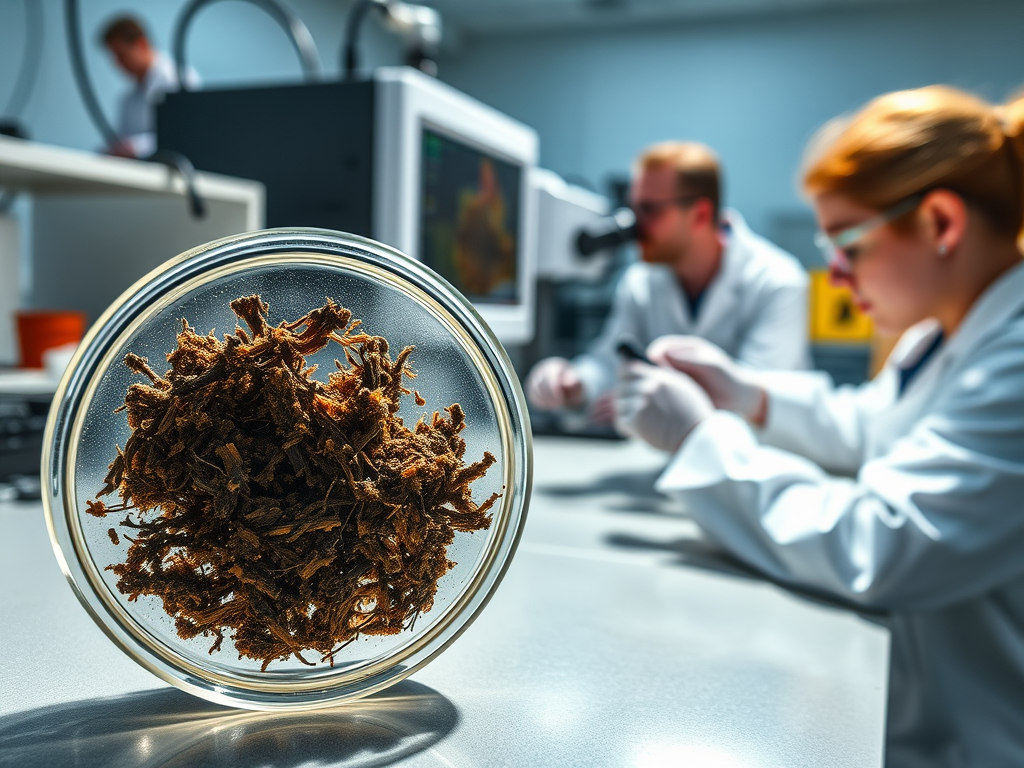
The concrete industry is a major contributor to global greenhouse gas emissions, accounting for about 7% of the total, largely due to the energy-intensive production of Portland cement. With the demand for concrete expected to rise by over 20% by 2050, finding sustainable alternatives is more urgent than ever. One promising solution gaining traction is the use of biocharBiochar is a carbon-rich material created from biomass decomposition in low-oxygen conditions. It has important applications in environmental remediation, soil improvement, agriculture, carbon sequestration, energy storage, and sustainable materials, promoting efficiency and reducing waste in various contexts while addressing climate change challenges. More as a concrete additive. This innovative material acts as a partial cement substitute and a carbon sink, offering a way to significantly reduce the environmental impact of construction. A recent article in the e-Journal of Nondestructive Testing by Hatice Kilci investigates how biochar’s unique pore structure influences its performance in cementitious systems.
Biochar’s environmental appeal lies in its dual function: it replaces a portion of the cement clinker, which reduces emissions from production, and it permanently locks away carbon within the concrete, a process known as carbon sequestration. Studies suggest that replacing just 10% of cement content with biochar could lead to an annual reduction of 880 million tons of CO2, which is about 1.1% of global annual greenhouse gas emissions. Biochar’s low density allows for a high mass replacement, further boosting its CO2 savings potential. The study highlights that the properties of biochar, which vary based on the original biomassBiomass is a complex biological organic or non-organic solid product derived from living or recently living organism and available naturally. Various types of wastes such as animal manure, waste paper, sludge and many industrial wastes are also treated as biomass because like natural biomass these More and the high-temperature pyrolysisPyrolysis is a thermochemical process that converts waste biomass into bio-char, bio-oil, and pyro-gas. It offers significant advantages in waste valorization, turning low-value materials into economically valuable resources. Its versatility allows for tailored products based on operational conditions, presenting itself as a cost-effective and efficient More process used to create it, are key to its effectiveness.
The research focused on the microstructure of biochar and its effect on the concrete’s load-bearing and filtering capabilities. Using synchrotron-based computed tomography (SXCT), the study characterized the biochar’s internal structure, quantifying key features like pore size, wall thickness, and porosityPorosity of biochar is a key factor in its effectiveness as a soil amendment and its ability to retain water and nutrients. Biochar’s porosity is influenced by feedstock type and pyrolysis temperature, and it plays a crucial role in microbial activity and overall soil health. Biochar More. This analysis revealed that while the biochars tested had similar specific surface areas and wall thicknesses, their average pore size varied dramatically. For instance, wood biochar had the smallest pores at 2.35 µm, while coconut shell biochar had significantly larger pores at 9.78 µm. This finding underscores that pore size and distribution are critical factors influencing biochar’s performance, not just its overall porosity.
To assess biochar’s functional properties in concrete, the researchers conducted tests on mortar samples containing biochar. They use H-NMR (nuclear magnetic resonance) to measure moisture distribution, finding that biochar-modified mortar samples showed a significant increase in water absorption compared to reference samples without biochar. This indicates that biochar effectively enhances moisture retention, making it a viable material for filter applications. The study also use ICP-OES (inductively coupled plasma optical emission spectroscopy), which confirmed that biochar can absorb chloride ions, with absorption increasing over time. While these filtering properties are promising, the study did note that biochar’s incorporation can lead to a reduction in mechanical strength, a challenge that requires further research to overcome. The findings suggest that the interplay between pore size, porosity, and how the cement paste penetrates biochar’s pores is crucial for its overall performance, affecting both mechanical strength and filtration.
In conclusion, this study provides valuable insights into how biochar’s specific pore structure affects its function as a concrete additive. It demonstrates that biochar can significantly enhance moisture absorption and offers potential for filter applications. However, the concurrent reduction in mechanical strength remains a challenge for full-scale implementation. Despite this, the research confirms biochar’s promise as a multifunctional additive for sustainable concrete, contributing to a substantial reduction in global emissions. Future studies will be essential to fully understand the complex relationship between biochar’s microstructure, mechanical performance, and filtering capabilities. The findings pave the way for developing innovative, sustainable building materials that can help decarbonize the construction industry.
Source: Kilci, H. (2025). Influence of the pore structure of biochar on the load-bearing and filtering behavior of biochar as a concrete admixture. e-Journal of Nondestructive Testing, 31715.




Leave a Reply