
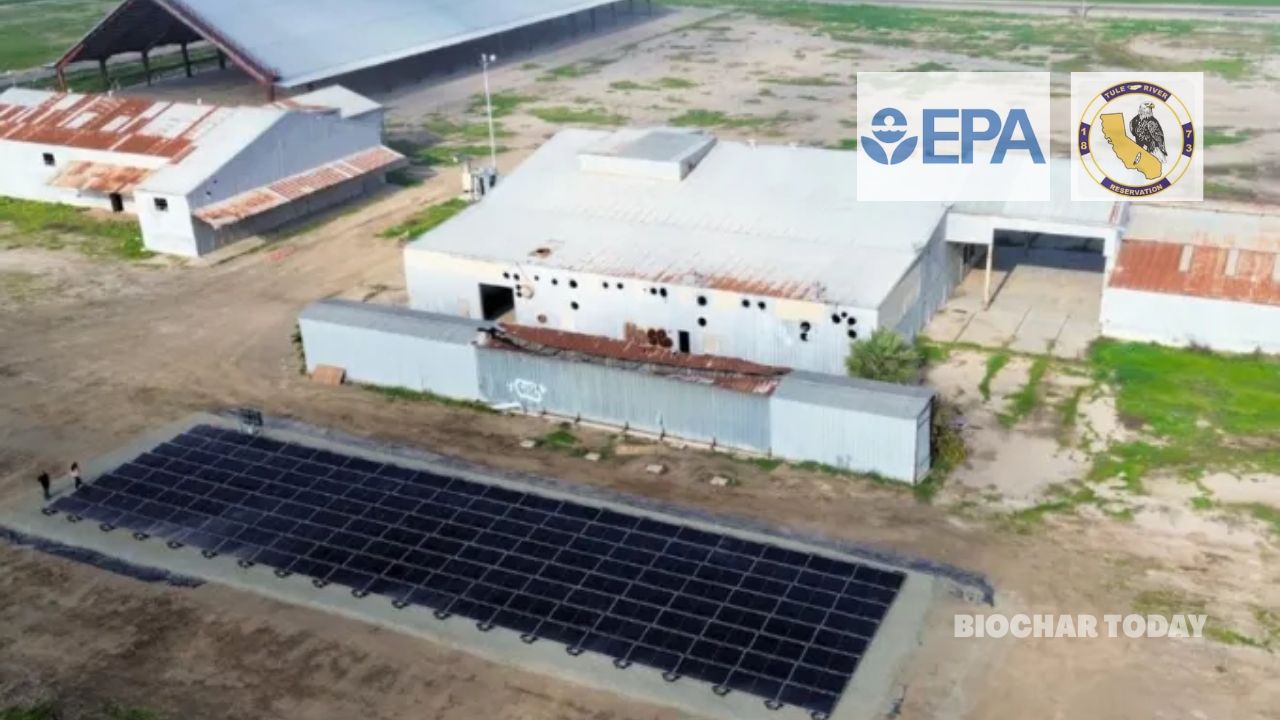
The U.S. Environmental Protection Agency (EPA) has selected the Tule River Economic Development Corporation (TREDC), a tribal entity of the Tule River Tribe of California, for a $14.7 million Climate Pollution Reduction Grant. This federal investment in the United States aims to convert an abandoned cotton gin site in Tipton, California, into a scalable biomass-to-biochar facility. Using advanced pyrolysisPyrolysis is a thermochemical process that converts waste biomass into bio-char, bio-oil, and pyro-gas. It offers significant advantages in waste valorization, turning low-value materials into economically valuable resources. Its versatility allows for tailored products based on operational conditions, presenting itself as a cost-effective and efficient More technology developed by the provider ARTi, the project will process woody biomassBiomass is a complex biological organic or non-organic solid product derived from living or recently living organism and available naturally. Various types of wastes such as animal manure, waste paper, sludge and many industrial wastes are also treated as biomass because like natural biomass these More from the Sierra Nevada mountains and local agricultural waste. By diverting this material from traditional slash pile burning, the initiative aligns with the tribe’s sovereign climate action plan to reduce regional air pollution and mitigate catastrophic wildfire risks.
A critical challenge addressed by this project is the disposal of massive volumes of woody waste generated by orchard turnover and forest management in California’s Central Valley. Agricultural burning is increasingly restricted to improve air quality, yet forest floors remain overloaded with “dead, dying, and diseased” trees that fuel wildfires. Furthermore, the regional agricultural sector faces declining soil quality and water scarcity. Finding a method to manage these waste streams while sequestering carbon and supporting the local economy has been a persistent hurdle for tribal and regional planners who must balance environmental protection with industrial feasibility.
The solution involves the deployment of a five-unit pyrolysis system designed to handle diverse feedstocks, including orchard trimmings, tree limbs, and sawmill dust. This technology heats the biomass in low-oxygen chambers to produce biocharBiochar is a carbon-rich material created from biomass decomposition in low-oxygen conditions. It has important applications in environmental remediation, soil improvement, agriculture, carbon sequestration, energy storage, and sustainable materials, promoting efficiency and reducing waste in various contexts while addressing climate change challenges. More, a stable carbon form that can be incorporated into soil to improve water retention and crop yields. After an initial natural gas injection, the system becomes self-sustaining by recycling its own heat and converting carbon monoxide and hydrogen into electricity to power the facility’s operations. This circular model ensures that the carbon removed from the atmosphere remains locked in the soil for hundreds to thousands of years.
The outcomes of the EPA’s investment include significant carbon sequestration and the creation of approximately a dozen tribal jobs. TREDC projections indicate the facility will remove up to 10,600 metric tons of carbon dioxide annually, providing the tribe with a new revenue stream through carbon credit markets. Beyond climate benefits, the produced biochar will be sold to regional growers to enhance agricultural resilience in a water-stressed corridor. This project serves as a replicable model for tribal energy sovereignty, proving that sovereign nations can successfully lead high-technology climate solutions while diversifying their economic base.




Leave a Reply