

Key Takeaways
- Converting plant waste into ultra-small charcoalCharcoal is a black, brittle, and porous material produced by heating wood or other organic substances in a low-oxygen environment. It is primarily used as a fuel source for cooking and heating. More particles creates a powerful tool for farming and land protection.
- These microscopic particles help soil hold onto vital nutrients and water much longer than standard treatments.
- The material traps hazardous heavy metals and chemical pollutants to prevent them from entering crops.
- Using this technology improves crop growth while naturally lowering harmful greenhouse gas emissions from fields.
- Converting waste into high-value agricultural supplies supports sustainable farming and circular economic practices.
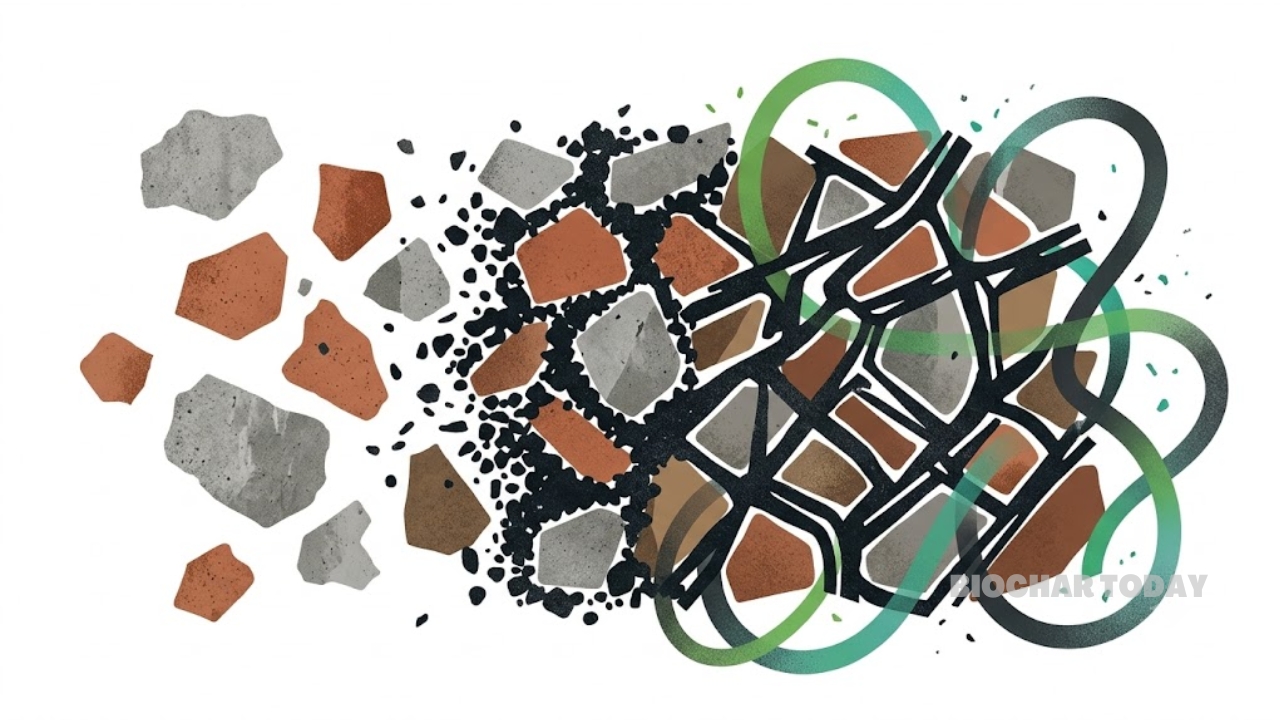
Modern agricultural systems face significant threats from soil degradation, chemical pollution, water scarcity, and climate variability. Conventional soil management practices and synthetic fertilizers often lead to nutrient leachingLeaching is the process where nutrients are dissolved and carried away from the soil by water. This can lead to nutrient depletion and environmental pollution. Biochar can help reduce leaching by improving nutrient retention in the soil. More, reduced soil quality, and environmental contamination. Transforming agricultural residues and industrial organic waste into nano-biochar offers a sustainable, climate-resilient solution. By processing biomassBiomass is a complex biological organic or non-organic solid product derived from living or recently living organism and available naturally. Various types of wastes such as animal manure, waste paper, sludge and many industrial wastes are also treated as biomass because like natural biomass these More through low-temperature oxygen-limited heating and mechanical nanoscale reduction, organic waste is converted into high-value carbonaceous materials that support circular bioeconomy goals.
Nano-biochar particles measure under one hundred nanometers and possess physical and chemical features distinct from traditional biocharBiochar is a carbon-rich material created from biomass decomposition in low-oxygen conditions. It has important applications in environmental remediation, soil improvement, agriculture, carbon sequestration, energy storage, and sustainable materials, promoting efficiency and reducing waste in various contexts while addressing climate change challenges. More. The engineered material features a high specific surface area, complex multiscale pore networks, and abundant reactive oxygen-containing surface groups such as hydroxyl, carboxyl, and carbonyl functions. These structural properties give the material high chemical reactivity, extended colloidal stability, and strong dispersibility in soil systems. The expanded active surface area creates numerous binding sites that significantly boost cation exchange capacity, allowing soils to retain essential plant nutrients like ammonium, potassium, calcium, and magnesium.
In agricultural soils, nano-biochar acts as a natural sponge and targeted nutrient carrier. Its microporous architecture improves water retention and hydraulic movement in arid or sandy soils, reducing irrigation requirements. Agrochemicals and fertilizers loaded onto the particle matrix are released slowly into the root zone, preventing nutrient runoff and increasing overall fertilizer use efficiency. The material also modulates soil pHpH is a measure of how acidic or alkaline a substance is. A pH of 7 is neutral, while lower pH values indicate acidity and higher values indicate alkalinity. Biochars are normally alkaline and can influence soil pH, often increasing it, which can be beneficial More and creates protective habitats for beneficial microbial communities, including nitrogen-fixing bacteria and mycorrhizal fungiThese are friendly fungi that form a partnership with plant roots. They act like an extension of the root system, helping plants access water and nutrients more effectively. Biochar can create a cozy habitat for these helpful fungi, boosting their growth and improving plant health. More, which stimulate root development and plant health.
Beyond soil fertility, nano-biochar demonstrates broad environmental remediation capabilities. The surface functional groups immobilize toxic heavy metals like lead, cadmium, chromium, and mercury through electrostatic attraction, ion exchange, and surface complexation, preventing contaminant uptake by food crops. The material also adsorbs organic pollutants, including pesticides, pharmaceutical residues, and microplastics. Furthermore, incorporating nano-biochar into agricultural management promotes long-term carbon sequestration and alters soil microbial dynamics to reduce methane and nitrous oxide emissions from farmland.
While nano-biochar presents transformative potential for climate-smart farming, several practical challenges remain to be solved. Current manufacturing methods such as high-energy mechanical milling require optimization to lower production costs and ensure standardized material properties. Regulatory frameworks and comprehensive risk assessments are also needed to evaluate long-term ecotoxicological safety across diverse field environments. Continued multi-location field trials will help establish scalable, cost-effective protocols for integrating nano-biochar into sustainable farming systems.
Source: Pandey, V., Kumari, S., Ansabayeva, A., Abdelkader, M., & Ahmed, Z. F. R. (2026). Revolutionizing sustainability of agroecosystems using nano-biochar solutions: Agricultural and environmental perspectives. CABI Agriculture and Bioscience, 7(1), Article 63.




Leave a Reply