
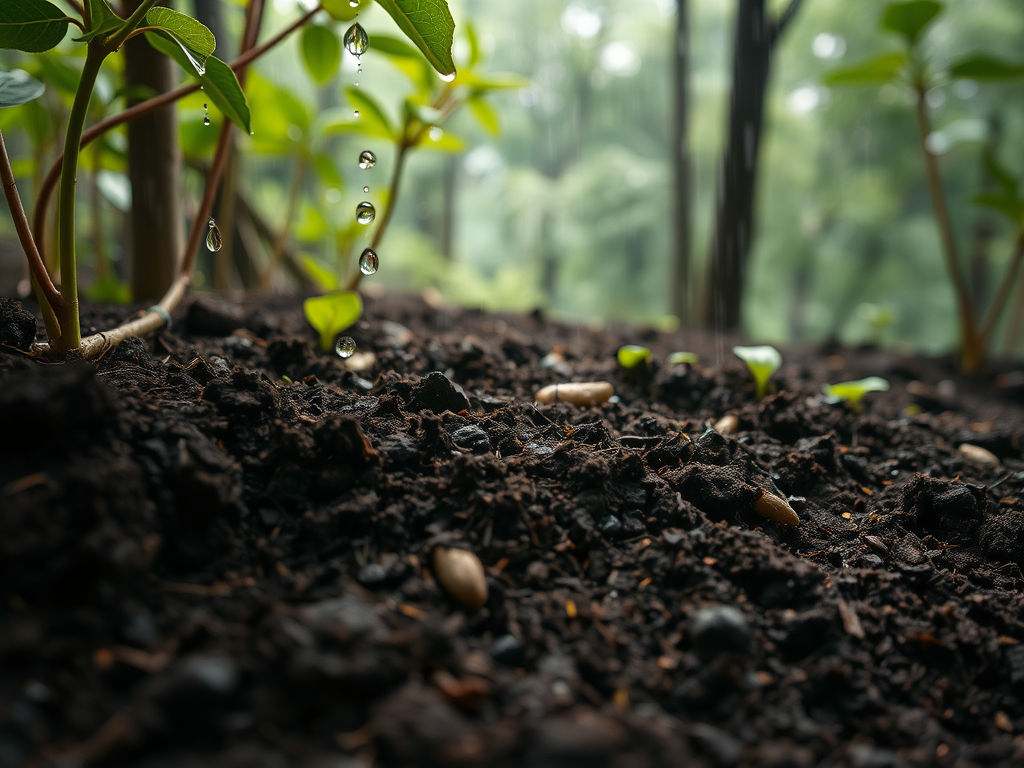
Ever wondered how biochar—a seemingly simple material—can orchestrate a symphony beneath our feet? A recent study published in Ecological Processes explored how biocharBiochar is a carbon-rich material created from biomass decomposition in low-oxygen conditions. It has important applications in environmental remediation, soil improvement, agriculture, carbon sequestration, energy storage, and sustainable materials, promoting efficiency and reducing waste in various contexts while addressing climate change challenges. More interacts with rainfall and soil respiration in urban camphor forests, uncovering fascinating insights with implications for climate action and soil management.
Soil respiration, the process of carbon dioxide release from the soil, plays a pivotal role in the global carbon cycle. This study reveals that biochar, derived from rice straw, not only boosts soil respiration rates but also alters how soils respond to rainfall. Higher doses of biochar (up to 45 tons per hectare) significantly increased soil respiration, particularly during periods following rainfall. Intriguingly, biochar moderated the usual dependency of soil respiration on moisture and temperature—potentially a crucial factor for managing soil health in variable climates.
Rainfall events emerged as key influencers. During wet periods, biochar mitigated the spikes in soil respiration that typically follow rain, reducing the direct correlation between moisture and respiration rates. This highlights biochar’s potential to stabilize soil carbon fluxes, even under extreme weather conditions, making it an essential tool for sustainable forest and urban soil management. But why does this matter? Understanding biochar’s effects can help us design resilient ecosystems as climate change intensifies rainfall variability. The study emphasizes that biochar is not just a soil amendment—it’s a bridge to sustainable urban forests, better carbon management, and healthier soils.
Our Take
By integrating biochar into urban and agricultural landscapes, we could reduce carbon emissions, improve soil structure, and make ecosystems more adaptable to changing climates. While this study sheds light on biochar’s potential to influence soil respiration, it also raises the need for long-term research. The findings show short-term effects, but the aging of biochar and its interactions with soil and climate factors over time remain uncertain. For biochar producers and policymakers, the challenge lies in balancing its promising benefits with the ecological nuances of its application.
SOURCE: Zu, H., Deng, Z., Liu, X., Luo, J., Chen, Y., Yi, M., … & Yan, W. (2025). Effects of biochar on soil respiration mediated by rainfall events: evidence from one-year field experiment in an urban forest. Ecological Processes. https://doi.org/10.1186/s13717-024-00571-z




Leave a Reply