
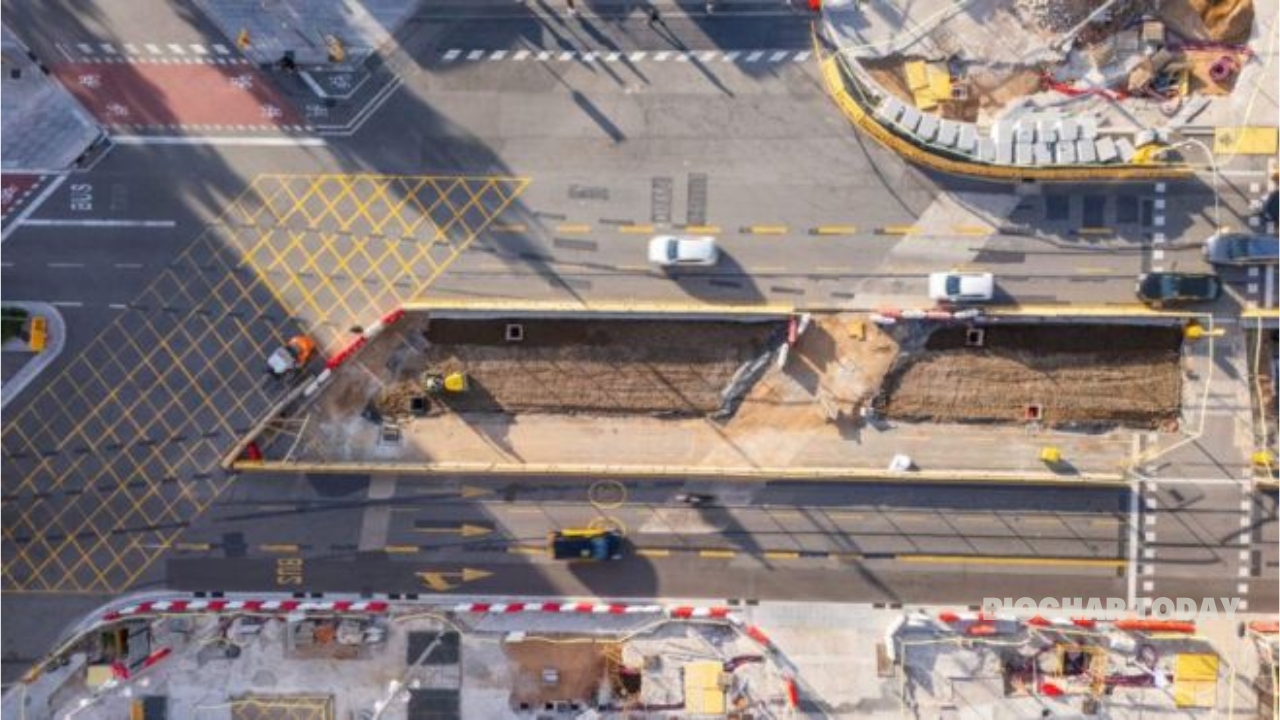
The Barcelona City Council in Spain has launched two innovative pilot projects focused on the decarbonization of urban infrastructure by incorporating biocharBiochar is a carbon-rich material created from biomass decomposition in low-oxygen conditions. It has important applications in environmental remediation, soil improvement, agriculture, carbon sequestration, energy storage, and sustainable materials, promoting efficiency and reducing waste in various contexts while addressing climate change challenges. More into road and sidewalk construction. These initiatives represent a strategic collaboration between municipal authorities, academic researchers, and construction firms to reduce the carbon footprint of public works. By utilizing biochar as a sustainable filler in bituminous mixtures and other paving materials, the city aims to transform standard gray infrastructure into functional carbon sinks. This approach aligns with Barcelona’s broader climate goals and its 2026 status as the World Capital of Architecture, showcasing a commitment to “renaturalizing” the urban environment through advanced material science.
A central challenge addressed by these projects is the high environmental impact of traditional pavement manufacturing and maintenance. Conventional bituminous mixtures rely on energy-intensive processes and high-emissions fillers like calcium carbonate, contributing significantly to the city’s overall greenhouse gas inventory. Furthermore, standard urban surfaces are often impermeable, which exacerbates the “heat island” effect and disrupts natural water cycles in dense Mediterranean cities. Municipalities have historically struggled to find scalable, cost-effective alternatives that maintain the mechanical durability required for heavy urban traffic while achieving meaningful carbon neutrality.
The solution implemented in Barcelona involves the technical substitution of traditional mineral fillers with biochar derived from organic waste sources, specifically olive stones and olive pomace. Research conducted in partnership with local entities has demonstrated that biochar, with a recommended particle size of less than 75 µm, can be effectively integrated into asphalt binders. This specialized filler not only replaces high-carbon materials but also leverages the porous structure of biochar to improve the asphalt’s resistance to rutting, cracking, and aging. The pilot projects utilize these “bio-asphalts” and sustainable tiles to create more resilient, low-emission surfaces that are designed to remain stable across various environmental conditions.
The outcomes of these pilots suggest a transformative potential for the paving industry, with research indicating that biochar-infused mixtures can achieve a reduction in CO2 emissions of up to 76% compared to conventional mixtures. Beyond carbon sequestration, the new pavements contribute to urban cooling and improved air quality by reducing chemical emissions typically associated with standard asphalt. These projects have provided a successful blueprint for integrating circular economy principles into large-scale public infrastructure, showing that biochar can serve as a strategic asset for cities seeking to meet stringent climate accountability standards. As Barcelona continues its urban transformation, these sustainable roadways provide a replicable model for other metropolises aiming for a carbon-neutral future.


Leave a Reply