

Cadmium (Cd) contamination in soil poses a serious threat to food safety and human health, necessitating effective remediation strategies. While biocharBiochar is a carbon-rich material created from biomass decomposition in low-oxygen conditions. It has important applications in environmental remediation, soil improvement, agriculture, carbon sequestration, energy storage, and sustainable materials, promoting efficiency and reducing waste in various contexts while addressing climate change challenges. More and clay minerals are recognized as cost-effective immobilization materials, their individual adsorption capacities are limited. A recent study by Chao Wang, Shan Gao, Tao Sun, Shihang Wu, Yuebing Sun, and Hongtao Jia, published in Water Air Soil Pollution, addresses this by systematically evaluating wood chip biochar (WBC), sepiolite (Sep), and their composite (WBC+Sep) for Cd immobilization through comprehensive batch experiments and field trials.
The study’s batch experiments revealed that the WBC+Sep composite exhibits an exceptional Cd2+ adsorption capacity of 32.40 mg⋅g−1, significantly outperforming individual WBC (13.64 mg⋅g−1) and Sep (9.28 mg⋅g−1). The adsorption kinetics followed pseudo-second-order dynamics, and fitting to the Langmuir isotherm confirmed the predominance of monolayer chemisorption, indicating strong chemical bonding.
Field trials conducted on Cd-contaminated farmland in Tianjin, China, further supported these findings. The application of WBC+Sep reduced DTPA-extractable Cd in the soil by 28.95% to 36.84%, effectively converting exchangeable and carbonate-bound Cd into more stable residual forms. This is crucial because exchangeable and carbonate-bound states are considered the most mobile forms of Cd, while the residual state is more stable. The WBC+Sep composite demonstrated superior immobilization efficacy compared to other treatments, with the residual Cd fraction increasing from 6% to 13%.
The composite treatment also significantly reduced Cd concentrations in maize plants. The hierarchy of Cd accumulation in maize parts was consistently observed as roots > stems > leaves > grains. Importantly, Cd concentrations in maize grains were reduced by 6.99% to 45.25% across different maize varieties. For example, the W2S1 composite treatment (10 kg WBC + 10 kg Sep) reduced grain Cd concentrations by 39.30%-45.50% for Liyu 16, 13.12%-34.69% for Sanbei 218, and 38.47%-41.12% for Zhengdan 958. These reductions brought Cd levels in maize grain below China’s National Food Safety Standard ( Cd≤0.1 mg⋅kg−1, GB2762-2022). The bioconcentration factor (BCF) from soil to grains decreased by 8.30%-45.25% in Liyu 16, 6.99%-40.26% in Zhengdan 958, and 9.73%-33.91% in Sanbei 218.
Beyond Cd immobilization, the application of WBC+Sep also led to improvements in soil properties. Soil pHpH is a measure of how acidic or alkaline a substance is. A pH of 7 is neutral, while lower pH values indicate acidity and higher values indicate alkalinity. Biochars are normally alkaline and can influence soil pH, often increasing it, which can be beneficial More increased by 0.03 to 0.20 units, and dissolved organic carbon (DOC) concentrations significantly improved by 4.23% to 13.43%. These changes were negatively correlated with bioavailable Cd fractions, meaning higher pH and DOC corresponded to lower available Cd. Furthermore, the activities of soil enzymes such as urease, phosphatase, and catalase were enhanced, indicating improved soil health. The W2S1 composite, in particular, showed the most substantial enhancements in soil urease and alkaline phosphatase activities.
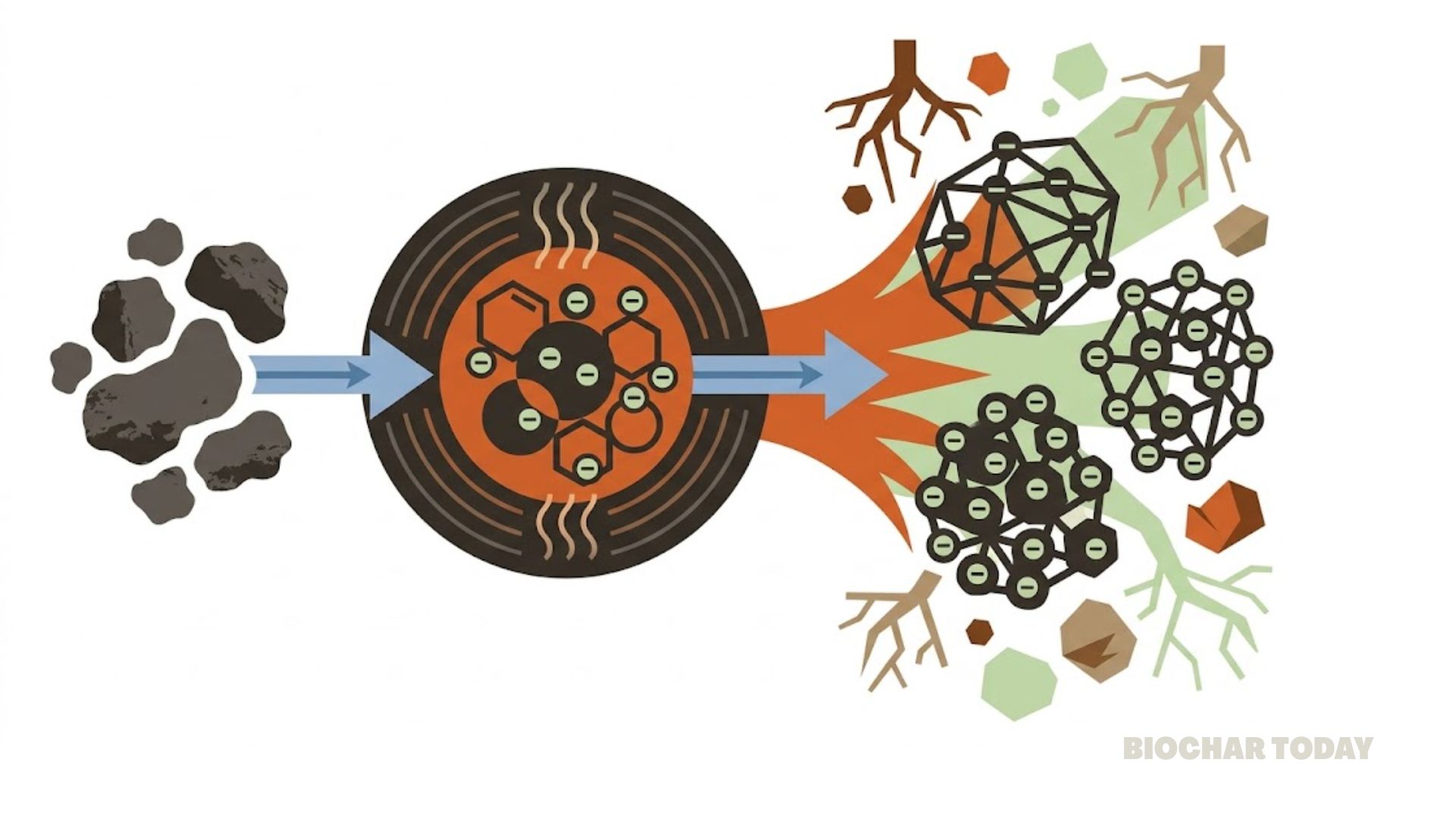
Mechanistic investigations using advanced analytical techniques like SEM-EDS, XRD, and FTIR revealed that Cd immobilization occurred through a combination of pore filling, precipitation , ion exchange, and complexation with oxygen-containing functional groups present on the materials’ surfaces. These findings highlight the potential of WBC+Sep as an effective and sustainable passivation material for the remediation of Cd-contaminated soils, offering a promising approach to simultaneously improve soil quality and ensure safer maize production.
Source:Wang, C., Gao, S., Sun, T., Wu, S., Sun, Y., & Jia, H. (2025). Evaluation of Biochar, Sepiolite, and Their Composites for Immobilization Remediation of Cadmium Contamination Soil: Insights From Batch Experiments and Field Trials. Water, Air, & Soil Pollution, 236(6), 617.


Leave a Reply