
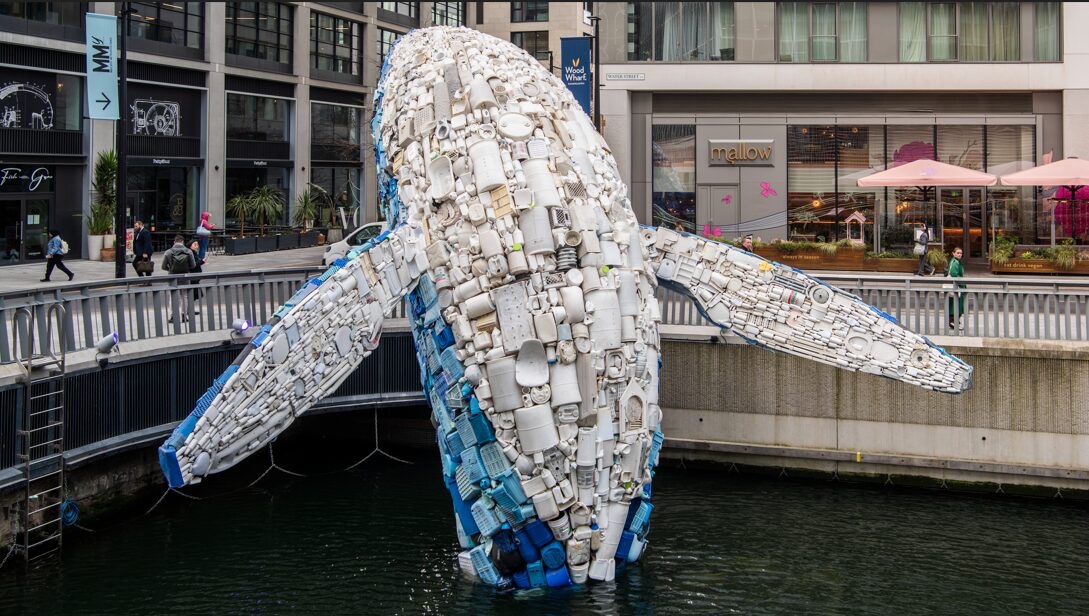
A new public sculpture in London’s Canary Wharf is highlighting the role of circular construction materials in sustainable urban design. The Whale on the Wharf, a 12-metre-high blue whale made from ocean plastic by Studio KCA, now rests on a foundation made with an innovative concrete mix that includes biocharBiochar is a carbon-rich material created from biomass decomposition in low-oxygen conditions. It has important applications in environmental remediation, soil improvement, agriculture, carbon sequestration, energy storage, and sustainable materials, promoting efficiency and reducing waste in various contexts while addressing climate change challenges. More derived from coffee grounds.
Developed by Holcim UK, the mix incorporates biochar produced from spent coffee grounds collected from local coffee shops and fast-growing UK hardwoods. The concrete was formulated at Holcim’s Battersea Readymix plant and delivered in five loads—around 32 cubic metres in total. DiveCo Marine, a specialist civil engineering diving firm, installed the mix beneath the water in Wood Wharf to support the sculpture.
The material innovation lies in the inclusion of carbon-reducing components such as limestone fines and ground granulated blast-furnace slag, along with the coffee-based biochar. According to Holcim UK, this blend cuts embodied carbon by 66% compared to standard concrete, while the biochar locks carbon into the structure, preventing its release into the atmosphere.
Holcim UK has been researching biochar’s potential in concrete with its Innovation Centre in France. Their use of what they call “bio-expresso biochar” demonstrates how waste materials can be repurposed into construction products that meet industry standards and contribute to climate goals.
Unveiled on April 9, the whale sculpture not only draws attention to plastic pollution but also showcases how waste—like used coffee grounds—can help build a more sustainable future.
LEARN MORE: Coffee concrete used for base of four-storey high whale sculpture


Leave a Reply