
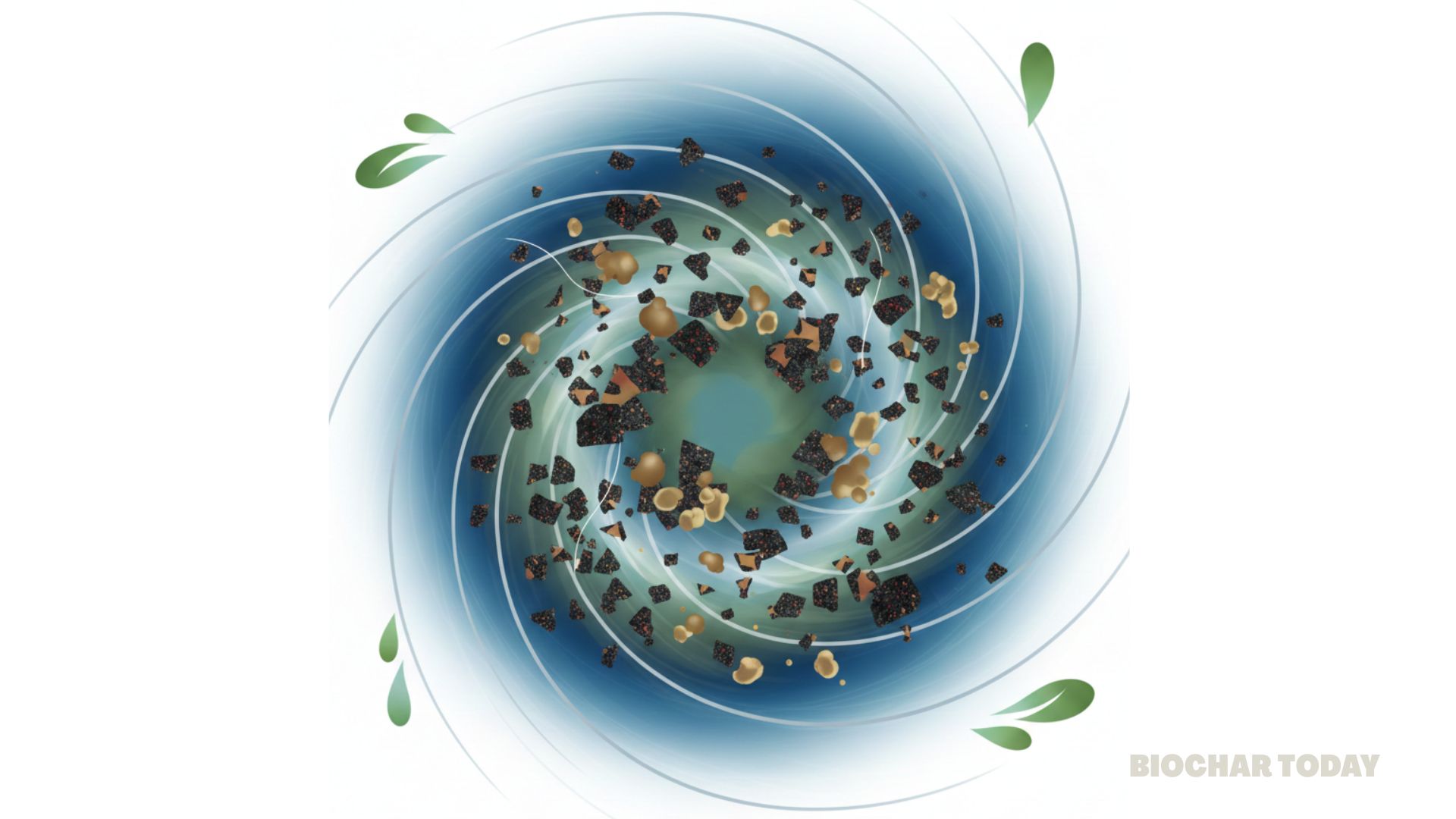
Key Takeaways
- Activated nanomagnetic biocharBiochar is a carbon-rich material created from biomass decomposition in low-oxygen conditions. It has important applications in environmental remediation, soil improvement, agriculture, carbon sequestration, energy storage, and sustainable materials, promoting efficiency and reducing waste in various contexts while addressing climate change challenges. More removes over 90 percent of toxic dyes from industrial wastewater.
- Integrated magnetic properties allow technicians to quickly retrieve the filtering material using external magnets.
- High-performing filters are created from agricultural and industrial waste like coffee husks, nut shells, and waste plastics.
- These materials maintain over 70 percent of their cleaning capacity through five or more reuse cycles.
- Advanced activation techniques produce materials with massive internal surface areas reaching nearly 3,000 square meters per gram.
The release of synthetic dyes from textile, leather, and paper industries into aquatic ecosystems presents a significant threat to environmental health and human safety. These chemical compounds are often toxic, resistant to natural breakdown, and can disrupt vital biological processes in water bodies. In a recent article published in Frontiers in Water and Environment, authors Wan Noni Afida Ab Manan and Ahmad Zamani Ab Halim explore a promising solution using activated nanomagnetic biochar. This material represents a major step forward in water treatment technology because it combines the high filtering capacity of charcoal-like biochar with the convenience of magnetic particles. By integrating these magnetic properties, technicians can easily retrieve the filtering material from large water tanks using external magnets, making the entire treatment process faster and more efficient than traditional methods.
The findings from this systematic review highlight the incredible versatility of using agricultural and industrial waste as raw materials for water purification. Researchers have successfully converted feedstocks such as palm kernel shells, coffee husks, watermelon shells, and even waste plastics into high-performing adsorbents. One of the most significant results identified in the analysis is the achievement of massive surface areas in these materials, with some versions reaching nearly three thousand square meters per gram. This vast internal network of pores allows the material to trap a high volume of pollutants. The study notes that these advanced materials frequently achieve dye removal rates exceeding 90 percent, and in several optimized cases, they reached efficiencies as high as 99 percent for specific pollutants like methylene blue.
Beyond initial cleaning efficiency, the research emphasizes the importance of reusability for long-term sustainability. The review found that many types of magnetic biochar can be cleaned and used again multiple times without losing significant power. Many of the analyzed materials maintained over 70 percent of their original cleaning capacity after five separate cycles of use and regeneration. Some innovative designs even showed stable performance for up to sixteen cycles. This ability to reuse the material reduces the overall cost of water treatment and minimizes the amount of secondary waste generated during the process. Furthermore, the study indicates that these magnetic filters can be integrated into existing biological treatment systems, where they help improve the settling of sludge and enhance the overall removal of various organic pollutants.
While the results are highly encouraging, the researchers also identified specific areas where the technology can be improved for broader use. Currently, most experiments focus on removing a single type of dye at a time, but real industrial wastewater is a complex mixture of many different chemicals. The development of multifunctional filters that can tackle multiple pollutants simultaneously is a primary goal for future work. Additionally, the study points out that while the filters themselves are eco-friendly, the methods used to clean them for reuse can sometimes be energy-intensive. Moving toward greener cleaning techniques, such as using sunlight or non-toxic chemicals, will be essential for ensuring the technology is truly sustainable from start to finish. Despite these challenges, the evidence suggests that magnetic biochar is a viable and powerful tool for cleaning industrial wastewater on a large scale.
Source: Ab Manan, W. N. A., & Ab Halim, A. Z. (2025). Activated nanomagnetic biochar for dye adsorption: A recent systematic review. Frontiers in Water and Environment, 9(1), 25-43.


Leave a Reply