

Key Takeaways
- Common food scraps like coffee grounds and fruit waste are converted into biocharBiochar is a carbon-rich material created from biomass decomposition in low-oxygen conditions. It has important applications in environmental remediation, soil improvement, agriculture, carbon sequestration, energy storage, and sustainable materials, promoting efficiency and reducing waste in various contexts while addressing climate change challenges. More and bio-oil to provide renewable energy and waste cleanup solutions.
- Coffee grounds are the most efficient material for this process, generating the highest yields of both biochar (9.96%) and bio-oil compared to other food wastes.
- Hydrothermal liquefaction technology processes wet food waste at high temperatures to break down organic materials into usable fuels.
- Pear wine leftovers produce the largest amount of nutrient-rich wastewater , which can be repurposed for fertilizer or to grow microalgae.
- The resulting biochar is highly versatile, with potential uses ranging from soil health improvements for crops to absorbing heavy metals in industrial water.
In a recent study published in the journal Energies, authors Ezra Nash, Zachary Rehg, Rukiyat Thompson, and Sarah Bauer explore how different types of food waste can be transformed into valuable bio-based products. The research team examined brewery grains, pear wine lees, coffee grounds, and honeydew skins to evaluate their potential as sustainable feedstocks for energy production. By focusing on materials that are typically discarded, the study highlights a “waste-to-wealth” approach that reduces environmental pressure on landfills while creating renewable resources. This transition to second-generation biofuels is critical for reducing the negative impacts that traditional food-crop-based fuels have on global food and water supplies.
The conversion process, known as hydrothermal liquefaction, uses an aqueous medium to digest biomassBiomass is a complex biological organic or non-organic solid product derived from living or recently living organism and available naturally. Various types of wastes such as animal manure, waste paper, sludge and many industrial wastes are also treated as biomass because like natural biomass these More at high pressures and temperatures, mimicking the natural formation of fossil fuels over a much shorter period. This method is particularly effective for food waste because it can handle materials with high water content—often over 80 percent—without requiring expensive and energy-intensive drying steps. During the reaction, complex organic molecules are broken down and then recombined into bio-oil, biochar, and a gaseous by-product. The researchers found that the specific chemical makeup of each food waste type significantly influenced the final distribution of these products, with coffee grounds emerging as the top performer for fuel and solid carbon production.
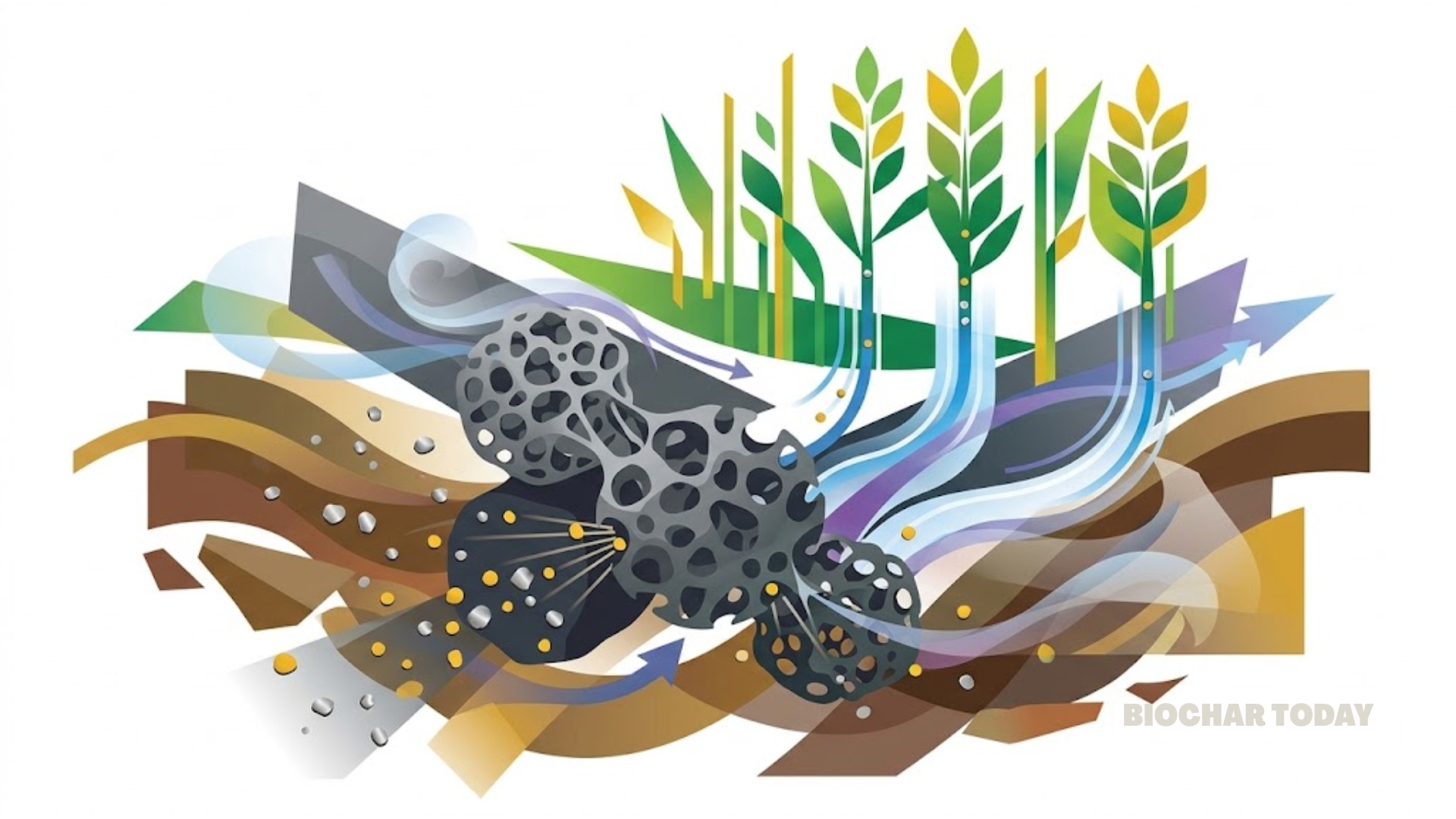
While bio-oil is the primary target for fuel, the solid biochar produced during the process has gained significant attention for its environmental benefits. The study found that biochar from coffee grounds and brewery grains contained very low levels of ashAsh is the non-combustible inorganic residue that remains after organic matter, like wood or biomass, is completely burned. It consists mainly of minerals and is different from biochar, which is produced through incomplete combustion. Ash Ash is the residue that remains after the complete More, making it an excellent candidate for agricultural soil amendments. Adding biochar to soil can improve crop growth and help retain nutrients, closing the loop on agricultural production. Additionally, the research characterized the nutrient-rich wastewater, known as the aqueous co-product, produced alongside the fuels. Although this liquid requires treatment due to high nitrogen and phosphorus levels, it represents another valuable stream that could support microalgae cultivation or be recycled into fertilizers.
The findings underscore the importance of consistent sample management and reaction conditions to optimize yields. For instance, the researchers noted that the duration of the cooling phase might impact how much bio-oil is ultimately captured versus how much is converted into gas. They also identified that pear wine leftovers produced the highest volume of liquid by-product, highlighting that different waste streams require tailored management strategies. By providing a comprehensive comparison of these materials under identical conditions, the study offers a roadmap for scaling up food waste conversion technologies. This research demonstrates that what we currently consider trash could actually be a vital part of a cleaner and more efficient energy landscape.
Source: Nash, E., Rehg, Z., Thompson, R., & Bauer, S. (2025). Analysis of product distribution and quality from the hydrothermal liquefaction of food waste feedstocks. Energies, 19(1), 109.

Leave a Reply