
Key Takeaways
- Industrial waste like red mud and leftover grain from alcohol production can be recycled into a powerful tool for cleaning polluted water.
- A new material made from charcoalCharcoal is a black, brittle, and porous material produced by heating wood or other organic substances in a low-oxygen environment. It is primarily used as a fuel source for cooking and heating. More, beneficial bacteria, and refinery waste can effectively pull toxic heavy metals like lead and cadmium out of water.
- The material works through a combination of chemical sticking, swapping particles, and turning dissolved metals into solid minerals.
- This cleaning tool is much more effective than using the ingredients alone, showing that the combination of minerals and microbes creates a superior filter.
- Using these recycled materials provides a low-cost and eco-friendly way to protect human health and the environment from dangerous water pollution.
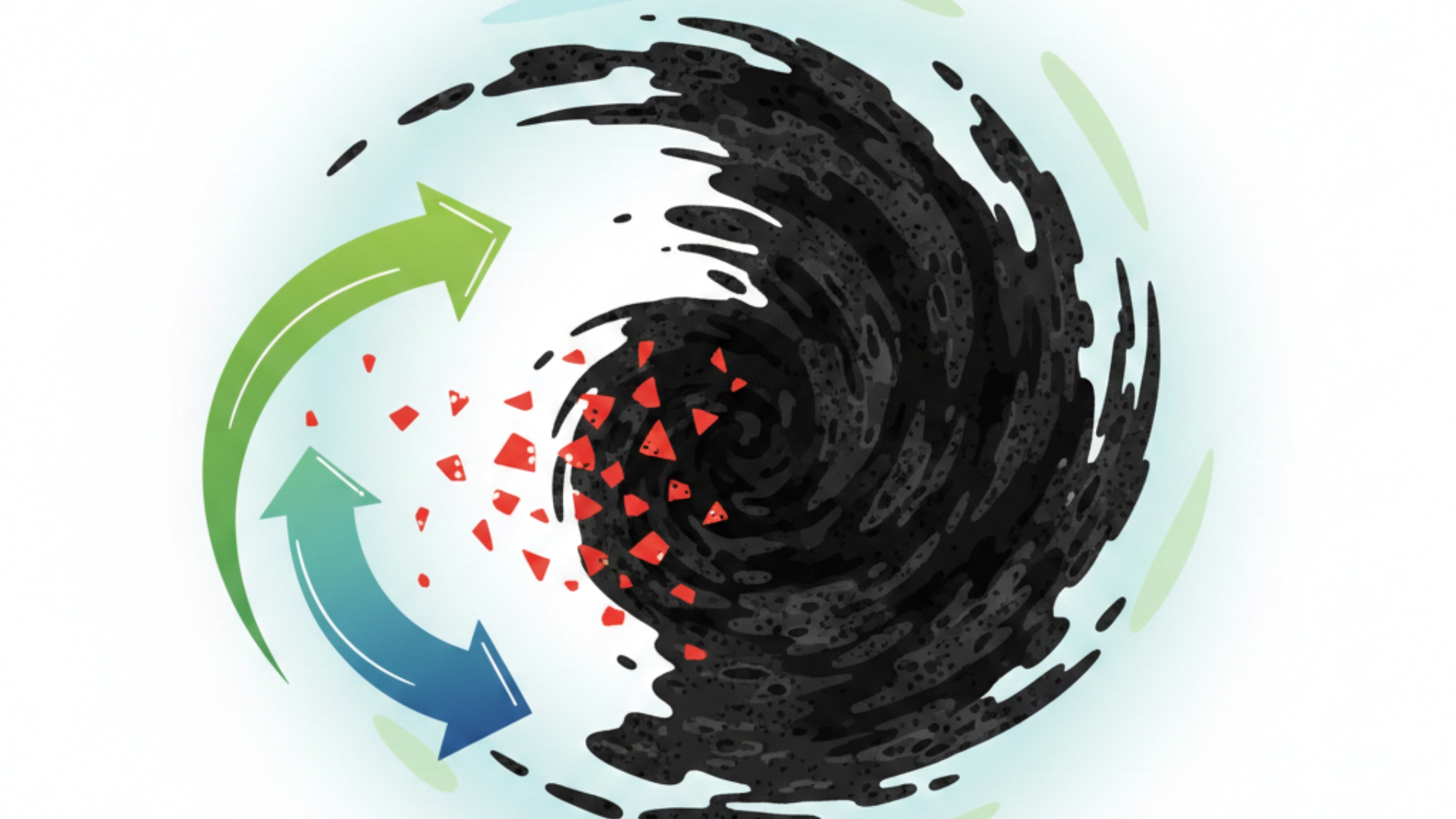
The study published in the journal Biology by researchers Guangxu Zhu, Yunhe Zhao, Yunyan Wang, Baohang Huang, Rongkun Chen, Xingyun Zhao, Panpan Wu, and Qiang Tu addresses the critical challenge of heavy metal pollution in water. The researchers focus on cadmium and lead, two highly toxic pollutants that do not break down and can cause serious health issues like kidney failure and brain damage. To solve this, they created a unique cleaning material called a ternary composite biocharBiochar is a carbon-rich material created from biomass decomposition in low-oxygen conditions. It has important applications in environmental remediation, soil improvement, agriculture, carbon sequestration, energy storage, and sustainable materials, promoting efficiency and reducing waste in various contexts while addressing climate change challenges. More. This material is made by combining three different components: biochar made from leftover grains from the liquor industry, red mud which is a waste product from aluminum refining, and a helpful bacterium known as Lactobacillus plantarum. By recycling these waste products, the team developed a way to turn industrial leftovers into a high-performance filter for environmental protection.
The findings reveal that this composite material is significantly more effective at removing heavy metals than simpler versions. When tested, the material reached a maximum adsorption capacity of 130.10 milligrams of lead and 12.13 milligrams of cadmium for every gram of the composite used. This performance is a major improvement over standard charcoal filters, largely because of the synergy between the ingredients. The red mud provides many active spots for metals to latch onto, while the bacteria produce substances that help trap the metals. The porous structure of the charcoal acts as a sturdy frame that keeps everything together and allows water to flow through easily so the metals can be caught quickly.
The researchers also discovered that the material works best when the water is not too acidic, identifying a neutral level as the ideal condition for the most efficient cleaning. At low concentrations of pollution, the material was able to remove nearly all of the lead and cadmium from the water. Specifically, the removal efficiency reached over 99 percent for lead and 98 percent for cadmium in certain conditions. The study showed that the cleaning process happens through several chemical methods, including surface complexation and ion exchange. These results suggest that using a combination of minerals, microbes, and charcoal is a highly promising strategy for creating sustainable and low-cost water treatment systems that can help safeguard public health.
Source: Zhu, G., Zhao, Y., Wang, Y., Huang, B., Chen, R., Zhao, X., Wu, P., & Tu, Q. (2026). Adsorption characterization and mechanism of a red mud-Lactobacillus plantarum composite biochar for Cd2+ and Pb2+ removal. Biology, 15(2), 153.



Leave a Reply