

A two-year field study in Korea, published in the journal BiocharBiochar is a carbon-rich material created from biomass decomposition in low-oxygen conditions. It has important applications in environmental remediation, soil improvement, agriculture, carbon sequestration, energy storage, and sustainable materials, promoting efficiency and reducing waste in various contexts while addressing climate change challenges. More, investigated the effects of woody biochar (WB) on red pepper cropping systems, focusing on the annual net ecosystem carbon budget (NECB), crop yield, and soil properties. The researchers, led by Sohee Yoon and Sang Yoon Kim, aimed to identify the optimal WB application levels to improve NECB and promote sustainable agriculture.
The study found that WB application significantly increased the annual NECB in red pepper fields. The optimal application levels were estimated to be 7.3–11.4 Mg dry weight (d.w) per hectare (ha−1) when the entire red pepper biomassBiomass is a complex biological organic or non-organic solid product derived from living or recently living organism and available naturally. Various types of wastes such as animal manure, waste paper, sludge and many industrial wastes are also treated as biomass because like natural biomass these More (shoots, roots, and fruits) was removed after harvest. This scenario assumes that all plant matter is taken from the field, which is common practice for purposes like biofuel production or composting. However, when only the fruit was harvested and the remaining plant biomass was returned to the soil, the optimal WB application level was much lower, at 1.8–6.7 Mg d.w ha−1. This lower rate is effective because returning plant residues to the soil provides an additional carbon input that enhances the overall C balance.
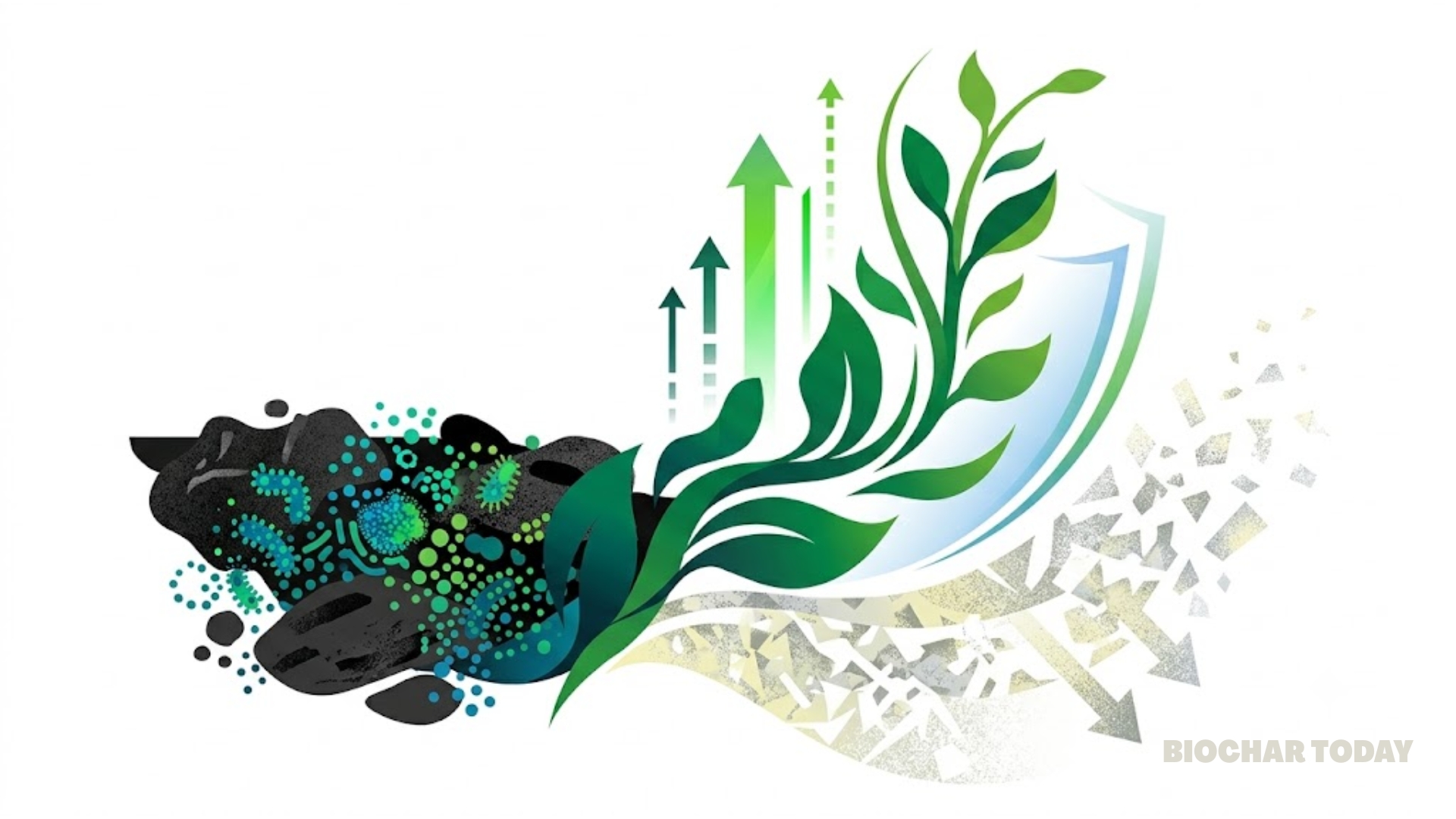
In addition to improving the carbon budget, the study also found that WB application positively affected red pepper productivity and soil properties. Increasing WB application levels from 0 to 10 Mg d.w ha−1 increased total biomass productivity by 19–34% compared to the control. Similarly, fruit yield increased bym 16–18% in the first year and 16% in the second year compared to the control. The application of WB also significantly improved soil physicochemical properties, such as a decrease in bulk density and an increase in soil organic carbon (SOC) content. Soil pHpH is a measure of how acidic or alkaline a substance is. A pH of 7 is neutral, while lower pH values indicate acidity and higher values indicate alkalinity. Biochars are normally alkaline and can influence soil pH, often increasing it, which can be beneficial More also increased with higher WB application levels, likely because the biochar used in the study had a higher pH than the original soil. These results suggest that optimizing WB application can be a sustainable strategy for improving overall soil quality and crop productivity.
The research highlights the importance of using a comprehensive approach like NECB to evaluate the effects of soil amendments. By considering all carbon inputs and outputs, researchers can accurately determine the most effective and sustainable application rates of biochar. This study provides practical guidance for farmers and land managers, showing how to balance the benefits of biochar with the need to avoid excessive and unnecessary inputs, thus contributing to climate change mitigation and the long-term sustainability of agricultural ecosystems.
Source: Yoon, S., Lee, Y., An, H., Melendez, J., & Kim, S. Y. (2025). Sustainable woody biochar application for improving net ecosystem carbon budget, yield and soil properties in red pepper cropping systems: a two-year field study. Biochar, 7(112), 1-16.



Leave a Reply