
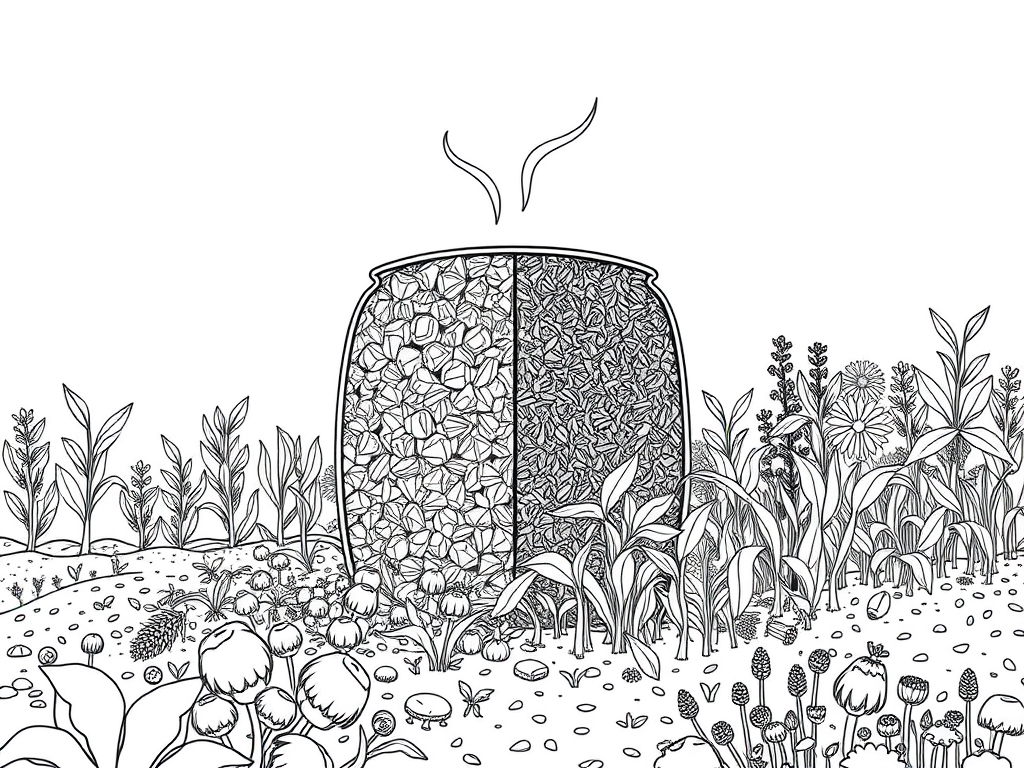
Maria-Elena Vorrath from Hamburg University, along with Wolfram Buss and colleagues, presented at the EGU in Vienna , highlighting an innovative approach to transform sewage sludge into a valuable biocharBiochar is a carbon-rich material created from biomass decomposition in low-oxygen conditions. It has important applications in environmental remediation, soil improvement, agriculture, carbon sequestration, energy storage, and sustainable materials, promoting efficiency and reducing waste in various contexts while addressing climate change challenges. More resource. Their project, “Poo for Future,” focuses on utilizing biochar derived from sewage sludge to promote sustainable agricultural practices and enhance climate resilience. This initiative, funded by the Calls for Transfer Initiative by Hamburg Innovation, addresses the dual challenge of waste management and the need for sustainable fertilizers.
Sewage sludge, often considered a problematic waste material, is being re-evaluated for its valuable components. It’s rich in phosphorus (1.5% P) and other nutrients, making it a potential resource for nutrient recycling. Utilizing sewage sludge as a feedstockFeedstock refers to the raw organic material used to produce biochar. This can include a wide range of materials, such as wood chips, agricultural residues, and animal manure. More for biochar production offers several benefits: the pyrolysisPyrolysis is a thermochemical process that converts waste biomass into bio-char, bio-oil, and pyro-gas. It offers significant advantages in waste valorization, turning low-value materials into economically valuable resources. Its versatility allows for tailored products based on operational conditions, presenting itself as a cost-effective and efficient More process destroys hormones, viruses, and pharmaceuticals, reduces the volume of waste, and creates a valuable product. However, there are challenges to overcome, including nutrient mobility and metal contamination, as well as existing restrictions on its use.
Research has demonstrated that phosphorus mobility in biochar can be increased by adding potassium acetate, which facilitates the formation of water-soluble potassium phosphates. This process allows biochar to function as a slow-release P-fertilizer, providing a sustainable alternative to conventional fertilizers. The “Superchar” project explores the possibility of a cheap and readily available source of potassium to enhance this process.
The Superchar project utilizes a combination of phosphorus-rich sewage sludge and potassium-rich chicken manure to produce an enhanced biochar product. Chicken manure contains approximately 1-3% potassium in dry mass, making it a suitable additive. The production process involves mixing the feedstocks, pelletizing the mixture, pyrolysis, potassium phosphate formation, and finally, the creation of “Superchar. ”
Experiments have shown that biochar produced with chicken manure (“Chickenchar”) releases approximately 1.7 times more phosphate than biochar produced solely from sewage sludge (“Shitchar”). This enhanced phosphorus release makes “Chickenchar” a more effective fertilizer.
The Mosan Project in Santa Catarina Palopó, Guatemala, is utilizing this biochar technology to address local challenges. The area faces rapid urbanization, inadequate sanitation, and contamination from feces and fertilizers. The Mosan Project distributes dry toilets, collects the waste, produces biochar, and uses it for regenerative farming. A field trip was planned to Guatemala to produce “Chickenchar,” gather feedback, validate the results in the lab, and share knowledge.
The Superchar project offers a sustainable solution by creating a slow-release P-fertilizer from problematic biogenic waste, generating income, and storing CO2. It aims to manage contaminated human waste, mitigate the sanitation crisis, increase nutrient recovery and food security, incentivize sustainable agriculture, share open-source knowledge, engineer degraded soils, create a valuable value chain, and store CO2 in soils. The project emphasizes the importance of translating research into practical applications to address real-world problems.
Source: Vorrath, M-E., Buss, W., Mijthab, M., & Anisie, R. (2025). Poo for Future: Community Engagement through Biochar Innovation by Utilizing Sewage Sludge for promotion of Sustainable Agricultural Practices and Climate Resilience.



Leave a Reply