
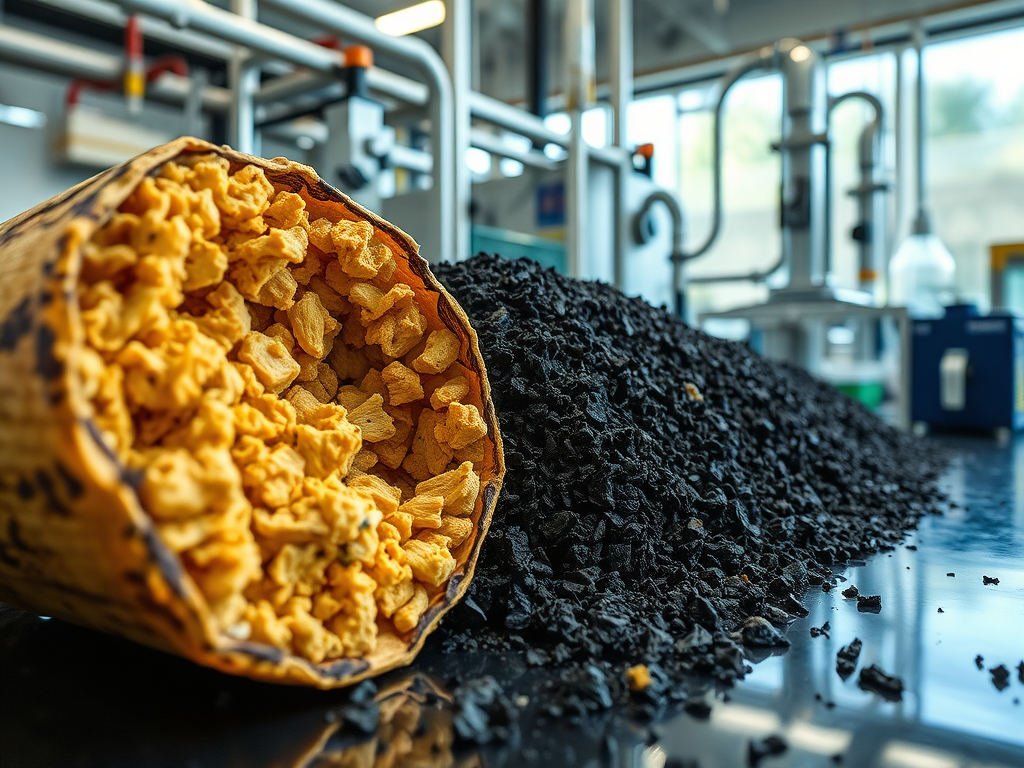
Denny Dermawan and colleagues, in their study published in Case Studies in Chemical and Environmental Engineering , explore the use of sugarcane bagasse biocharBiochar is a carbon-rich material created from biomass decomposition in low-oxygen conditions. It has important applications in environmental remediation, soil improvement, agriculture, carbon sequestration, energy storage, and sustainable materials, promoting efficiency and reducing waste in various contexts while addressing climate change challenges. More (SBB) combined with nano zero-valent iron (nZVI) for the efficient removal of hexavalent chromium [Cr(VI)] from wastewater. This innovative approach leverages atmospheric pressure microwave plasma pyrolysisPyrolysis is a thermochemical process that converts waste biomass into bio-char, bio-oil, and pyro-gas. It offers significant advantages in waste valorization, turning low-value materials into economically valuable resources. Its versatility allows for tailored products based on operational conditions, presenting itself as a cost-effective and efficient More to produce high-surface-area biochar, enhancing its adsorption capabilities.
The researchers synthesized biochar-nZVI composites at different ratios and tested their Cr(VI) removal efficiency under varying conditions, including pHpH is a measure of how acidic or alkaline a substance is. A pH of 7 is neutral, while lower pH values indicate acidity and higher values indicate alkalinity. Biochars are normally alkaline and can influence soil pH, often increasing it, which can be beneficial More, contact time, and adsorbent dosage. The results showed that the composite with a considerable ratio exhibited the highest adsorption capacity, reaching 112.41 mg/g at an optimal pH of 2. This performance was attributed to the synergistic effect of biochar’s porous structure and nZVI’s strong affinity for heavy metals.
Characterization techniques such as FTIR, SEM, and XRD confirmed the successful incorporation of nZVI onto the biochar surface. Adsorption kinetics followed a pseudo-second-order model, indicating chemisorption as the dominant removal mechanism. The study also highlighted the recyclability of the adsorbent, with the composite maintaining 68.3% efficiency after five regeneration cycles.
By transforming agricultural waste into a high-performance adsorbent, this research provides an eco-friendly and cost-effective solution for heavy metal remediation. Future work should focus on large-scale implementation and the long-term stability of biochar-nZVI composites in real-world wastewater treatment scenarios.
SOURCE: Dermawan, D., Satriavi, A. D., Nurhidayati, D. I., Firnandi, R., Mayangsari, N. E., Ramadani, T. A., Widiana, D. R., Juniani, A. I., Mujiyanti, D. R., & Wang, Y.-F. (2025). Composite adsorbent from sugarcane (Saccharum officinarum) bagasse biochar generated from atmospheric pressure microwave plasma pyrolysis process and nano zero-valent iron (nZVI) for rapid and highly efficient Cr(VI) adsorption. Case Studies in Chemical and Environmental Engineering.https://doi.org/10.1016/j.cscee.2025.101123



Leave a Reply