
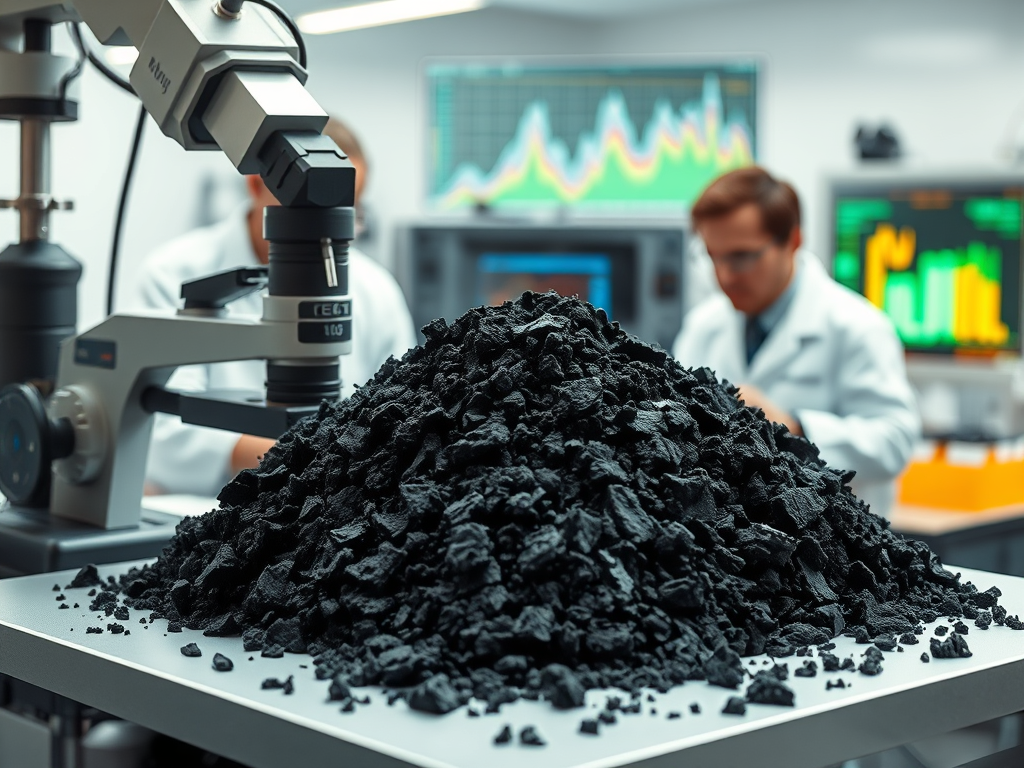
Shanmughan, Nighojkar, & Kandsubramanian explored the potential of sewage sludge-derived biocharBiochar is a carbon-rich material created from biomass decomposition in low-oxygen conditions. It has important applications in environmental remediation, soil improvement, agriculture, carbon sequestration, energy storage, and sustainable materials, promoting efficiency and reducing waste in various contexts while addressing climate change challenges. More (SSBC) for the removal of heavy metals from wastewater in their recent review published in Waste Management Bulletin. Heavy metals like lead, cadmium, and copper are often found in industrial wastewater and pose serious risks to the environment and human health. SSBC is a cost-effective material with a high adsorption capacity, making it a promising solution for heavy metal removal.
The review highlights the impact of pyrolysisPyrolysis is a thermochemical process that converts waste biomass into bio-char, bio-oil, and pyro-gas. It offers significant advantages in waste valorization, turning low-value materials into economically valuable resources. Its versatility allows for tailored products based on operational conditions, presenting itself as a cost-effective and efficient More temperature on the surface properties of SSBC, such as specific surface area and functional groups. Characterization techniques like SEM, FTIR, XRD, XPS, AES, GC-MS, ICP, and ESR are used to analyze the chemical and structural properties of SSBC. These techniques provide insights into the changes that enhance its adsorption performance.
The review also discusses the use of Artificial Neural Network (ANN) models to predict the adsorption efficiency of SSBC. These models offer a quantitative understanding of the relationship between heavy metal removal efficiency and biochar properties.
The authors emphasize the importance of pyrolysis in optimizing SSBC for wastewater treatment and demonstrate how advanced characterization techniques and predictive models can guide the development of more efficient biochar-based adsorbents for environmental remediation.
SOURCE: Shanmughan, B., Nighojkar, A., & Kandsubramanian, B. (2025). Advancements in characterization techniques, empirical models, and artificial intelligence for comprehensive understanding of heavy metal adsorption on sewage sludge biochar. Waste Management Bulletin, 3, 193–206. https://doi.org/10.1016/j.wmb.2025.01.003



Leave a Reply