
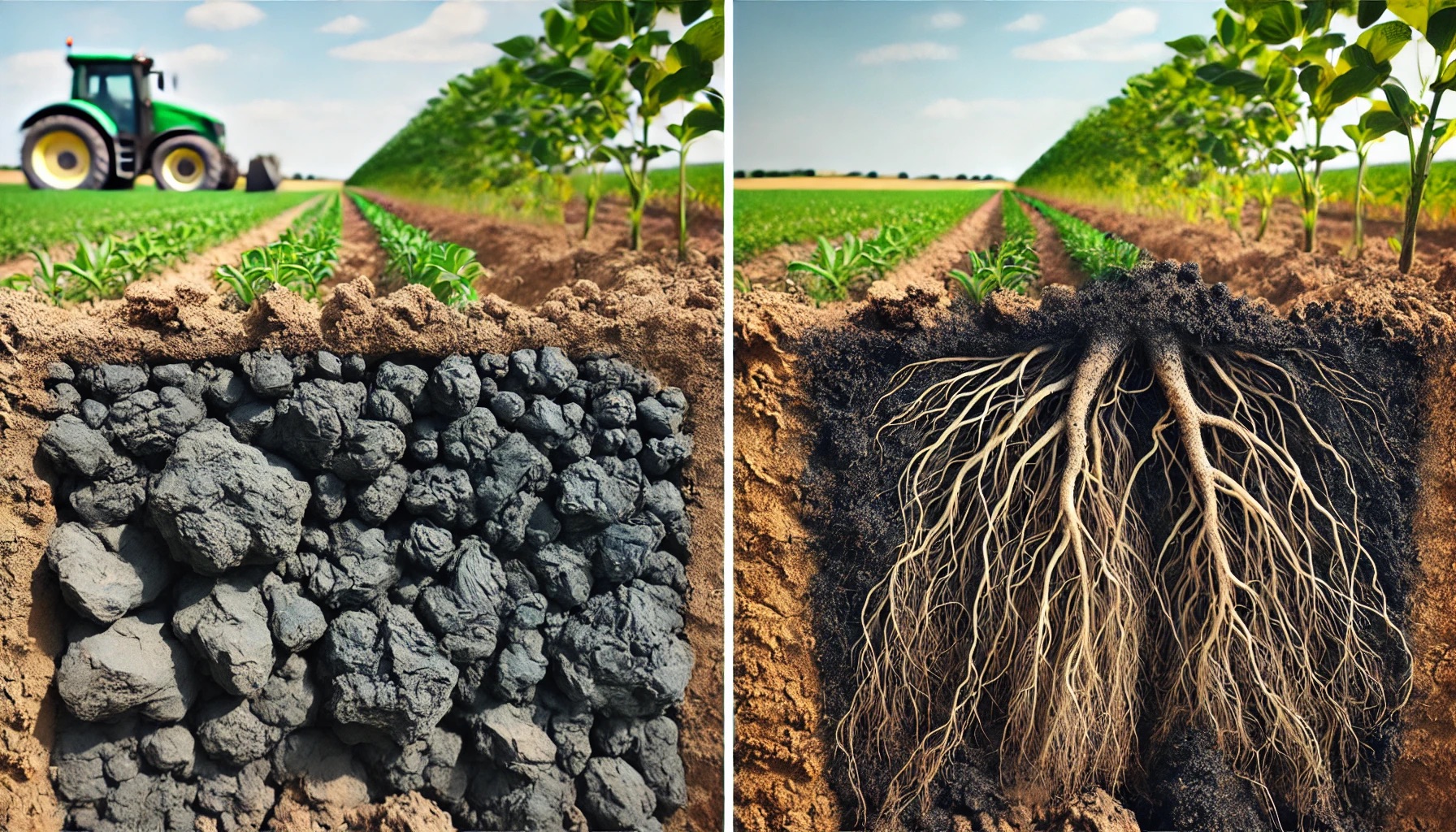
Wang, et al (2024) Amended soils with weathered coal exhibited greater resistance to aggregate breakdown than those with biocharBiochar is a carbon-rich material created from biomass decomposition in low-oxygen conditions. It has important applications in environmental remediation, soil improvement, agriculture, carbon sequestration, energy storage, and sustainable materials, promoting efficiency and reducing waste in various contexts while addressing climate change challenges. More: From the viewpoint of soil internal forces. Soil and Tillage Research. https://doi.org/10.1016/j.still.2024.106244
A recent study published in Soil and Tillage Research investigated the impact of weathered coal and biochar on soil stability and erosion resistance. The research, conducted by Ke Wang and colleagues, focused on how these materials influence soil internal forces, which are critical in preventing soil aggregate breakdown and erosion.
Soil erosion, particularly from rainfall, is a significant threat to agricultural productivity and ecosystem health. One key to mitigating this is enhancing soil aggregate stability, thereby reducing its breakdown under raindrop impact. The study explored the effects of weathered coal and biochar, applied to loamy clay soil at varying rates (0%, 1%, 2%, and 3%), over four years.
The results indicated that both weathered coal and biochar reduced the positive net pressure between soil particles, enhancing aggregate stability. However, weathered coal was more effective than biochar. Specifically, weathered coal decreased soil aggregate breakdown strength more significantly, especially at higher application rates. For instance, at a 3% application rate, weathered coal reduced aggregate breakdown strength by approximately 17.5-23.2% more than biochar.
Additionally, soils amended with weathered coal exhibited lower splash erosion rates compared to those amended with biochar. The study suggests that the superior performance of weathered coal is due to its ability to increase van der Waals attractive pressure between soil particles, thus better maintaining soil structure.
These findings highlight weathered coal’s potential as a valuable organic additive for enhancing soil stability and erosion resistance, providing insights that could help improve soil management practices in erosion-prone agricultural areas.



Leave a Reply