
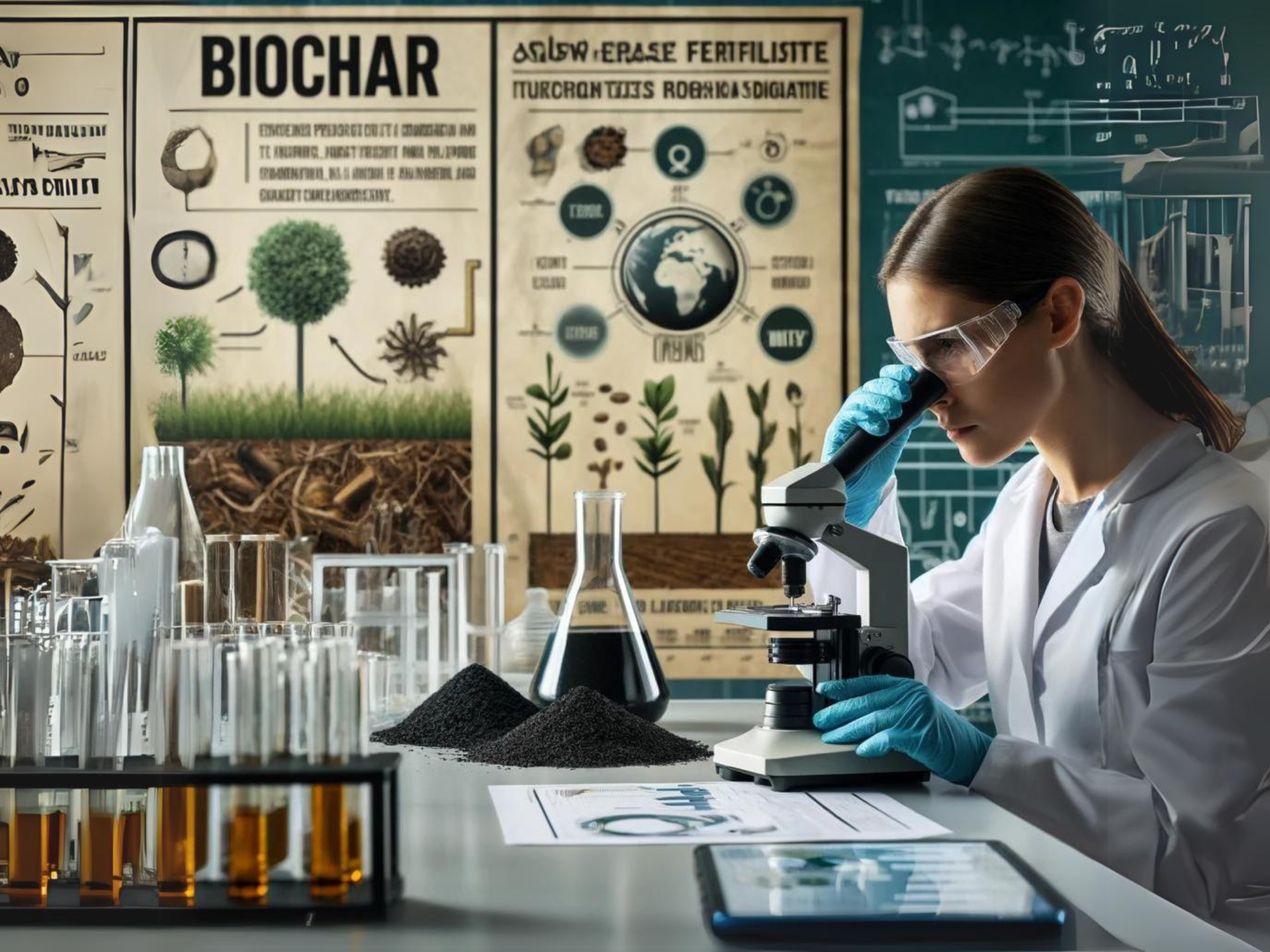

The quest for sustainable food waste management solutions has led researchers to explore the potential of biochar, produced through the pyrolysisPyrolysis is a thermochemical process that converts waste biomass into bio-char, bio-oil, and pyro-gas. It offers significant advantages in waste valorization, turning low-value materials into economically valuable resources. Its versatility allows for tailored products based on operational conditions, presenting itself as a cost-effective and efficient More of food waste digestate (FWD), as a nutrient-rich, slow-release fertilizer. A recent study delves into the nutrient leaching characteristics and speciation changes in biochar derived from FWD at different pyrolysis temperatures: 350°C (BC350), 450°C (BC450), and 550°C (BC550).
The findings reveal distinct leaching behaviors among the biochar variants. BC350 predominantly releases orthophosphates via diffusion, whereas BC450 and BC550 do so through dissolution, indicating a slow-release mechanism. Notably, nitrogen (N), potassium (K), and dissolved organic carbon (DOC) are discharged through a quick surface wash-off process, suggesting an initial burst of nutrients available for plant uptake.
The study underscores the differential composition of biochar produced at various temperatures. While BC350 is characterized by inorganic nitrogen, BC450 and BC550 contain higher levels of organic nitrogen and demonstrate a capacity to enhance seed shoot length, showcasing their potential as effective long-term, slow-release N and P fertilizers. The transition from polyphosphates in BC350 to Ca/Mg orthophosphates in BC450 and BC550 is particularly significant, supporting the slow dissolution-controlled release process.
This research highlights the role of pyrolysis temperature in determining the nutrient composition and release mechanisms of biochar. BC450 and BC550, with their slow-release properties and ability to stimulate plant growth, emerge as promising solutions for resource recycling in sustainable agriculture. This study contributes to the broader understanding of biochar as a versatile, eco-friendly option for food waste management and agricultural enhancement, paving the way for its strategic utilization in fostering circularity and sustainability within the waste management and agricultural sectors.



Leave a Reply