
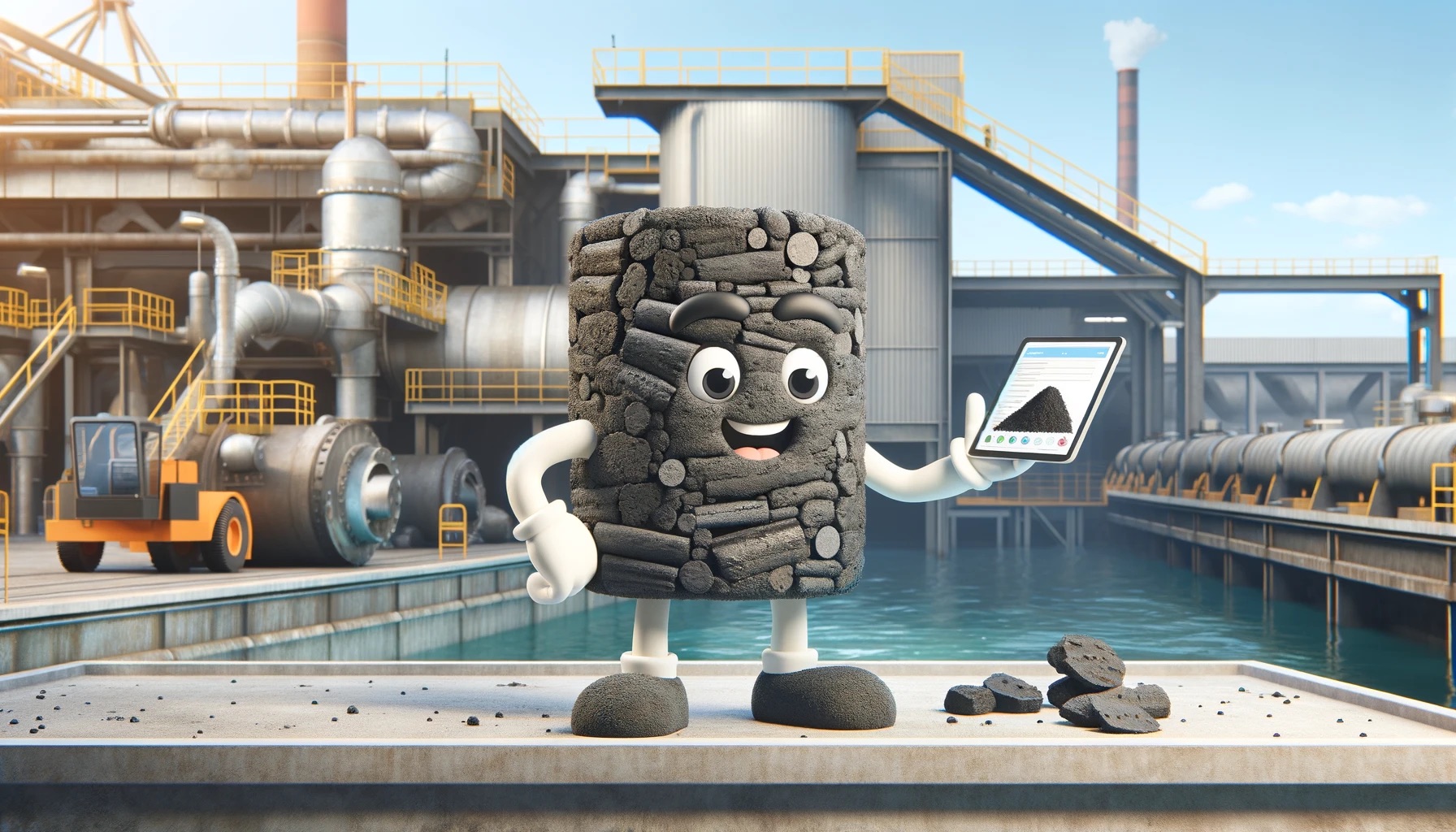

Researchers Lu Zhou, Guanhao Zhang, Yulin Zeng, Xunli Bao, Bei Liu, and Liang Cheng have developed a method to convert steel mill wastewater sludge into iron-enriched biochar. This biochar effectively removes tetracycline, a common antibiotic contaminant, from water.
Steel mill wastewater sludge, which contains heavy metals and iron, can be problematic for the environment. The researchers found that pyrolyzing the sludge at 450°C stabilizes the heavy metals, making them safer for the environment. This temperature is optimal for producing biochar with high adsorption capacity for tetracycline, reaching up to 240.38 mg/g.
The pyrolysisPyrolysis is a thermochemical process that converts waste biomass into bio-char, bio-oil, and pyro-gas. It offers significant advantages in waste valorization, turning low-value materials into economically valuable resources. Its versatility allows for tailored products based on operational conditions, presenting itself as a cost-effective and efficient More process not only stabilizes heavy metals but also improves the biochar’s structure and functionality. The iron in the sludge transforms into stable iron oxide phases, such as Fe3O4 and MgFe2O4, enhancing the biochar’s ability to adsorb tetracycline through complexation, π-π interactions, and hydrogen bonding.
This study provides a solution for disposing of hazardous steel mill sludge and removing antibiotic contaminants from wastewater. The iron-enriched biochar developed from this process offers a sustainable approach to resource utilization and wastewater treatment.



Leave a Reply