
Peng, et al (2024) Transformations of phosphorus and potassium in rice straw biocharBiochar is a carbon-rich material created from biomass decomposition in low-oxygen conditions. It has important applications in environmental remediation, soil improvement, agriculture, carbon sequestration, energy storage, and sustainable materials, promoting efficiency and reducing waste in various contexts while addressing climate change challenges. More based on chemical fractionation. Fuel. https://doi.org/10.1016/j.fuel.2024.132884
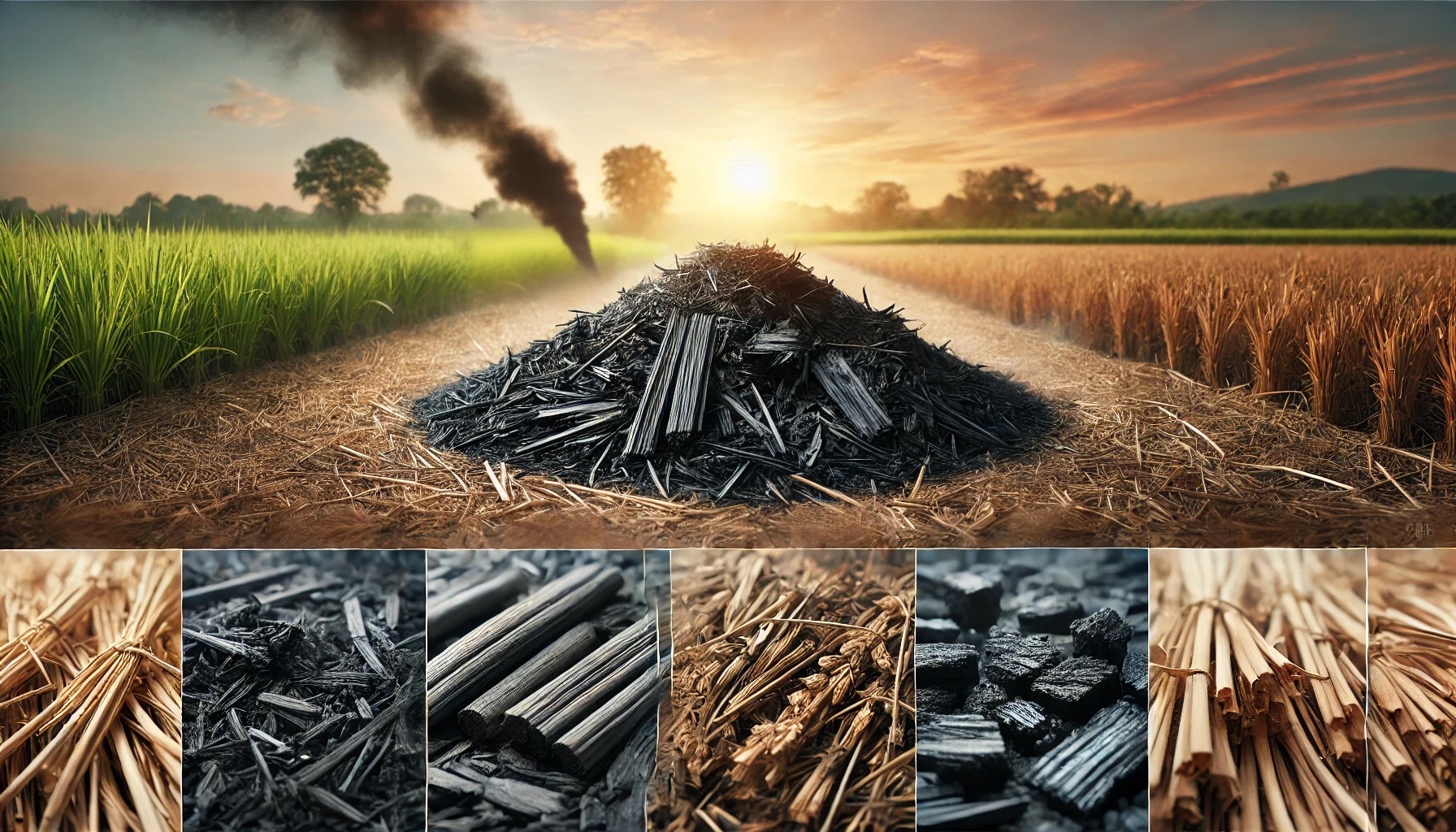
Biochar, often used to improve soil health, also holds potential as a fertilizer, providing essential nutrients like phosphorus (P) and potassium (K). This study explores how P and K change in rice straw biochar when pyrolyzed at different temperatures, aiming to identify optimal conditions for use as a slow-release fertilizer.
Phosphorus in rice straw predominantly exists in organophosphorus (OP) and NaOH-extractable forms, while potassium mainly appears as water-soluble potassium (WSK). The study found that at pyrolysisPyrolysis is a thermochemical process that converts waste biomass into bio-char, bio-oil, and pyro-gas. It offers significant advantages in waste valorization, turning low-value materials into economically valuable resources. Its versatility allows for tailored products based on operational conditions, presenting itself as a cost-effective and efficient More temperatures between 200°C and 1000°C, these forms of P and K undergo significant transformations. HCl-extractable P (HCl-P), a more plant-available form, increased notably with temperature, peaking at 1000°C, while WSK decreased sharply between 500°C and 900°C.
Volatilization of P occurred mainly between 200°C and 500°C, while K volatilized between 500°C and 900°C. Biochar produced at 600°C showed the best balance of bioavailable P and K, making it suitable as a fertilizer.
This research highlights the potential of rice straw biochar, particularly when produced at 400°C to 700°C, as a slow-release source of P and K, offering a sustainable alternative to synthetic fertilizers. The findings provide valuable insights into optimizing biochar for agricultural use, especially in regions facing phosphorus shortages and potassium-deficient soils.




Leave a Reply