
Kang, et al (2024) Development of self-sensing cement composites by incorporating hybrid biocharBiochar is a carbon-rich material created from biomass decomposition in low-oxygen conditions. It has important applications in environmental remediation, soil improvement, agriculture, carbon sequestration, energy storage, and sustainable materials, promoting efficiency and reducing waste in various contexts while addressing climate change challenges. More and nano carbon black. Cement and Concrete Composites. https://doi.org/10.1016/j.cemconcomp.2024.105708
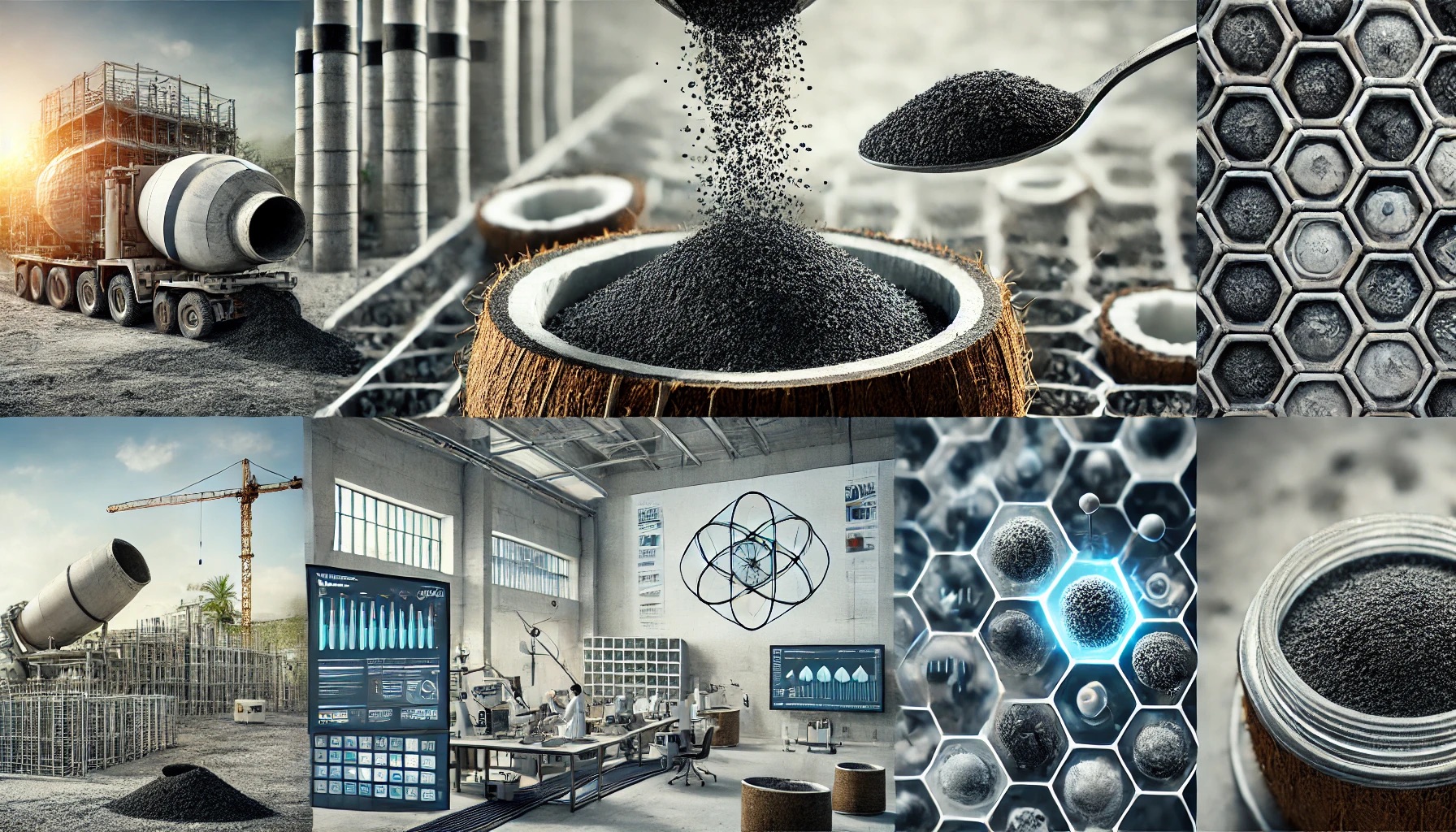
In the latest research featured in Cement and Concrete Composites (October 2024), a new approach for developing sustainable self-sensing cement composites (SSCC) is explored. Traditional conductive materials used in SSCCs often contribute to environmental pollution. This study, however, combines biochar derived from coconut shells with nano carbon black, offering a greener solution while maintaining impressive structural performance.
The researchers focused on blending biochar with nano carbon black in varying percentages, evaluating how these materials affect the fluidity, mechanical properties, and conductivity of the SSCC. Results demonstrated that biochar not only improves the compressive strength of the cement but also enhances its conductivity. For instance, adding 4.5% biochar reduced the resistivity by 35.6% after 35 days. Additionally, biochar extended the crack initiation stage and contributed to multiple crack formations at higher percentages of carbon material.
Microscopic analysis and resistivity testing revealed that the hybrid combination of biochar and nano carbon black resulted in a highly conductive, durable, and environmentally friendly cement composite. The piezoresistive properties of these materials also showed promise for real-time structural health monitoring.
This study highlights the potential of coconut shell biochar to reduce the environmental footprint of construction materials while improving performance. By combining renewable biochar with traditional nano carbon black, this innovative approach opens new pathways for creating more sustainable, intelligent infrastructure.


Leave a Reply