

Mohamed, et al (2024) Decreasing the nitric oxide gas concentration by using sunflower seed husk biocharBiochar is a carbon-rich material created from biomass decomposition in low-oxygen conditions. It has important applications in environmental remediation, soil improvement, agriculture, carbon sequestration, energy storage, and sustainable materials, promoting efficiency and reducing waste in various contexts while addressing climate change challenges. More as filter. Journal of Physics: Conference Series. DOI 10.1088/1742-6596/2830/1/012006
In an effort to tackle air pollution, researchers are exploring innovative and sustainable methods to reduce harmful gases like nitric oxide (NO). One promising approach involves using biochar derived from agricultural waste. A recent study focused on biochar produced from sunflower seed husks (SSHB) as an adsorbent to decrease NO concentrations in the air.
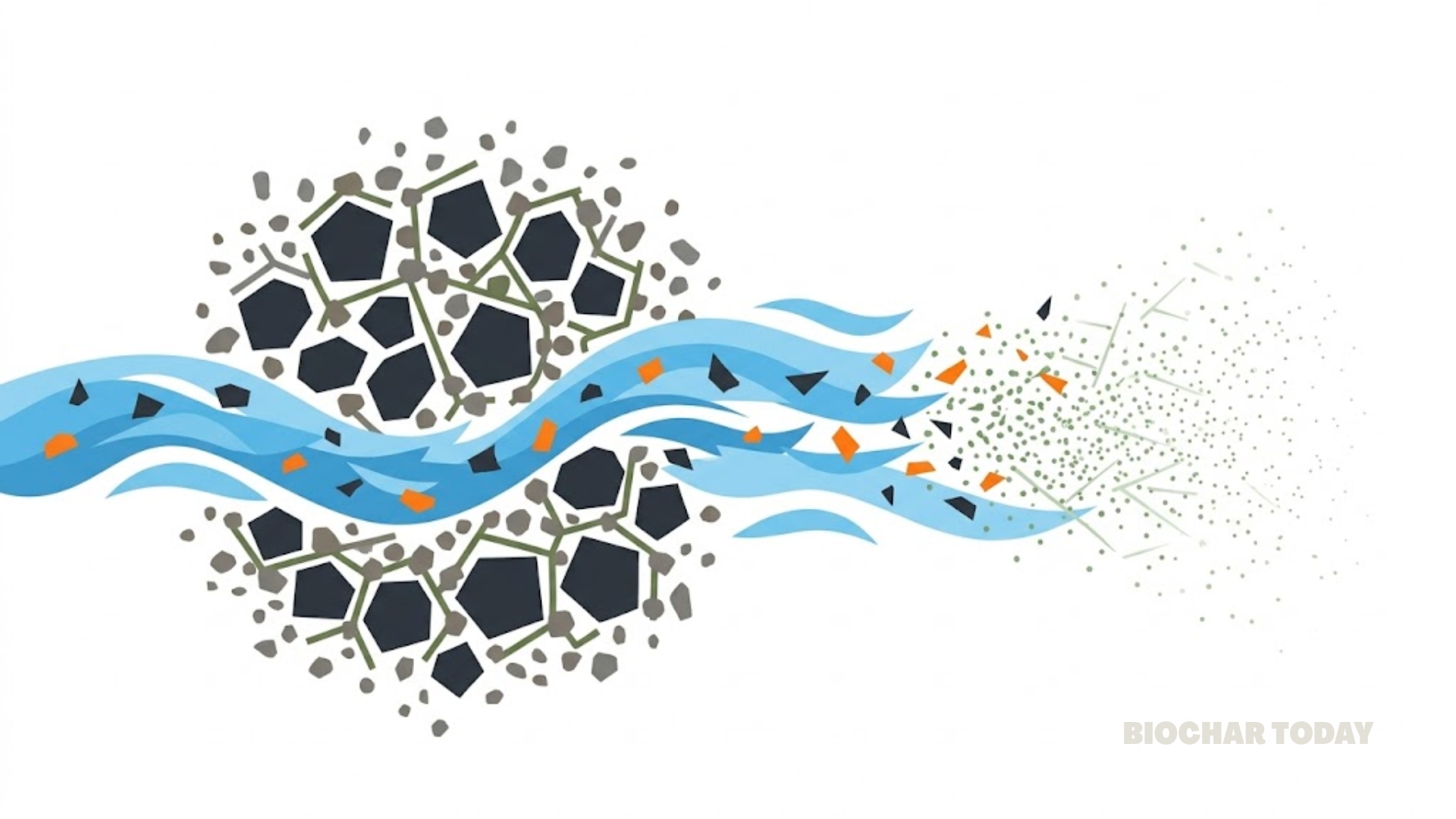
Biochar is created by heating organic material in a low-oxygen environment (pyrolysisPyrolysis is a thermochemical process that converts waste biomass into bio-char, bio-oil, and pyro-gas. It offers significant advantages in waste valorization, turning low-value materials into economically valuable resources. Its versatility allows for tailored products based on operational conditions, presenting itself as a cost-effective and efficient More). In this study, sunflower seed husks were pyrolyzed at 450°C to form SSHB, which was then tested for its ability to filter out NO gas at a concentration of 90 ppm. Two particle sizes were analyzed: fine (F) and coarse (C). The fine SSHB outperformed the coarse variety, adsorbing 31.6 mg of NO per gram, compared to 26.7 mg/g for the coarse version over an 8-minute test.
Various analytical techniques were used to evaluate SSHB’s surface characteristics, including SEM and BET analysis, which showed that its porosityPorosity of biochar is a key factor in its effectiveness as a soil amendment and its ability to retain water and nutrients. Biochar’s porosity is influenced by feedstock type and pyrolysis temperature, and it plays a crucial role in microbial activity and overall soil health. Biochar More played a key role in adsorption efficiency. Adsorption isotherms and kinetic models indicated that the Freundlich model best described the NO adsorption process, suggesting the surface’s heterogeneous nature. The pseudo-second-order model also provided the best fit for the adsorption kinetics, implying a chemically driven adsorption mechanism.
This research highlights the potential of using sunflower seed husk biochar as a low-cost, effective solution for reducing air pollution, particularly NO, in both industrial and urban environments. Further improvements in biochar production could enhance its efficiency, offering a scalable tool in pollution control strategies.



Leave a Reply