
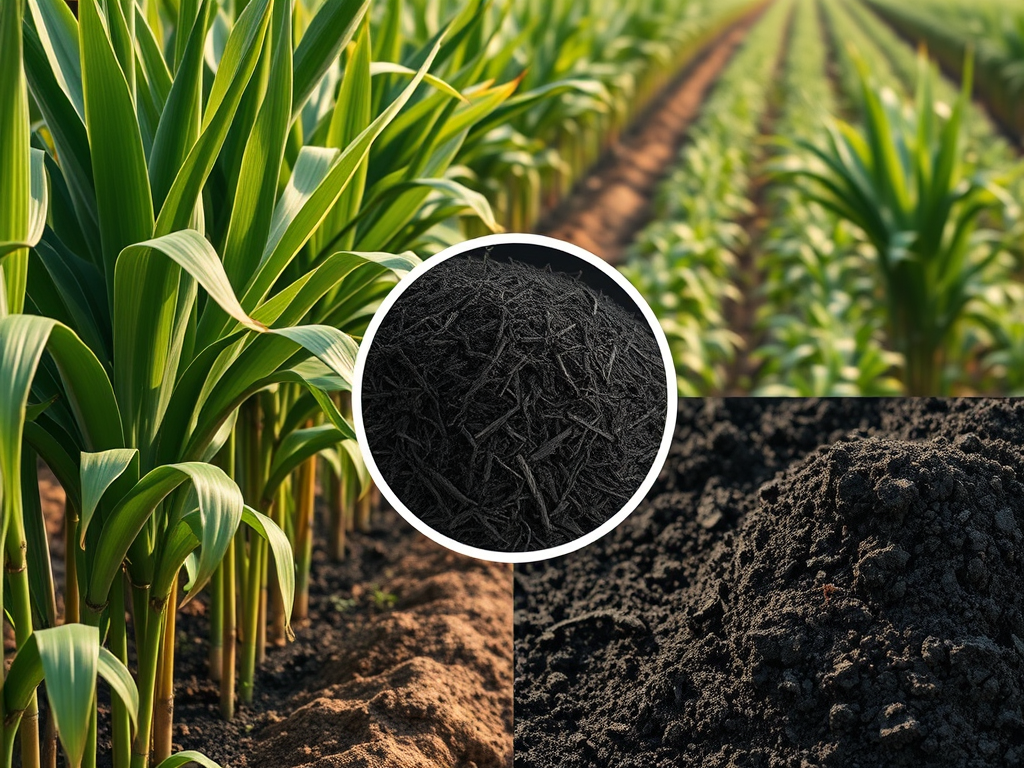
A study by Mayuri D. Aluthge and colleagues, published in Carbon Research (2025), explores the potential of sugarcane biomass-derived biocharBiochar is a carbon-rich material created from biomass decomposition in low-oxygen conditions. It has important applications in environmental remediation, soil improvement, agriculture, carbon sequestration, energy storage, and sustainable materials, promoting efficiency and reducing waste in various contexts while addressing climate change challenges. More in improving soil quality for sugarcane cultivation. By comparing biochar produced using a barrel technique (BBC-BT) and a laboratory method (BBC-450), the research offers valuable insights into small-scale biochar production and its agronomic benefits.
The researchers examined biochar made from sugarcane bagasse, trash, and mini-mill waste at various pyrolysisPyrolysis is a thermochemical process that converts waste biomass into bio-char, bio-oil, and pyro-gas. It offers significant advantages in waste valorization, turning low-value materials into economically valuable resources. Its versatility allows for tailored products based on operational conditions, presenting itself as a cost-effective and efficient More temperatures (300°C, 450°C, and 600°C) and with the barrel technique. They found that BBC-BT had comparable qualities to laboratory-prepared biochar, with unique advantages for practical applications in sugarcane-growing soils.
A 90-day greenhouse pot experiment demonstrated that biochar amendments significantly enhanced soil properties. Both BBC-BT and BBC-450 improved soil pHpH is a measure of how acidic or alkaline a substance is. A pH of 7 is neutral, while lower pH values indicate acidity and higher values indicate alkalinity. Biochars are normally alkaline and can influence soil pH, often increasing it, which can be beneficial More, organic carbon (OC), water-holding capacity, and nutrient availability (e.g., nitrogen, phosphorus, potassium, calcium, magnesium, and zinc). Notably, BBC-BT exhibited the highest soil quality index, making it a promising solution for resource-constrained farmers. The barrel technique, an affordable and accessible method, showed potential as an alternative for small-scale farmers to produce biochar efficiently. This innovation aligns with sustainable farming goals, reducing reliance on chemical fertilizers and enhancing long-term soil health.
The study highlights the broader implications of biochar for soil fertility, crop yield improvement, and sustainable agricultural practices, particularly in tropical regions with nutrient-depleted soils.
Aluthge, M. D., Weerasinghe, A. S., Wickramasinghe, U. M., Kulasekara, B. R., Kumarasiri, L. M., Cooray, A. T., Rajapaksha, S. P., & Vithanage, M. (2025). Sugarcane biomass-derived biochar for soil quality enhancement in sugarcane-growing soil. Carbon Research, 4(9), https://doi.org/10.1007/s44246-024-00175-4.




Leave a Reply