
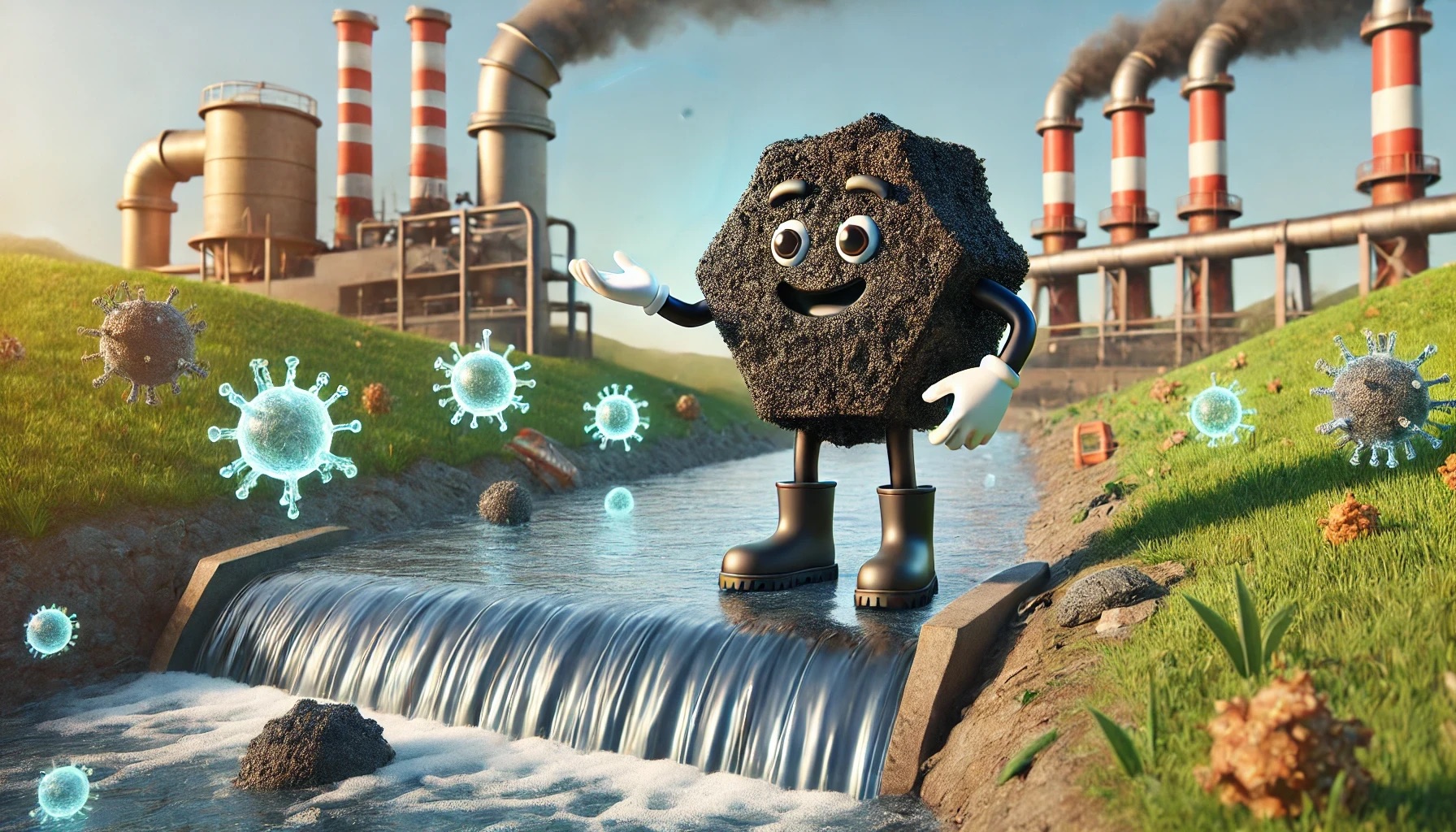

A new study published in the Journal of Water Process Engineering explores the development of an innovative biochar-supported sulfurized nanoscale zero-valent iron (S-nZVI@NBC) material to effectively remove chromium (Cr), particularly hexavalent chromium (Cr(VI)), from industrial wastewater. Chromium contamination is a significant environmental concern due to its toxic and carcinogenic nature, especially in its hexavalent form.
The research focuses on synthesizing S-nZVI@NBC using diethylenetriamine to modify biocharBiochar is a carbon-rich material created from biomass decomposition in low-oxygen conditions. It has important applications in environmental remediation, soil improvement, agriculture, carbon sequestration, energy storage, and sustainable materials, promoting efficiency and reducing waste in various contexts while addressing climate change challenges. More, which improves the material’s adsorption capabilities. Key findings include a 97.65% removal efficiency for Cr(VI) and over 80% retention of this effectiveness after six cycles of regeneration. The study shows that the novel material functions through mechanisms of adsorption, reduction, and coprecipitation, converting toxic Cr(VI) into the less harmful Cr(III).
The authors also optimized the synthesis parameters, finding that a mass ratio of 1:6 between S-nZVI and biochar, and an S/Fe molar ratio of 0.12, were the most effective for chromium removal. Kinetic studies revealed that the process follows a multilayer chemisorption model. This breakthrough highlights the potential for S-nZVI@NBC to address environmental pollution and improve water treatment by offering a durable and efficient solution for removing harmful chromium compounds from wastewater, even in complex industrial settings.



Leave a Reply