

Zbair, et al (2024) NO2 Adsorption on BiocharBiochar is a carbon-rich material created from biomass decomposition in low-oxygen conditions. It has important applications in environmental remediation, soil improvement, agriculture, carbon sequestration, energy storage, and sustainable materials, promoting efficiency and reducing waste in various contexts while addressing climate change challenges. More Derived from Wood Shaving Litter: Understanding Surface Chemistry and Adsorption Mechanisms. Clean Technology. https://doi.org/10.3390/cleantechnol6030049
In recent research, scientists explored the use of biochar derived from wood shaving litter as a potential solution for NO2 adsorption. The study focused on two types of wood shavings: fresh (WSF) and used (WSU), the latter originating from animal litter. Biochar was produced through pyrolysisPyrolysis is a thermochemical process that converts waste biomass into bio-char, bio-oil, and pyro-gas. It offers significant advantages in waste valorization, turning low-value materials into economically valuable resources. Its versatility allows for tailored products based on operational conditions, presenting itself as a cost-effective and efficient More at 450°C, and its effectiveness in adsorbing NO2 was tested at temperatures ranging from 22°C to 250°C.
The study involved a comprehensive analysis of the biochar’s properties using various techniques such as thermogravimetric analysis (TGA), scanning electron microscopy (SEM), X-ray photoelectron spectroscopy (XPS), and others. These analyses revealed significant changes in the elemental composition, surface functional groups, and textural properties of the biochar compared to the raw biomassBiomass is a complex biological organic or non-organic solid product derived from living or recently living organism and available naturally. Various types of wastes such as animal manure, waste paper, sludge and many industrial wastes are also treated as biomass because like natural biomass these More. Notably, biochars derived from WSU exhibited higher adsorption capacities due to their greater specific surface area, mineral content, and functional groups.
During the experiments, it was observed that NO2 adsorption increased with temperature. At lower temperatures, NO2 adsorption on both types of biochar showed a gradual increase. However, at higher temperatures, adsorption was more immediate, and subsequent reduction to NO occurred. For instance, at 250°C, B-WSU biochar achieved a maximum NO2 adsorption capacity of 43.54 mg/g, compared to 9.62 mg/g for B-WSF biochar.
XPS analysis provided insights into the changes in surface functional groups upon NO2 exposure. The results indicated enhanced surface oxidation and the formation of nitrogen-containing species, which played a crucial role in the adsorption process. Additionally, the study highlighted that differences in surface heterogeneity and mineral content significantly influenced the NO2 adsorption behavior of the biochar samples.
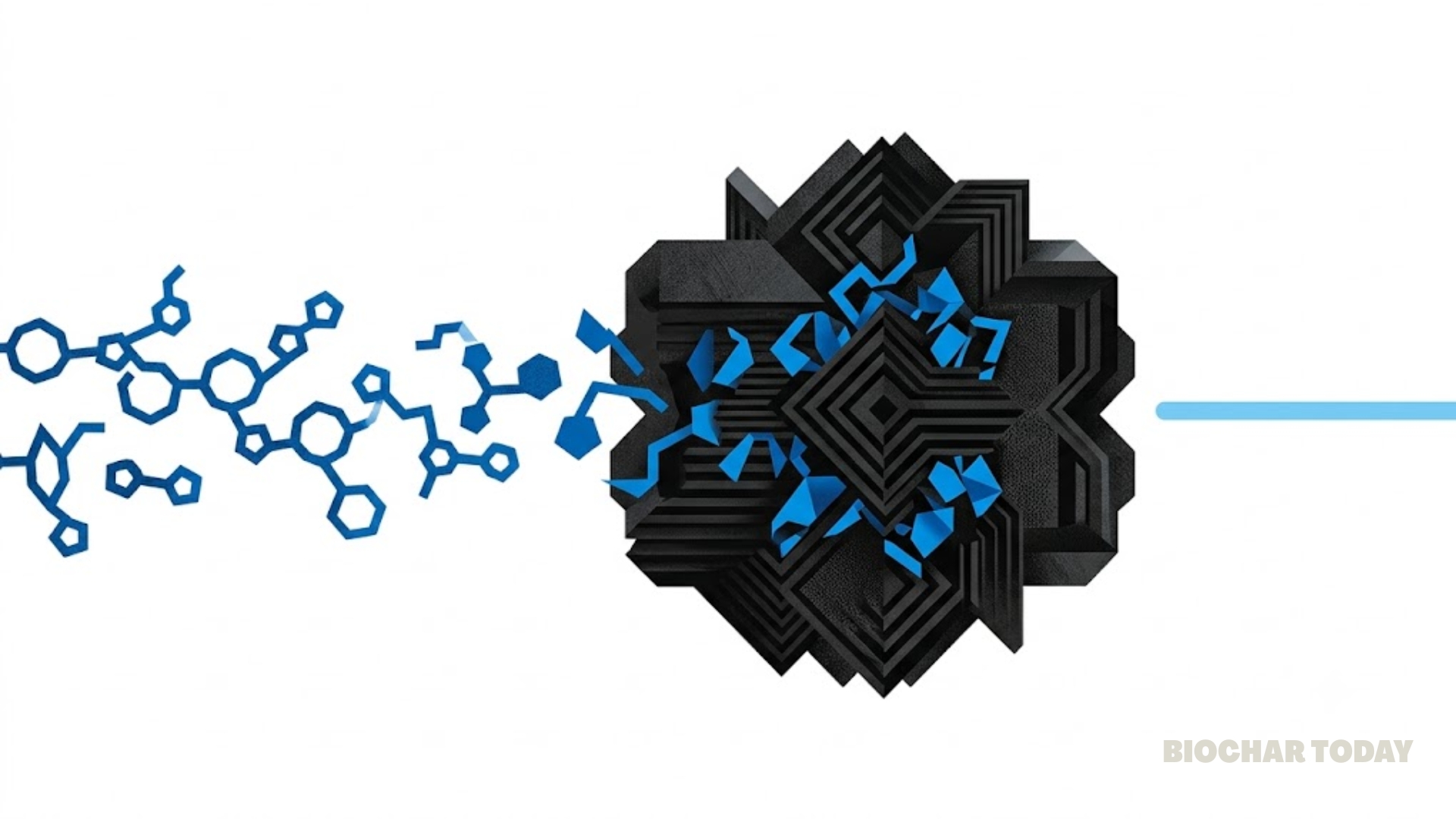
The researchers found that the adsorption mechanism involved both chemisorption on oxygen-containing functional groups and physical adsorption, facilitated by the biochar’s high specific surface area and pore volume. The rich mineral content in B-WSU biochar, likely derived from the animal litter environment, contributed to its higher adsorption capacity. This points to the potential of utilizing waste materials in biochar production as part of a circular economy strategy.
The study’s findings underscore the potential of WSF and WSU biomass-derived biochar as effective adsorbents for NO2 removal, which could be beneficial in air pollution mitigation strategies. The research emphasizes the importance of understanding the textural properties and surface chemistry of biochars to optimize their adsorption performance.
In conclusion, biochar derived from wood shaving litter, especially from animal litter environments, shows promising potential for NO2 adsorption. The enhanced adsorption capacities at higher temperatures and the changes in surface chemistry upon NO2 exposure indicate that biochar could be a sustainable and efficient alternative for air pollution control. This study provides valuable insights into the mechanisms governing NO2 adsorption on biochar and highlights the importance of utilizing waste materials to produce biochars with tailored properties for environmental applications.



Leave a Reply