
Xu, Z., Shao, G., Lu, Y. et al. Preparation of biocharBiochar is a carbon-rich material created from biomass decomposition in low-oxygen conditions. It has important applications in environmental remediation, soil improvement, agriculture, carbon sequestration, energy storage, and sustainable materials, promoting efficiency and reducing waste in various contexts while addressing climate change challenges. More based on self-polymerization of tannic acid and ammonia adsorption performance study. J Mater Sci (2024). https://doi.org/10.1007/s10853-024-09893-x
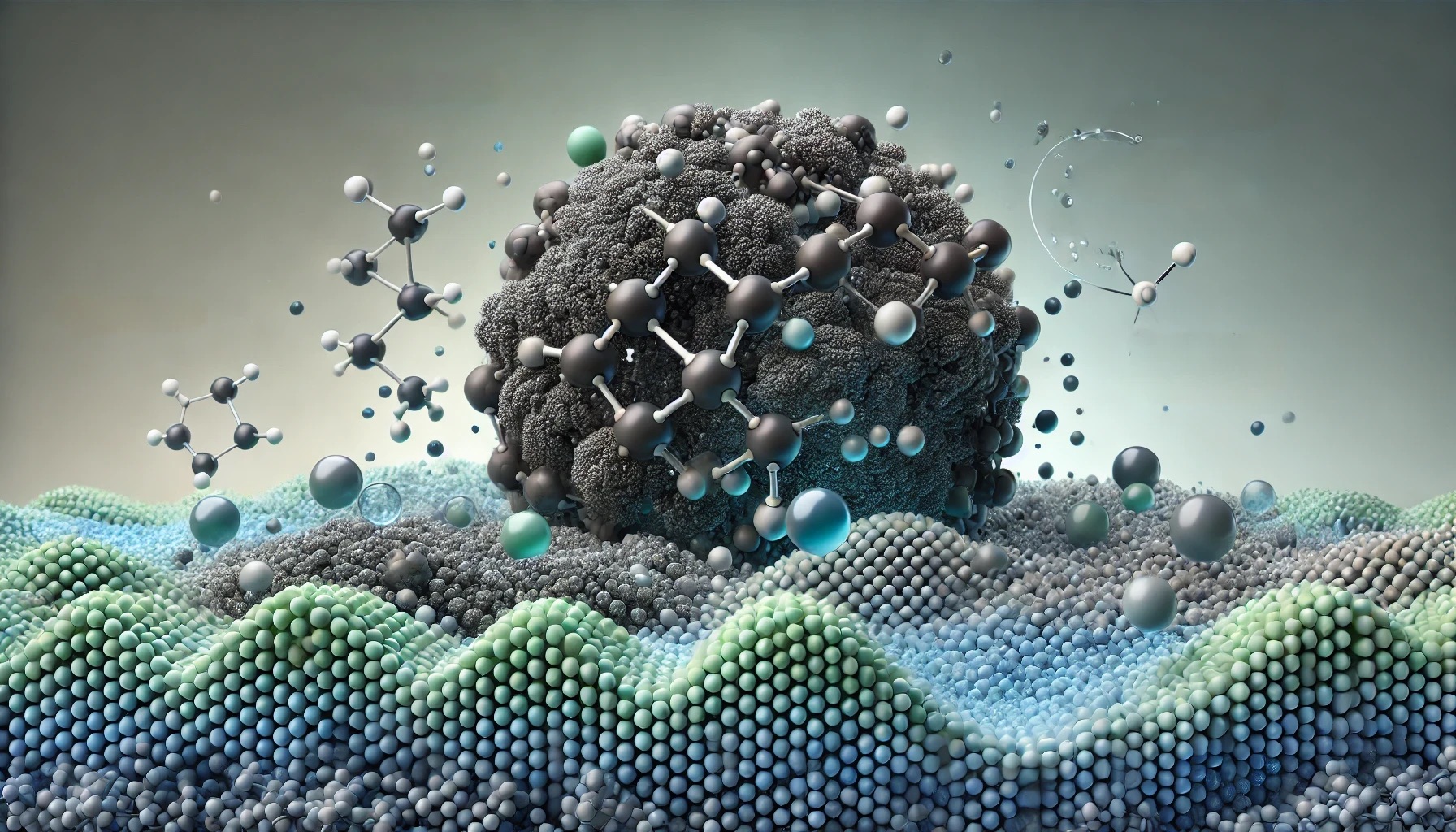
Ammonia is a crucial raw material in various industries, but its environmental impact is increasingly concerning. Effective methods for ammonia adsorption are essential to mitigate its harmful effects. A recent study has developed a new biochar material based on tannic acid, a naturally occurring compound, to address this issue.
Researchers synthesized tannic acid biochar (TAB) using different activators, including K2CO3, KHCO3, and KOH. The tannic acid was self-polymerized and subjected to a pyrolytic carbonization reaction at 800°C, resulting in TAB. This biochar was then treated with 10% phosphoric acid by mass, leading to a significant increase in its specific surface area and hydroxyl content—key factors for effective adsorption—while maintaining a lack of acidic functional groups.
Notably, the specific surface area of the TAB-KOH variant increased dramatically from 22 m²/g to 667 m²/g after acidification. This modification greatly enhanced the biochar’s ammonia adsorption capacity, reaching 342.6 mg/g. The proposed mechanism involves hydroxyl groups on the biochar surface first adsorbing water, which then dissolves ammonia gas, facilitating its capture.
This research demonstrates that tannic acid-based biochar has significant potential as an efficient and cost-effective ammonia adsorbent. The simplicity of its production and the affordability of raw materials make it a viable candidate for large-scale use in mitigating ammonia pollution.





Leave a Reply