
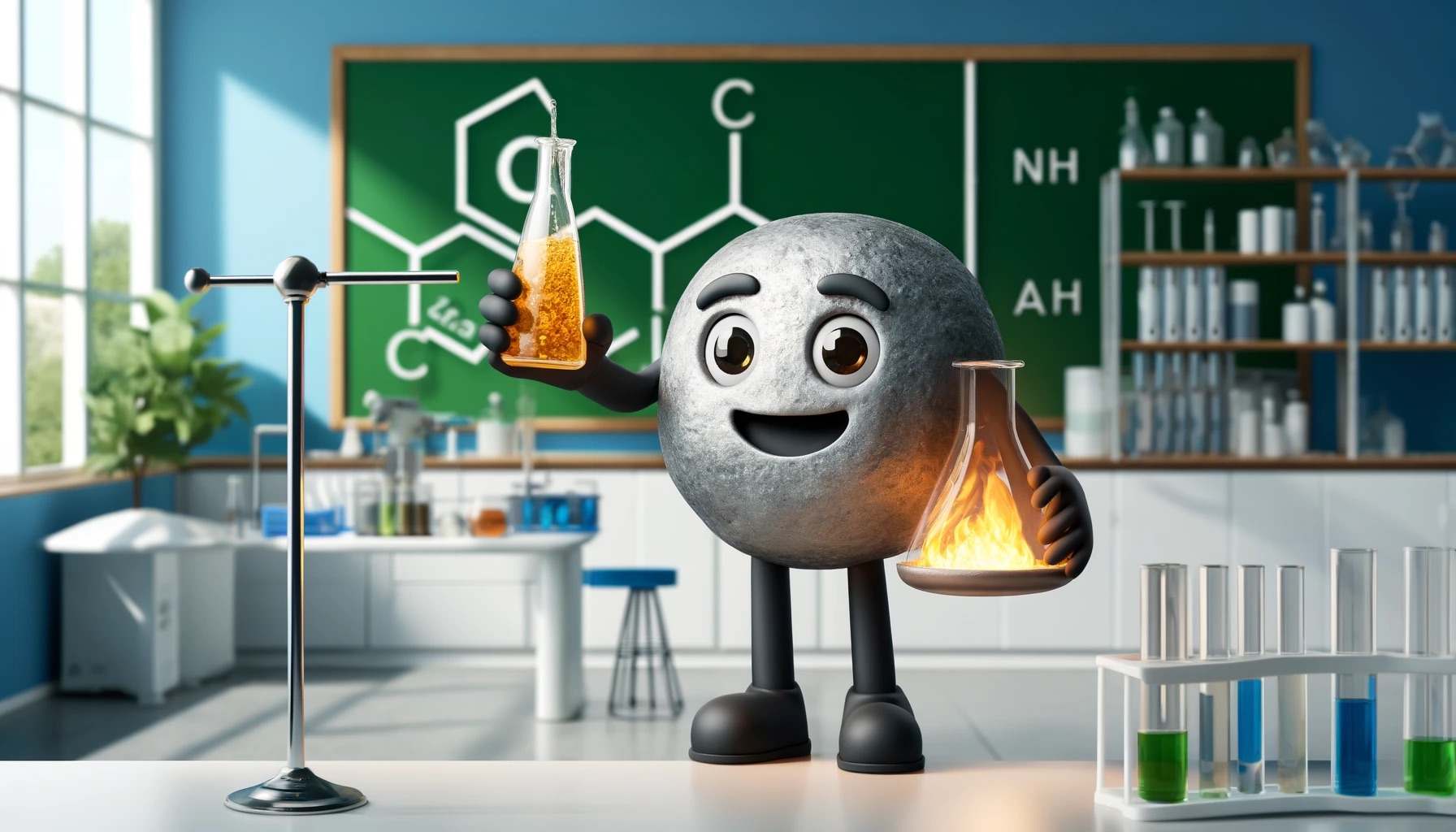
Miño, et al (2024) Enhancing the conversion of waste motor oil into diesel-like fuels using mineral-impregnated biocharBiochar is a carbon-rich material created from biomass decomposition in low-oxygen conditions. It has important applications in environmental remediation, soil improvement, agriculture, carbon sequestration, energy storage, and sustainable materials, promoting efficiency and reducing waste in various contexts while addressing climate change challenges. More catalysts. Chemical Engineering Communications. https://doi.org/10.1080/00986445.2024.2351492
A recent study reveals the impact of metal-impregnated biochar on the catalytic conversion of waste motor oil (WMO) into diesel-like fuel (DLF). The research focused on optimizing the initial metal concentration during the wet impregnation process, finding that excessively high concentrations can clog biochar pores, thereby reducing reaction efficiency.
Among the metals tested, zinc and calcium exhibited higher kinetic constants under optimal conditions compared to nickel, while maintaining consistent yield and selectivity to liquid products. The study further developed a reduction method for impregnating metal particles, specifically calcium oxide, to improve metal dispersion on the biochar surface. This approach resulted in better performance due to the formation of smaller particles rather than metal agglomerates.
Remarkably, the optimized calcium oxide biochar demonstrated a significant improvement, with a kinetic constant increase of about 280% at 420°C and a reduced activation energy of 246 kJ mol−1, compared to 308 kJ mol−1 for thermal cracking.
The resulting DLF from the superior catalytic system was analyzed, revealing rheological properties comparable to commercial diesel. Additionally, the hydrocarbon distribution was similar, though the DLF contained smaller hydrocarbon chains.
This research highlights the potential of metal-impregnated biochar as an effective catalyst in converting WMO into high-quality diesel-like fuel, offering a promising solution for sustainable fuel production and waste management.




Leave a Reply