
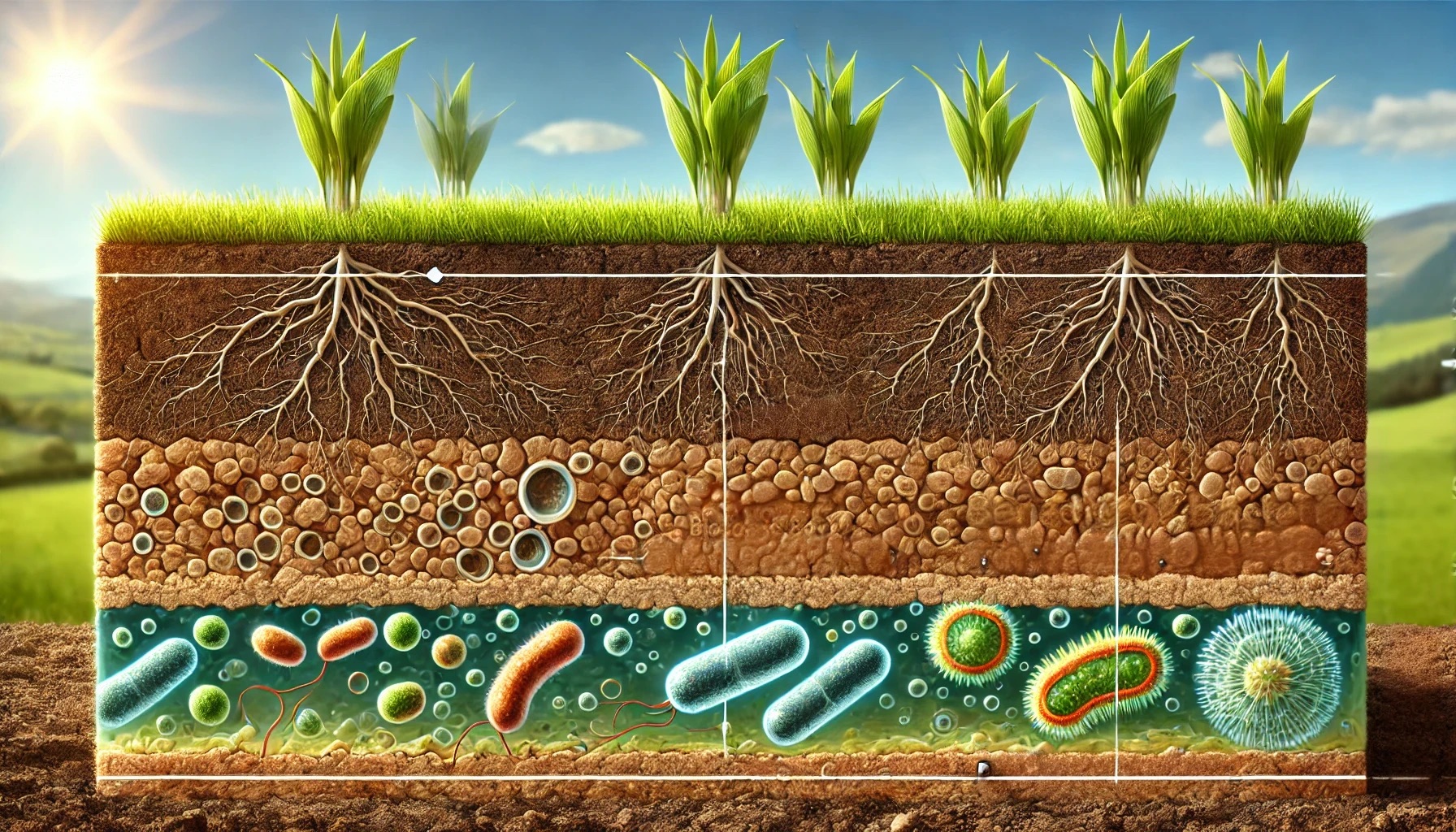

Recent studies show that using modified biochar can effectively improve saline-alkali soil, but the impact of iron-modified biochar (FB) on soil chemistry at various depths was previously unclear. To address this, researchers designed a soil column experiment dividing the soil into three sections, allowing them to examine FB’s effects on soil properties and bacterial communities along a depth gradient.
The study found that applying 1% FB significantly enhanced soil chemical properties, with noticeable differences between topsoil and subsoil. In the topsoil, extracellular enzyme activities increased, indicating improved soil health. In the subsoil, there was a reduction in base cations, which helps to alleviate soil salinity.
Bacterial community responses also varied with soil depth. Halophilic (salt-loving) bacteria, particularly from the phyla Bacteroidetes and Deinococcus, were more abundant in the subsoil. In contrast, beneficial bacteria like Alphaproteobacteria, Sphingomonas, and Pontibacter increased in the overall saline-alkali soil when treated with 1% FB.
These findings highlight the potential of iron-modified biochar to improve saline-alkali soils by altering both soil chemistry and microbial communities. This innovative approach could lead to more effective soil management strategies, promoting healthier soil ecosystems and better agricultural outcomes.



Leave a Reply