
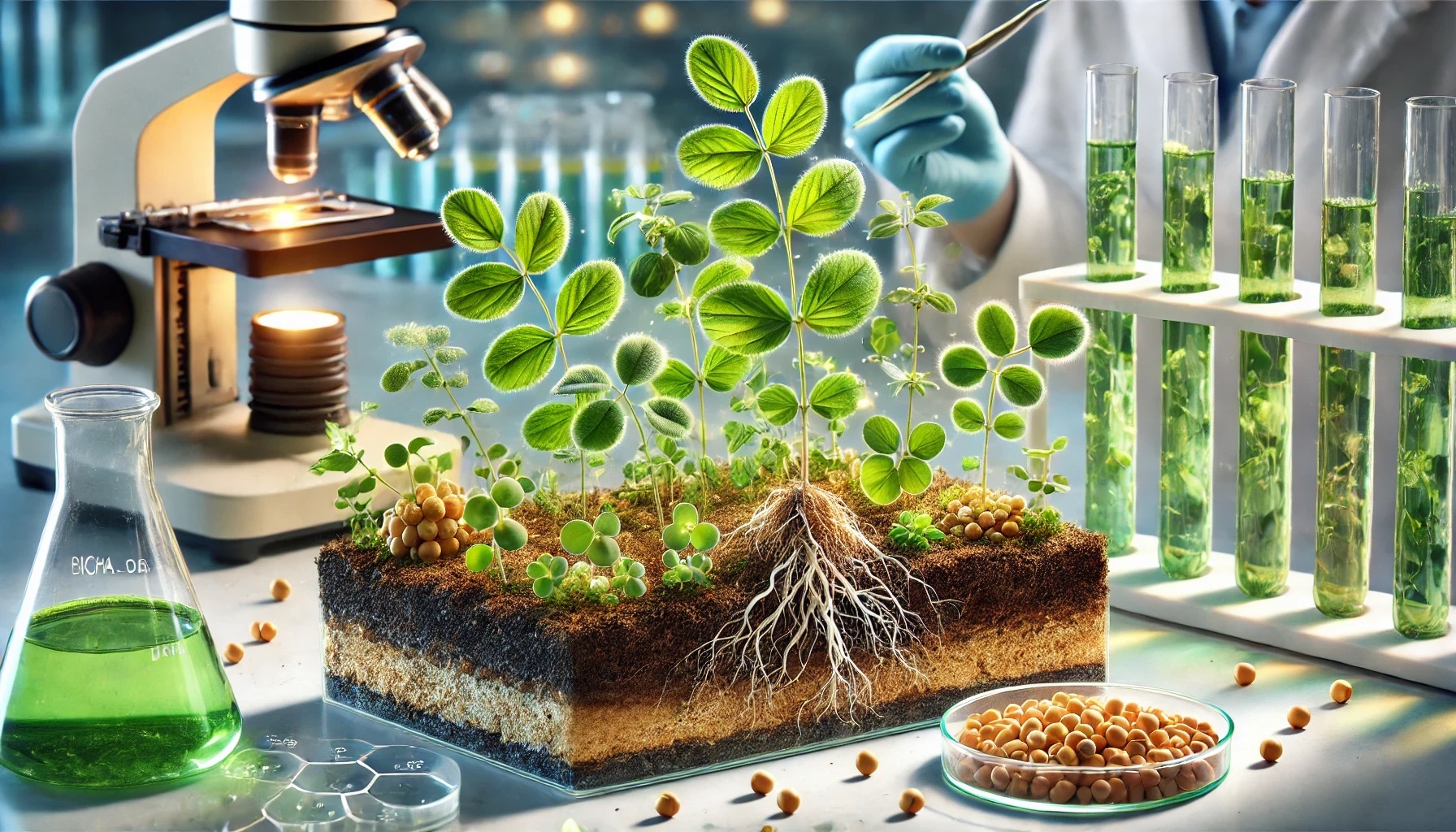
Shahzad, M.A., Younis, U., Ehsan, A. et al. Impact of gibberellic acid GA3, quantum dot biocharBiochar is a carbon-rich material created from biomass decomposition in low-oxygen conditions. It has important applications in environmental remediation, soil improvement, agriculture, carbon sequestration, energy storage, and sustainable materials, promoting efficiency and reducing waste in various contexts while addressing climate change challenges. More, and rhizosphere bacteria on fenugreek plant growth and stress responses under lead stress. Sci Rep14, 29612 (2024). https://doi.org/10.1038/s41598-024-81072-z
Fenugreek plants, known for their medicinal and nutritional value, face significant challenges when exposed to lead (Pb) contamination in soil. Pb stress affects plant metabolism, reducing growth, chlorophyll levels, and yield, and increasing oxidative damage. A recent study highlights the combined use of gibberellic acid (GA3), quantum dot biochar (QDBC), and rhizosphere bacteria (RB) as a promising solution to mitigate these effects.
Key Findings
The study tested five treatments under controlled conditions, focusing on growth, stress markers, and antioxidant responses. Results revealed that the combination of 0.5 mg/L GA3-QDBC with RB significantly enhanced fenugreek performance even under 500 ppm Pb stress. This treatment increased root and shoot biomassBiomass is a complex biological organic or non-organic solid product derived from living or recently living organism and available naturally. Various types of wastes such as animal manure, waste paper, sludge and many industrial wastes are also treated as biomass because like natural biomass these More by up to 73% and improved chlorophyll levels by 36% compared to untreated plants. It also lowered oxidative damage indicators, such as malondialdehyde (MDA), by 50%.
Mechanisms of Action
• GA3 promotes plant growth by regulating key physiological processes and boosting chlorophyll production.
• QDBC enhances soil properties, improving water retention and nutrient availability, while acting as an antioxidant.
• RB facilitates nutrient uptake and triggers systemic resistance, reducing oxidative stress.
Conclusion
The combined treatment not only improved plant growth but also strengthened stress resilience, offering a sustainable approach to managing lead contamination. Further field studies are needed to validate these findings and optimize their application in agriculture.
This research presents a step toward more resilient crop production in contaminated environments, aligning with sustainable farming practices.



Leave a Reply