
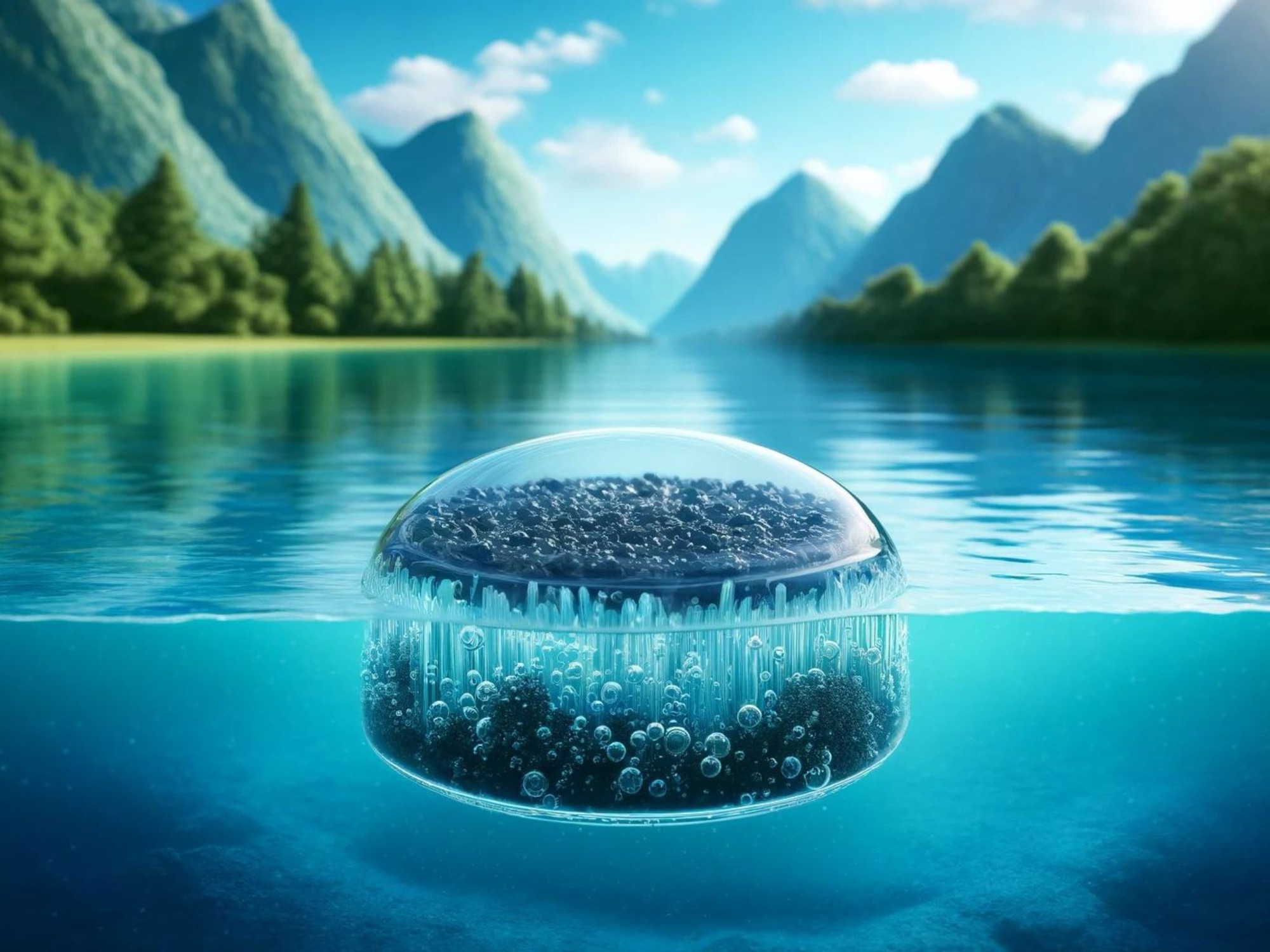

In response to the pressing environmental issue of dyes in industrial wastewater, a novel biochar-based composite hydrogel (PAS/aBC-CD) has been developed. This innovation employs a straightforward composite method, encapsulating biochar within a gel network, which not only simplifies biochar recovery but also significantly boosts its adsorption capacity. The composite hydrogel has shown remarkable efficacy in adsorbing dyes, achieving adsorption capacities of 1494 mg/g for Methylene Blue (MB), 1182 mg/g for Malachite Green (MG), and 1031.6 mg/g for Neutral Red (NR).
A key feature of this study is the use of chromate ions (CrO42−) as a bridging agent, which synergistically enhances the adsorption of dyes, facilitating higher dye removal efficiencies. Through systematic adsorption–desorption experiments, the PAS/aBC-CD hydrogel demonstrated excellent cyclic stability, retaining 98% of its adsorption capacity after five cycles, underscoring its potential for practical application in industrial settings.
The industrial applicability of the hydrogel was further evidenced by column adsorption experiments, which simulated real-world conditions to explore the full potential of this adsorbent. These experiments not only confirmed the high performance of the hydrogel but also highlighted its robustness and efficiency in continuous use scenarios.
This study not only provides a promising solution to mitigate the environmental impacts of dye pollutants but also introduces a cost-effective and highly efficient material for wastewater treatment processes. The introduction of such innovative materials could significantly advance the field of environmental conservation, offering viable and sustainable alternatives to conventional methods. The PAS/aBC-CD hydrogel’s impressive adsorption capabilities and stability make it a noteworthy development in the ongoing efforts to clean industrial wastewater.


Leave a Reply